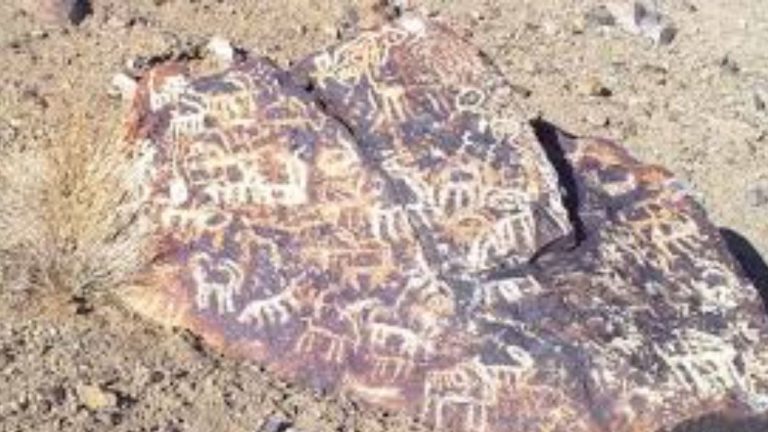
Vinai Kumar Saxena launches conservation park to safeguard Ladakh’s prehistoric rock carvings
April 18, 2026: In a landmark step to preserve Ladakh’s ancient heritage, Vinai Kumar Saxena laid the foundation stone for India’s first Petroglyph Conservation Park on the banks of the Indus River in Leh on World Heritage Day. Petroglyphs—prehistoric carvings etched onto rocks—are under growing threat due to unregulated tourism, rapid development, and low awareness. The park aims to provide a dedicated space to protect these artefacts while making them accessible in a curated and educational format.
The project will bring together petroglyphs from vulnerable and isolated locations across Ladakh, ensuring their long-term preservation. Authorities noted that nearly 400 such sites exist in the region, with many located along the Indus and Zanskar River, where construction activities pose significant risks. A Memorandum of Understanding has also been signed between the Department of Archives, Archaeology and Museums and the Archaeological Survey of India to jointly safeguard this heritage. Some carvings include inscriptions in ancient languages such as Chinese, Arabic, and Sanskrit, reflecting centuries of cultural exchange.
Describing Ladakh as a “repository of ancient heritage,” Saxena said the region hosts one of the richest collections of prehistoric rock art in South and Central Asia. He stressed that conservation must be integrated into development planning, highlighting threats from road construction and environmental factors. The carvings, depicting hunting scenes, wildlife, trade routes, and Buddhist symbols, trace human history from the Palaeolithic age to later periods. He also called for curated tourism circuits and community participation, urging locals to act as custodians to ensure sustainable preservation of this invaluable legacy.