
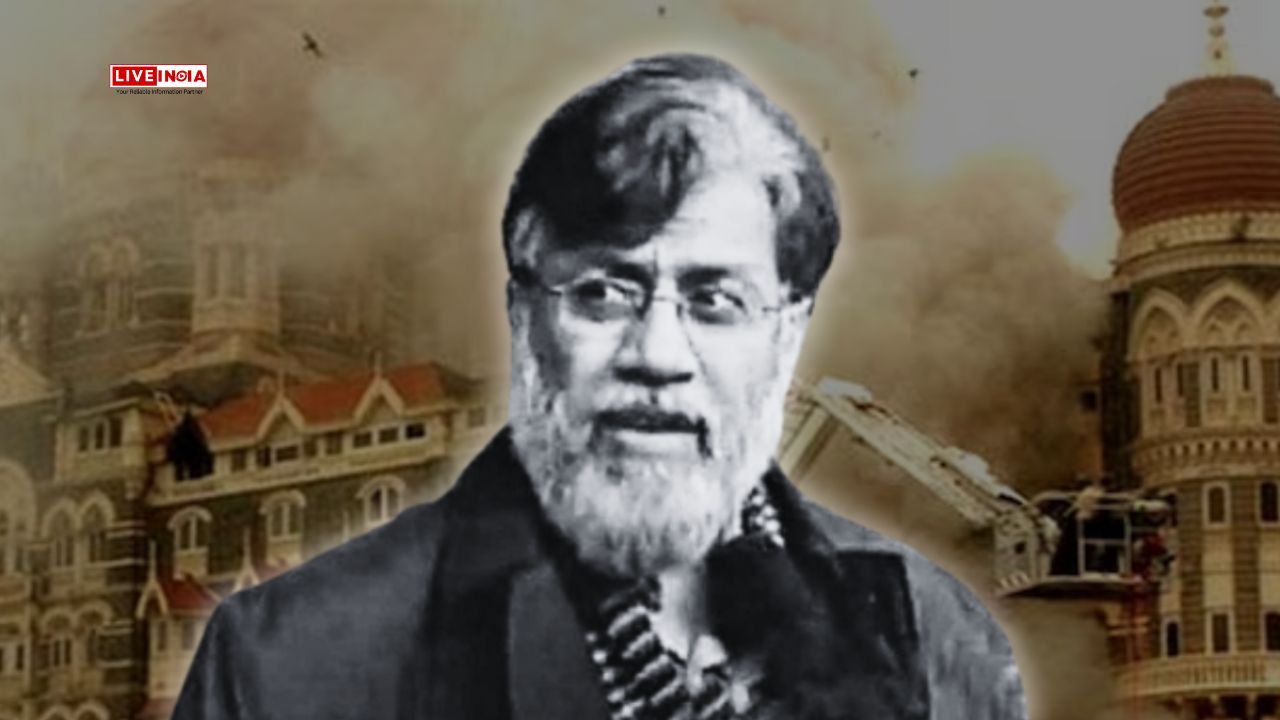


As 26/11 accused Tahawwur Rana lands in Delhi to face justice, Pakistan disowns the terrorist, calling him a Canadian national with lapsed citizenship.
New Delhi | April 10, 2025 — Hours before Tahawwur Hussain Rana — a key conspirator in the 2008 Mumbai terror attacks — arrives in India, Pakistan officially distanced itself from the accused, declaring him a Canadian citizen with no active Pakistani documentation.
Speaking to the media in Islamabad, Pakistan’s Ministry of Foreign Affairs spokesperson Shafqat Ali Khan said, “Tahawwur Rana has not renewed his Pakistani documents for over two decades. His Canadian nationality is very clear.” The remarks come as a U.S. military plane carrying the 64-year-old lands at Palam Air Force Base in Delhi for his formal arrest and prosecution.
Also Read: Trump Approves Extradition of 26/11 Mumbai Terror Attack Accused Tahawwur Rana to India
Also Read: Vijay Mallya Loses UK Appeal Against Bankruptcy Over £1 Billion Debt
India Gears Up to Prosecute Rana
Rana, who was extradited by the United States late Wednesday, will be taken into custody by the National Investigation Agency (NIA) and held in Delhi’s Tihar Jail under high security. He is expected to appear before a Delhi court before being moved to Mumbai for further investigation and trial.
Rana faces charges including criminal conspiracy, waging war against India, murder, and forgery, among others. He is accused of aiding Pakistani-American David Coleman Headley in scouting locations and providing logistical support for the 26/11 attacks that killed 166 people across Mumbai.
Political Back-and-Forth in India
While Prime Minister Narendra Modi’s government has claimed credit for the diplomatic breakthrough, the Congress party reminded that the process was initiated under the UPA regime in 2009. “This extradition is the culmination of a decade-and-a-half of painstaking diplomatic, legal, and intelligence efforts,” said former Union Home Minister P. Chidambaram.
Rana was first arrested in the U.S. in 2009 for conspiring to attack a Danish newspaper and for his ties with Lashkar-e-Taiba, the terror outfit behind the 26/11 attacks. He was convicted in the U.S. in 2011 and has since fought legal battles to avoid extradition to India — all of which failed.
Public and Legal Reactions
The arrival of Rana has sparked strong sentiments in India. Families of victims and survivors of the Mumbai attacks are demanding the harshest punishment. “Rana should be hanged,” said the girl who identified Ajmal Kasab, the sole 26/11 attacker captured alive and later executed in 2012.
What’s Next?
Rana will now be subject to intensive interrogation by a joint team from the NIA, intelligence agencies, and forensic psychologists. The objective: to uncover deeper links and possibly expose new layers in the network that orchestrated the horrific attacks.
As India moves closer to long-awaited justice, Pakistan’s disavowal of Rana underscores the deep geopolitical tensions that continue to linger nearly 17 years after the attacks.
Tags:
Tahawwur Rana, 26/11 attacks, Pakistan statement, extradition to India, Mumbai terror attacks, David Headley, NIA, Tihar Jail, Palam Airport, Modi government, UPA government, Pakistan foreign ministry, terrorism, Ajmal Kasab, Lashkar-e-Taiba, Indian diplomacy