
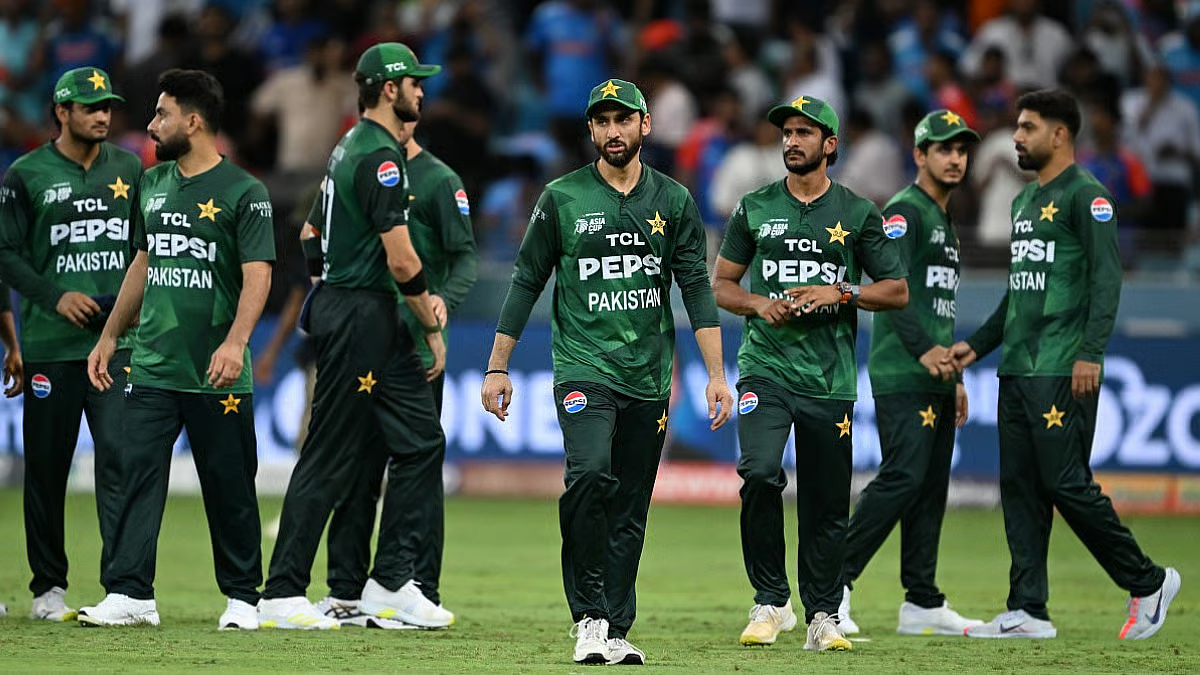


The Pakistan Cricket Board (PCB) has reportedly laid down three key demands to resolve its ongoing standoff with the International Cricket Council (ICC), according to sources. The development comes after Pakistan threatened to boycott its high-profile T20 World Cup 2026 match against India, despite warnings from the ICC about possible consequences.
PCB’s Three Major Demands
According to sources, PCB officials conveyed their conditions during a meeting with ICC representatives in Lahore on Sunday. The three demands include:
- Increased financial compensation for Bangladesh following its removal from the tournament.
- A participation fee for Bangladesh despite the team’s ouster from the T20 World Cup.
- Hosting rights for a future ICC event for Pakistan as part of a broader settlement.
These demands are seen as Pakistan’s attempt to break the deadlock and support Bangladesh after its exclusion from the competition.
Internal Differences Within PCB
Sources further revealed that some PCB officials are willing to go ahead with the India match, scheduled for February 15 in Colombo, but PCB Chairman Mohsin Naqvi is reportedly resisting the idea. Naqvi is expected to meet Pakistan Prime Minister Shehbaz Sharif on Monday for further consultations before a final call is made.
Background: Bangladesh’s Removal from T20 World Cup
The ICC removed Bangladesh from the T20 World Cup last month after the Bangladesh Cricket Board (BCB) refused to send its team to India, citing security concerns. Despite ICC assurances that there was no credible threat, Bangladesh maintained its stance, forcing the ICC to replace them with Scotland.
Since then, Pakistan has strongly backed Bangladesh. PCB Chairman Mohsin Naqvi and other board officials also held talks with BCB President Aminul Islam Bulbul to discuss the ongoing situation.
ICC’s Concerns and Force Majeure Debate
The ICC has sought clarification from the PCB on how the force majeure clause could justify Pakistan’s refusal to play against India. Reports suggest the PCB attempted to shift responsibility to the Pakistani government, prompting the ICC to demand a detailed explanation.
The controversy initially began when Bangladesh, supported by its interim government, declined to travel to India for group-stage matches, triggering a chain reaction that has now escalated into a major cricketing and political dispute.
On-Field Update: Pakistan Survives Netherlands Scare
Amid the off-field turmoil, Pakistan managed to edge past the Netherlands by three wickets in their T20 World Cup opener in Colombo on Saturday, avoiding an early setback in the tournament.