
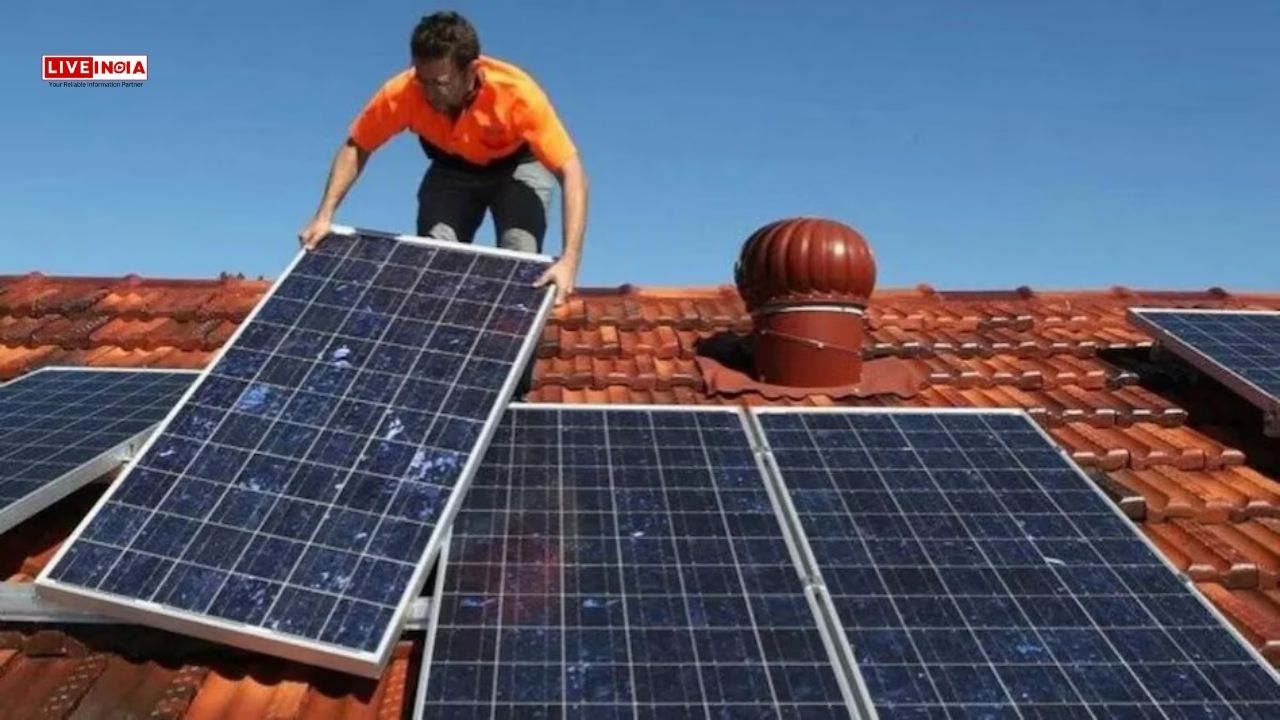


With 10 lakh rooftop solar systems installed, India’s flagship clean energy scheme is creating massive economic and environmental impact—eightfold returns on subsidy highlight its success.
June 20, 2025 | India’s rooftop solar revolution is picking up pace—thanks to the Pradhan Mantri Surya Ghar: Muft Bijli Yojana (PMSGMBY), launched by Prime Minister Narendra Modi in February 2024. Within its first year, the scheme has not only reached over 10 lakh rooftop installations, but also delivered annual power savings worth ₹1,619.95 crore—a clear sign of its success in both energy and economic terms.
Also Read: Samsung Galaxy Z Fold 7 Leaked Renders Reveal Design And Display Features
According to the Ministry of New and Renewable Energy (MNRE), these systems now generate 4.37 billion units of electricity annually, helping avoid over 3.59 million tonnes of CO₂ emissions in just one year.
📊 Eightfold Returns on Subsidy
A cost-benefit analysis by BlueKraft Fellow Jaya Dubey reveals that the government’s ₹4,410 crore subsidy investment has already returned nearly eight times the value in savings and clean energy generation.
Also Read: Explained: What Are Cluster Bombs, Used By Iran Against Israel?
With the installations totaling 26.27 lakh kilowatt-peak (kWp) capacity, projections estimate that over 25 years, the cumulative savings could reach ₹36,089 crore, while carbon emissions avoided may exceed 89.65 million tonnes—beating the original rooftop solar target of 72 million tonnes.
🌞 What the Scheme Offers
Under PMSGMBY:
- Households can install rooftop solar panels with up to 40% subsidy.
- 300 units of electricity per month are provided free of cost.
- The initiative supports digital application processes, faster inspections, and timely subsidy disbursement.
The average monthly installation rate has now crossed 70,000 systems, up tenfold from pre-scheme figures.
📈 Future Projections: ₹5 Lakh Cr in National Savings by 2027
With a goal of 1 crore households by 2027, the scheme could:
- Save the government up to ₹75,000 crore annually on electricity subsidies.
- Unlock ₹5 lakh crore in national savings over 25 years.
- Bolster energy security by reducing dependence on imported fossil fuels.
- Improve trade balance and free up fiscal space for education, healthcare, and infrastructure.
🌍 Climate Goals & Grid Benefits
The initiative is central to India’s net-zero target by 2070, slashing emissions while also easing pressure on DISCOMs through:
- Reduced grid load,
- Lower transmission losses,
- Decreased subsidy payouts.
🗺️ State-wise Rankings & Challenges
Top Performers:
- Gujarat (Score: 0.85)
- Kerala, Uttarakhand, Andhra Pradesh, Maharashtra, and Uttar Pradesh
Union Territories:
- Ladakh and Lakshadweep showed standout performance.
Key Bottlenecks:
- Early stages: registration, application, installation
- Efficient stages: inspection and subsidy disbursement (conversion rates above 0.79)
🔧 What’s Next?
To scale up and reach its full potential, experts recommend:
- Focusing on high-potential states like Rajasthan, Telangana, and Madhya Pradesh,
- Developing tailored interventions for the Northeast and Himalayan regions,
- Boosting domestic solar manufacturing, digital infrastructure, and skill development in lagging states.
📌 Tags:
rooftop solar, PM Surya Ghar Yojana, solar energy India, renewable energy policy, clean energy savings, carbon emissions India, MNRE, Aatmanirbhar Bharat, climate change India
📢 Hashtags:
#PMSuryaGhar #RooftopSolar #CleanEnergyIndia #SolarSavings #MuftBijliYojana #GreenIndia #NetZero2050 #ModiGovernment