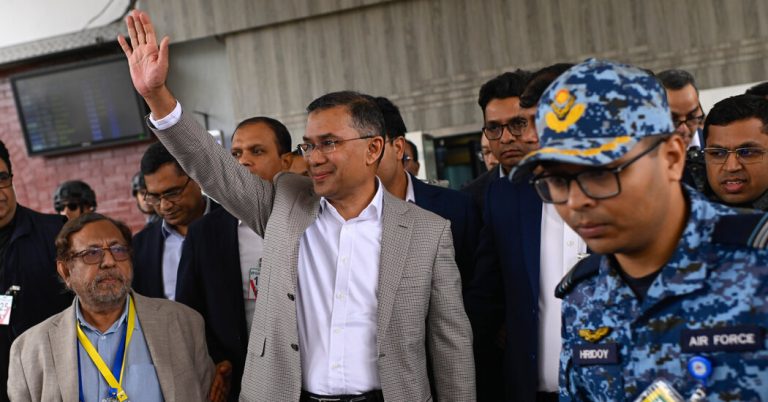
Dhaka: Bangladesh Prime Minister Tarique Rahman has issued a strong warning against extremism and radicalism as his government grapples with a fresh wave of student protests and growing political unrest across the country.
Addressing the closing session of the 13th Jatiya Sangsad during the budget session on Wednesday, Rahman said his administration would take a firm stand against any form of extremism while seeking cooperation from opposition parties.
“The incumbent government will not indulge in any form of extremism or radicalism under any circumstances,” he said.
In a message directed at the opposition, including the National Citizens’ Party (NCP) and Jamaat-e-Islami, the Prime Minister expressed confidence that all political stakeholders would support the government’s efforts to maintain stability.
“I believe the government will receive the full cooperation of the opposition party in this regard.”
Student Protests Intensify
Rahman’s remarks come as Bangladesh witnesses another round of student-led protests, with demonstrators demanding the resignation of the country’s Education Minister over issues related to the Higher Secondary Certificate (HSC) and equivalent examinations.
The protests have spread across major cities, including Dhaka and Chittagong, resulting in road blockades and increasing pressure on the government.
Bangladesh Home Minister Salahuddin Ahmed accused certain groups of attempting to exploit the unrest for political purposes.
“There are some groups that want to trouble the government. On several issues, they hide their identity and attempt to fish in troubled waters,” he said while referring to the ongoing student demonstrations.
The Home Minister also blamed the previous interim administration led by Muhammad Yunus for encouraging a culture of protesters entering government premises, adding that the current government would not allow educational standards to be compromised.
Government Under Pressure
The Tarique Rahman government, which has been in office for just under six months, is facing mounting challenges on multiple fronts.
Apart from student demonstrations, the administration is dealing with severe flooding caused by extreme weather in several parts of the country, including sections of the capital, Dhaka. The government has also faced political pressure from allied groups over constitutional reforms and governance issues.
Both the Jamaat-e-Islami and the National Citizens’ Party have organised protests and boycotts over various policy disagreements. Jamaat-e-Islami has also threatened nationwide demonstrations demanding the implementation of the “July Charter.”
Lessons From The 2024 Unrest
The government is keen to avoid a direct confrontation with students, mindful of the nationwide protests in 2024 that ultimately led to the fall of the previous administration headed by former Prime Minister Sheikh Hasina.
Concerns grew earlier this week after police used batons to disperse students protesting outside the Parliament complex on July 14.
Officials believe such images could fuel further public anger. As a result, the government has reiterated instructions to law enforcement agencies to exercise restraint and avoid taking harsh action against student protesters while maintaining public order.