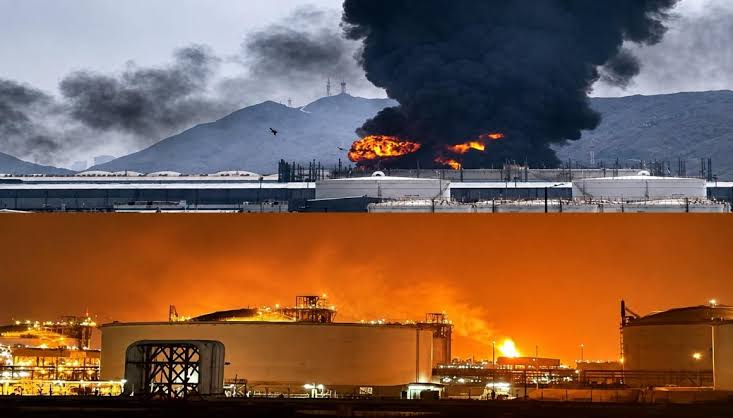
DOHA / NEW DELHI — The final group of mortal remains of the Indian nationals tragically killed in the Ras Laffan industrial zone explosion in Qatar has been repatriated to India, the Indian Embassy confirmed on Saturday.
The tragic incident, which occurred on June 21 at the Barzan local gas supply facility within Ras Laffan Industrial City, claimed a total of 13 lives and injured dozens of others.
Key Details of the Repatriation
- Final Repatriation: The bodies of eight Indian victims were flown back to India on June 26.
- Initial Repatriation: The remains of four other Indian nationals were sent home a day earlier, on June 25.
- Total Casualties: Out of the 13 deceased individuals, 12 were confirmed to be Indian nationals. According to QatarEnergy LNG CEO Saad Al-Kaabi, the remaining victim is believed to be a Pakistani national.
Diplomatic Response and Support
In the wake of the tragedy, diplomatic channels moved quickly to manage the crisis:
- High-Level Condolences: The Emir of Qatar, Sheikh Tamim bin Hamad Al Thani, personally called Indian Prime Minister Narendra Modi to express deep grief over the loss of Indian lives.
- Embassy Outreach: India’s Ambassador to Qatar, along with other embassy officials, visited the injured workers currently receiving treatment in Al Khor.
- Official Gratitude: Taking to X (formerly Twitter), the Indian Embassy in Doha extended its gratitude to the Qatari authorities, employer corporations, and Indian community organizations for their swift support and medical care.
“Embassy of India, Doha thanks Qatari authorities, Indian community organisations and Government authorities in India for their prompt support,” the embassy stated.
Background on the Incident
The explosion occurred as operators were attempting to resume activities at the Liquified Natural Gas (LNG) processing plant. The facility, operated by QatarEnergy LNG, had experienced recent operational disruptions tied to regional geopolitical tensions involving the US, Israel, and Iran. The blast injured 66 people in total.
The Reality of Migrant Labor in the Gulf
The tragedy has once again cast a spotlight on the massive South Asian migrant workforce powering the Gulf’s industrial sectors. Data from the International Labour Organisation (ILO) highlights that roughly 40% of the total workforce across the six oil-rich Gulf states consists of foreign nationals.
Labor rights groups, including Fair Square, note that these workers—primarily from India, Pakistan, Bangladesh, Nepal, Sri Lanka, and the Philippines—frequently operate under highly demanding and precarious conditions to maintain the region’s massive infrastructure and energy hubs.