


Less than 24 hours after a ceasefire between the United States and Iran was announced, Tehran has closed the crucial Strait of Hormuz again, reportedly in response to ongoing Israeli strikes in Lebanon, according to a report by Associated Press.
The move signals fresh uncertainty around the fragile truce that had raised hopes of stabilising global energy supplies.
Strait Closure Follows Ceasefire Announcement
The US-Iran ceasefire was announced early Wednesday, with Donald Trump confirming a two-week pause in hostilities. As part of the agreement, Iran had initially agreed to reopen the Strait of Hormuz, a vital global shipping route responsible for transporting a significant share of the world’s oil and liquefied natural gas.
The reopening was expected to ease disruptions in global energy markets that had worsened during weeks of escalating conflict.
However, the renewed closure of the Strait less than a day later highlights the fragility of the agreement and rising regional tensions.
Israel Supports Ceasefire But Excludes Lebanon
Benjamin Netanyahu publicly supported the United States’ decision to suspend strikes against Iran but clarified that the ceasefire does not apply to Israel’s military operations in Lebanon.
In a post on X, Netanyahu stated that Israel supports President Trump’s decision to pause attacks on Iran, provided Tehran reopens the Strait of Hormuz and stops attacks on the United States, Israel and other regional countries.
However, he emphasised that Israeli operations against Hezbollah would continue.
In a separate statement, Netanyahu noted that the United States had assured Israel it remained committed to achieving shared regional goals during upcoming negotiations.
“The two-week ceasefire does not include Lebanon,” he said, reinforcing Israel’s position that its campaign against Hezbollah remains separate from the US-Iran truce.
Israeli Strikes Intensify Tensions
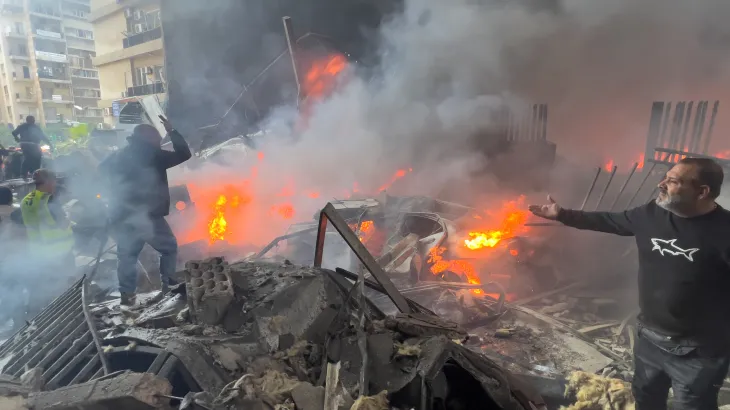
Despite the ceasefire, Israel continued military operations against Hezbollah targets in Lebanon. According to reports, recent strikes killed at least 112 people and injured 837 others, triggering protests from Iran and raising concerns about further escalation.
Iran has strongly objected to Israel’s actions, viewing them as a violation of the broader regional understanding surrounding the ceasefire.
The renewed closure of the Strait of Hormuz is widely seen as Tehran’s response to these ongoing Israeli operations.
Trump Backs Israel’s Military Actions
President Trump has openly supported Israel’s continued military campaign in Lebanon, stating that Hezbollah was not part of the ceasefire agreement between Washington and Tehran.
Speaking to PBS News, Trump defended Israel’s actions and described the Lebanon conflict as separate from the US-Iran deal.
“Yeah, they were not included in the deal,” Trump said when asked why Israel continued targeting Lebanon despite the ceasefire.
When pressed further on why Israeli military operations were excluded from the agreement, he replied, “Because of Hezbollah. They were not included in the deal. That’ll get taken care of too. It’s alright.”
He also confirmed that Israel’s actions were expected to continue, stating, “It’s part of the deal — everyone knows that. That’s a separate skirmish.”
Fragile Truce Faces Early Test
The closure of the Strait of Hormuz so soon after its reopening underscores the uncertainty surrounding the two-week ceasefire.
The Strait remains one of the world’s most strategically important waterways, handling a major portion of global oil shipments. Any disruption to traffic through the route has immediate consequences for global energy markets and shipping operations.
With Israel continuing its military campaign in Lebanon and Iran signalling its willingness to respond, the ceasefire now faces its first major test — raising fears that the region could slip back into wider conflict if tensions escalate further.