
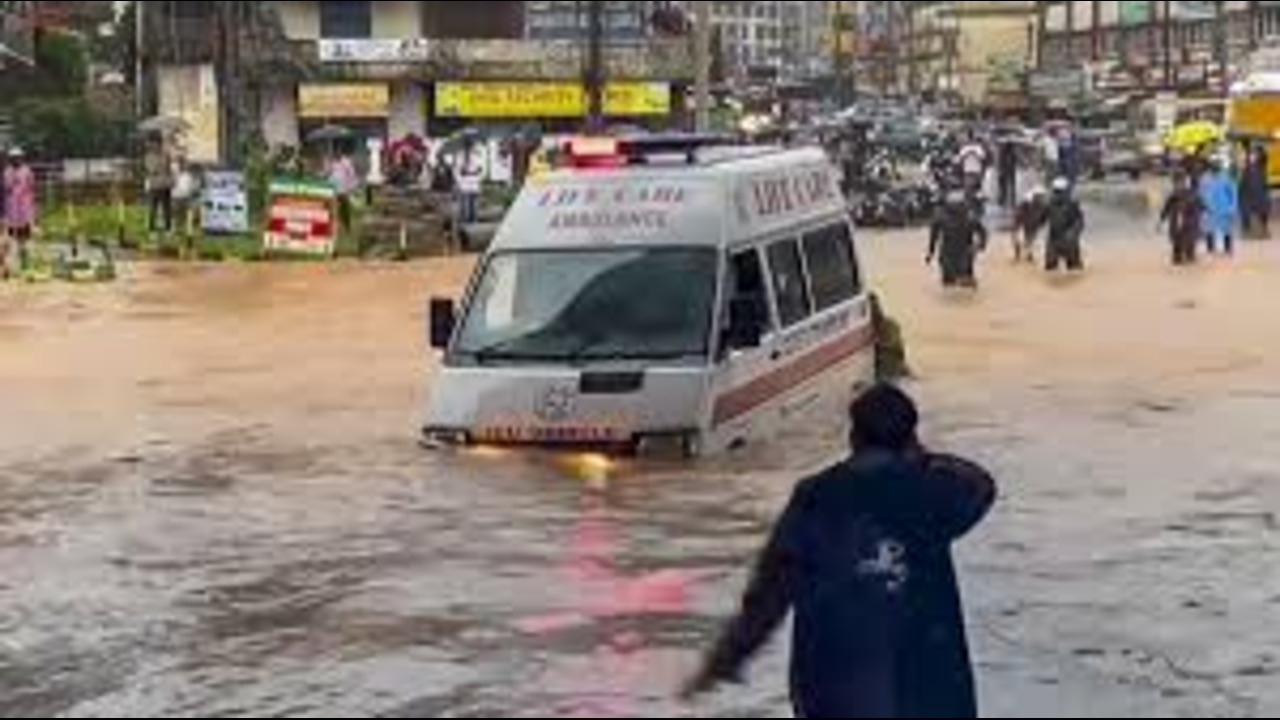


Mangaluru/Belthangady, June 15 – Torrential rains lashed Karnataka on Sunday, severely disrupting daily life across multiple districts and exposing deep-rooted issues in the state’s urban infrastructure and flood preparedness. In Belthangady taluk, a landslide near Kettikallu caused significant disruption along National Highway-169, halting vehicular movement and prompting emergency responses.
Rainfall Impact and Alerts
The India Meteorological Department (IMD) recorded intense rainfall:
- Mangaluru received 170 mm in 24 hours
- Panambur Observatory registered 210 mm
- Udupi district recorded 50 mm
Also read: Bridge Collapses In Pune, Dozens Feared Swept Away in Indrayani
An orange alert has been issued for Dakshina Kannada, Udupi, Shivamogga, Chikkamagaluru, and Kodagu, warning residents of thunderstorms and lightning in the coming days.
Urban Flooding in Mangaluru
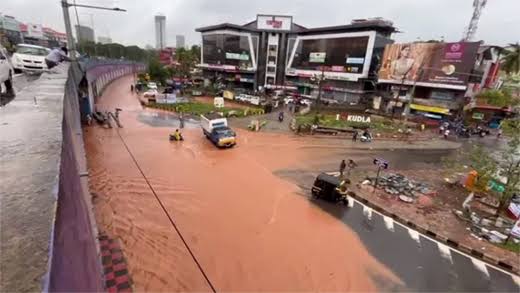
In Mangaluru city, flooding wreaked havoc in low-lying areas:
- Pumpwell, Kaikamba, Kankanady, and Bikarnakatte were among the worst-hit zones
- Rainwater entered homes and businesses, with many residents blaming outdated and ineffective drainage systems
- At Pumpwell Junction, one of the city’s busiest intersections, waterlogging brought traffic to a crawl; buses from Bengaluru were diverted through Nanthur Circle and Padil
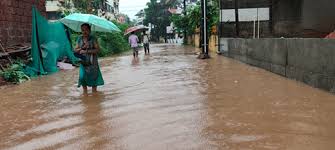
On the Jayashree Gate–Bikarnakatte stretch, roadways were submerged, further highlighting chronic infrastructure deficiencies.
Public Frustration and Emergency Response
Residents expressed frustration with the Mangaluru City Corporation (MCC) for its failure to implement lasting drainage and flood control solutions. “We raise complaints every monsoon, and the situation remains the same,” said a local shopkeeper near Kankanady.
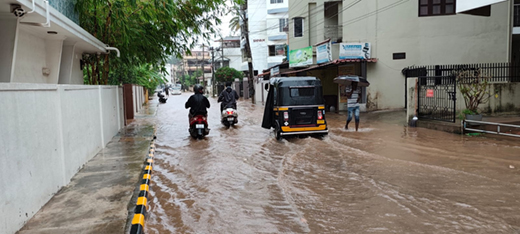
Emergency teams have now been deployed to:
- Clear clogged drains
- Monitor flood-prone areas
- Prevent additional structural damage
Authorities are also urging residents to remain indoors during intense spells and follow weather advisories.
Need for Long-Term Flood Mitigation
The repeated disruption caused by monsoon rains — year after year — has renewed calls for long-term flood mitigation strategies, including:
- Upgrading urban drainage systems
- Constructing retention basins and stormwater channels
- Developing localized flood mapping and early warning systems
Experts stress the importance of climate-resilient infrastructure planning, especially in coastal and hilly regions like Dakshina Kannada, where the risk of landslides and flash floods is high.