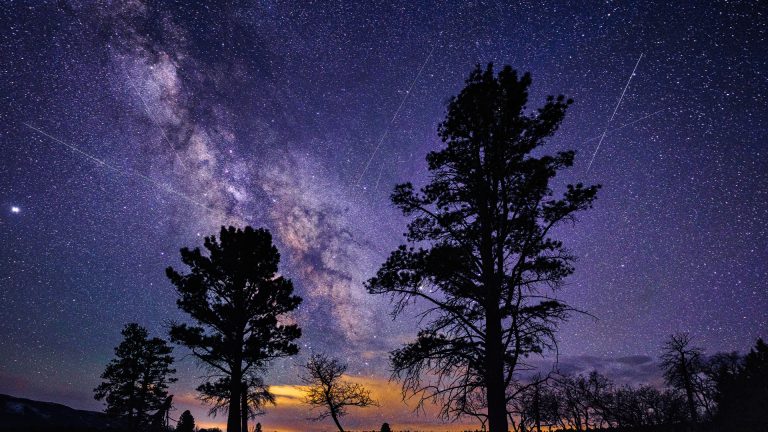
The Lyrids occur every April when Earth passes through the debris trail of Comet Thatcher. These tiny bits of rock hit our atmosphere at nearly 110,000 miles per hour, burning up and creating brilliant streaks of light. While the shower began on April 16, we are now entering the most exciting part of the event.
When to Watch: The 2026 Peak
Timing is everything when it comes to stargazing. In 2026, the Lyrids reach their peak on the night of April 21 into the early morning hours of April 22. Since today is April 22, your final chance for peak visibility is in the hours before dawn right now.
The Best Time: Between midnight and dawn.
Peak Hour: Around 2:00 AM onwards, when the “radiant” (the point where meteors seem to start) is highest in the sky.
Moon Phase: In a stroke of luck for 2026, the moon is a thin crescent that sets early. Consequently, the sky will be exceptionally dark, making it easier to spot even the faintest meteors.
Where to Look: Finding the Radiant
The shower gets its name from the constellation Lyra, specifically near the bright star Vega. While the meteors seem to pop out from this area, they can dash across any part of the sky.
In the UK: Look toward the east after midnight.
In India and South Asia: Aim for the hours just before dawn.
The “40-Degree” Rule: Experts suggest looking about 40 degrees away from Vega. This is where you are most likely to see “fireballs”—meteors that create longer, more dramatic glowing trains.
Tips for the Best Experience
You don’t need a telescope or binoculars to enjoy this show. In fact, using them is a mistake because they limit your field of view. Instead, follow these simple human-friendly tips:
Escape the City: Light pollution is the enemy of the Iranian ship and the stars alike. Find a dark-sky park or a quiet countryside spot.
Let Your Eyes Adjust: It takes about 20 to 30 minutes for your eyes to get used to the dark. Resist the urge to check your phone, as the blue light will ruin your night vision.
Lounge Back: Use a reclining chair or a blanket. The more of the sky you can see at once, the better your chances of catching a sudden burst.
Expect the Unexpected: Usually, you’ll see 10 to 20 meteors per hour. However, the Lyrids are known for “outbursts” that can occasionally produce up to 100 meteors in a single hour.
Is It Still Worth Watching?
If you missed the peak on the night of the 21st, don’t worry! The Lyrids remain active until April 25. While the number of meteors will slowly decrease each night, you can still catch a few “shooting stars” if you have clear skies and a bit of patience.