
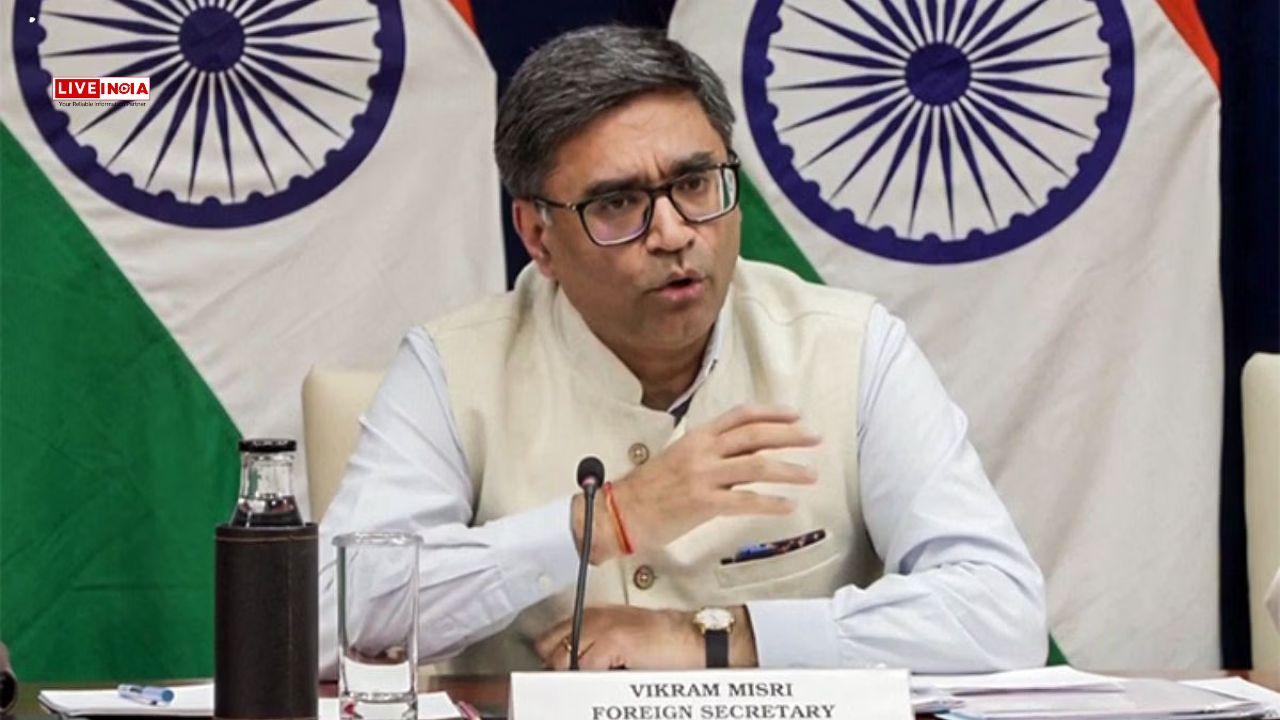


Foreign Secretary Vikram Misri says India’s decision to put the Indus Waters Treaty in abeyance stems from decades of provocation and Pakistan’s continued sponsorship of terrorism.
New Delhi, May 8, 2025:
In a firm diplomatic rebuttal to Pakistan’s criticism, India on Thursday asserted its sovereign right to suspend the Indus Waters Treaty, calling the move both lawful and overdue in light of the Pahalgam terror attack that left 26 civilians dead.
Foreign Secretary Vikram Misri, speaking during a press briefing on Operation Sindoor, said,
“The preamble of the treaty states it was concluded in a spirit of goodwill and friendship. Mark those words.”
He underscored that India’s restraint over 65 years, despite wars, provocations, and terror attacks, has been unmatched. “We honoured the treaty even when Pakistan waged multiple wars against us. But today, fundamental changes in the ground realities justify a reassessment,” Misri said.
Also Read: US Urges India To De-escalate After Pakistan’s Missile Attack, F-16 Shot Down
Why India Suspended the Indus Treaty
Misri clarified that the suspension is a direct response to Pakistan’s persistent support for cross-border terrorism and its obstruction of India’s legitimate rights under the treaty. He accused Islamabad of:
- Creating legal roadblocks to India’s hydropower projects on both Eastern and Western rivers.
- Refusing to negotiate or respond to India’s repeated diplomatic overtures to amend the treaty in line with 21st-century realities.
- Violating the spirit and letter of the treaty through indirect aggression and non-cooperation.
“This is a treaty based on 1950s engineering assumptions. We are in 2025. Climate change, clean energy, and demographic realities demand renegotiation,” Misri noted.
He also criticized Pakistan’s use of legal obstructionism to deny India the development of run-of-the-river hydroelectric projects — even on rivers India is fully entitled to under the treaty.
“Abeyance Until Terror Ends”
India has made it clear that the treaty will remain in abeyance until Pakistan irrevocably ends its support for terrorism and agrees to engage in meaningful renegotiation.
“It’s not just about water. It’s about blood — of innocent civilians,” Misri stated, referring to the April 22 terror attack in Pahalgam.
Background
The Indus Waters Treaty, signed in 1960 and brokered by the World Bank, allocates the rivers of the Indus basin between India and Pakistan. It is often hailed as a rare diplomatic success. However, India contends that Pakistan has abused the goodwill that underpins the treaty, especially by shielding and promoting terror groups operating from its soil.
Tags:
Indus Waters Treaty, Vikram Misri, Operation Sindoor, India Pakistan conflict, Pahalgam terror attack, Pakistan terrorism, Indian diplomacy, treaty suspension, Indus River, water dispute, OperationSindoor,