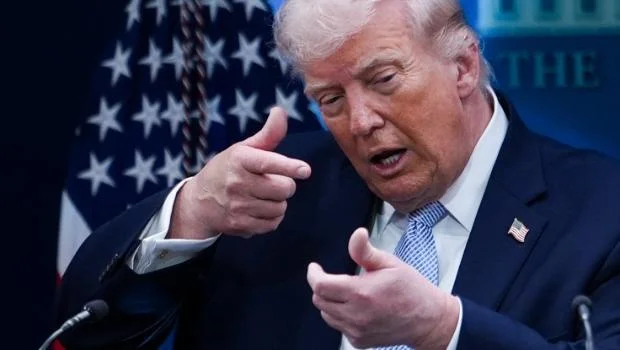
US President Donald Trump has injected a surge of optimism into global markets, claiming that military and diplomatic efforts in Iran are progressing “swimmingly.” During a high-profile event in Las Vegas, Nevada, on Thursday, Trump hinted that the war—which began in late February 2026—could “end pretty soon.”
The Road to a Breakthrough
Trump’s confidence follows a series of calculated statements over the last 48 hours. On April 15, he suggested the war was “very close to over,” and his latest remarks reinforce the idea that a significant breakthrough is being hammered out behind the scenes.
Ceasefire Status: The current ceasefire is set to expire next week. Trump has hinted that an extension may not even be necessary, suggesting he expects a permanent agreement to be reached before the deadline.
Mediation Efforts: After a stagnant first round of negotiations in Islamabad, diplomatic momentum has shifted. Back-channel discussions have reportedly narrowed differences on several key “red lines.”
The “Hormuz” Factor: The urgency for peace is underscored by the continued disruption in the Strait of Hormuz. While Trump recently claimed he was “permanently opening” the waterway, the logistical and security reality remains tense as long as the conflict persists.
The “Nuclear” Stumbling Block
Despite the President’s upbeat tone, senior officials warn that the nuclear issue remains a massive hurdle.
US Demands: Washington is insisting on the total removal of existing uranium stockpiles and a long-term suspension of enrichment activities.
Iran’s Resistance: Tehran has so far resisted these sweeping concessions, viewing them as a violation of national sovereignty.
Timeline of Recent Developments (April 2026)
US President Donald Trump has injected a surge of optimism into global markets, claiming that military and diplomatic efforts in Iran are progressing “swimmingly.” During a high-profile event in Las Vegas, Nevada, on Thursday, Trump hinted that the war—which began in late February 2026—could “end pretty soon.”
The Road to a Breakthrough
Trump’s confidence follows a series of calculated statements over the last 48 hours. On April 15, he suggested the war was “very close to over,” and his latest remarks reinforce the idea that a significant breakthrough is being hammered out behind the scenes.
Ceasefire Status: The current ceasefire is set to expire next week. Trump has hinted that an extension may not even be necessary, suggesting he expects a permanent agreement to be reached before the deadline.
Mediation Efforts: After a stagnant first round of negotiations in Islamabad, diplomatic momentum has shifted. Back-channel discussions have reportedly narrowed differences on several key “red lines.”
The “Hormuz” Factor: The urgency for peace is underscored by the continued disruption in the Strait of Hormuz. While Trump recently claimed he was “permanently opening” the waterway, the logistical and security reality remains tense as long as the conflict persists.
The “Nuclear” Stumbling Block
Despite the President’s upbeat tone, senior officials warn that the nuclear issue remains a massive hurdle.
US Demands: Washington is insisting on the total removal of existing uranium stockpiles and a long-term suspension of enrichment activities.
Iran’s Resistance: Tehran has so far resisted these sweeping concessions, viewing them as a violation of national sovereignty.
Timeline of Recent Developments (April 2026)
| Date | Event | Impact |
| April 12 | US naval blockade of Strait of Hormuz begins. | Global oil prices spike; China calls it “irresponsible.” |
| April 15 | Trump claims Xi Jinping promised no weapons for Iran. | Signals a major shift in the US-China-Iran triangle. |
| April 16 | Trump’s Las Vegas address. | Markets react positively to “end of war” rhetoric. |
| April 17 | Reports of Mojtaba Khamenei’s health crisis. | Raises questions about Iran’s internal leadership stability. |
Internal Turmoil in Tehran?
The President’s confidence may also be linked to reports emerging today regarding the health of Mojtaba Khamenei. Unconfirmed reports suggest the Supreme Leader is currently unconscious, which could be creating a power vacuum or a shift in the Iranian military’s willingness to negotiate.