
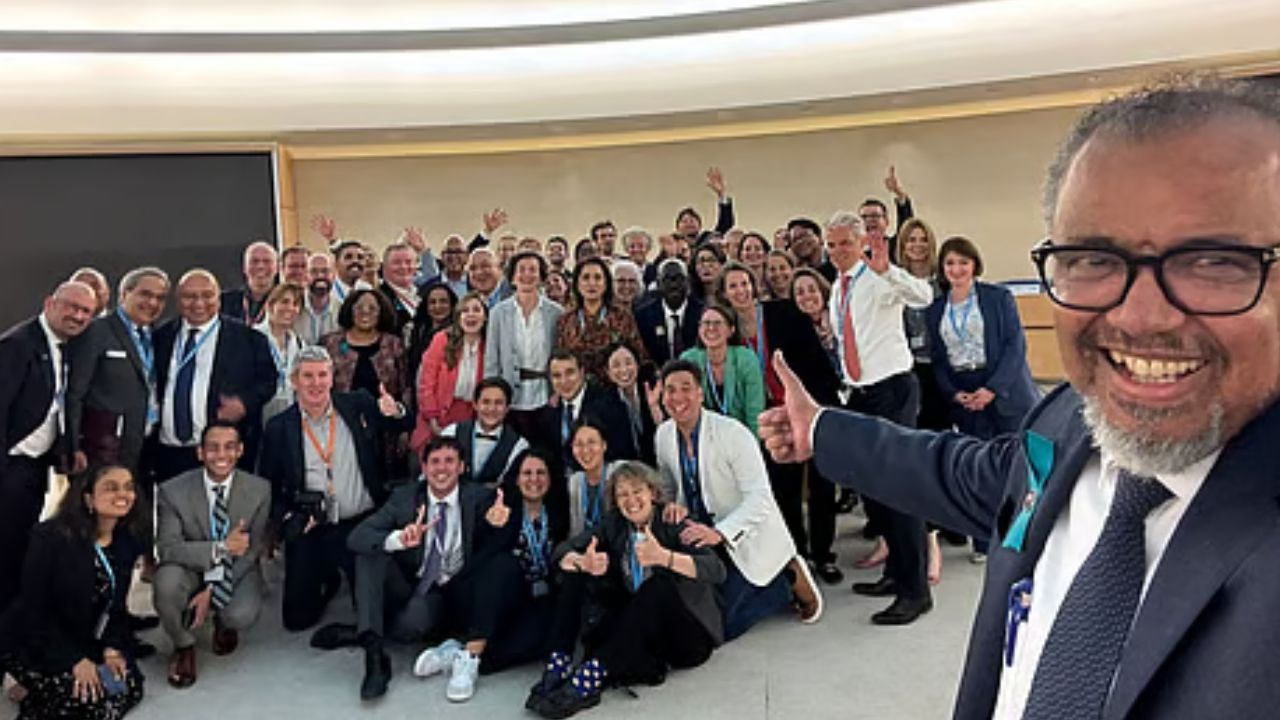


May 20, 2025: In a landmark decision aimed at fortifying global health security, Member States of the World Health Organisation (WHO) have unanimously adopted the first-ever global Pandemic Agreement at the 78th World Health Assembly.
Finalized after over three years of intense negotiations spurred by the lessons of the COVID-19 pandemic, the agreement sets out a global framework for pandemic preparedness, response, and equitable access to vital health tools—while upholding national sovereignty in public health decisions.
“The world is safer today thanks to the leadership, collaboration, and commitment of our Member States,” said WHO Director-General Dr. Tedros Adhanom Ghebreyesus. “This agreement is a victory for public health, science, and multilateral action. It ensures that we can collectively protect the world from future pandemic threats.”
Adopted unanimously in a plenary session of WHO’s highest decision-making body, the World Health Assembly, the agreement received overwhelming support in committee, with 124 countries voting in favor, none against, and 11 abstaining.
The WHO Pandemic Agreement lays out core principles and strategies for improving global coordination in critical areas such as vaccine distribution, access to diagnostics and therapeutics, surveillance systems, and emergency response. A key focus is ensuring fair and timely access to life-saving tools during health crises—particularly for low- and middle-income countries.
The agreement also firmly respects national authority in public health matters. It emphasizes that WHO will not have the power to mandate domestic laws or impose health measures such as lockdowns, travel bans, or vaccination mandates. The agreement explicitly states:”Nothing in the WHO Pandemic Agreement shall be interpreted as providing the Secretariat of the World Health Organisation, including the Director-General, any authority to direct, order, alter or otherwise prescribe the national and/or domestic law… or impose any requirements that Parties take specific actions.”
This historic accord is being hailed as a pivotal step toward building a more resilient global health system and preventing a repeat of the devastating global fallout from COVID-19.