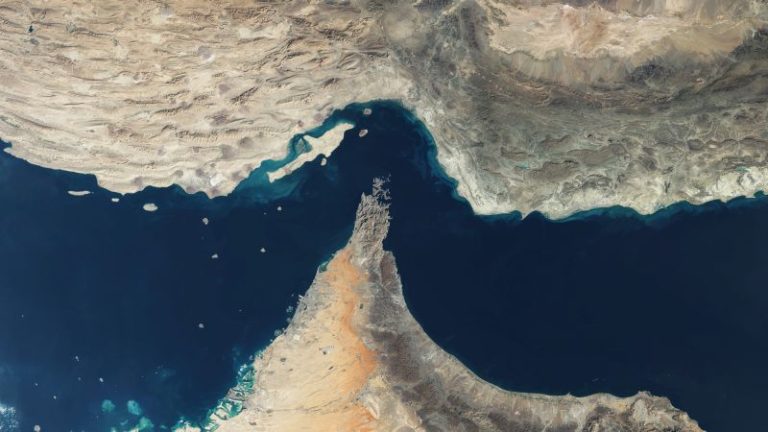
The Strait of Hormuz may appear to be just a narrow sea passage on the map, but its legal and political status has become one of the most contested issues in global geopolitics. While geographically it is clearly a strait connecting major shipping routes, the way it is governed depends heavily on differing interpretations of international law.
The disagreement stems from how the United States and Iran view the legal status of the strait — a vital maritime choke point through which nearly 20% of the world’s oil shipments pass.
Washington treats the Strait of Hormuz as an international waterway open to all ships. Tehran, however, considers it partly within its territorial waters, giving it the right to regulate passage more strictly. This difference in interpretation has fueled disputes over issues such as Iran’s toll collection on ships and US naval movements in the region.
Understanding the Law of the Sea
At the heart of the dispute is a complex framework known as the law of the sea — a set of international rules governing how oceans and waterways are used.
One of the most significant agreements in this area is the United Nations Convention on the Law of the Sea (UNCLOS). Completed in 1982 and implemented in 1994, the treaty created a global system defining maritime zones and navigation rights.
More than 170 countries and the European Union have ratified UNCLOS. However, both the United States and Iran remain outside the treaty framework — a key factor complicating the current dispute.
Iran has signed the treaty but never ratified it, while the United States has neither signed nor ratified UNCLOS. This means that the legal rules accepted by most of the world cannot automatically resolve disagreements between these two countries.
Iran’s View: “Innocent Passage” Rules Apply
Iran bases its argument on older international law standards that existed before UNCLOS. These include rulings such as the Corfu Channel case and the 1958 Territorial Seas Convention.
Under these earlier standards, foreign ships are allowed what is known as “innocent passage.” This means vessels can travel through international straits as long as they do not threaten the security of coastal nations.
According to Iran, this rule allows coastal countries such as Iran and Oman — the two nations bordering the Strait of Hormuz — to regulate navigation for safety and environmental purposes. Iran also claims the authority to determine whether a ship’s passage is “non-innocent.”
However, critics argue that Iran’s claim to suspend passage through its waters contradicts the same older legal standards it relies on, which prohibit suspending innocent passage in international straits.
The US Position: “Transit Passage” Must Be Allowed
The United States argues that the Strait of Hormuz qualifies as an international strait requiring what UNCLOS defines as “transit passage.”
This modern concept allows ships and aircraft to pass freely, provided the movement is continuous and uninterrupted. It also permits submarines to travel beneath the surface — a provision that significantly reduces coastal state control.
Although the United States has not ratified UNCLOS, it insists that transit passage rules have become customary international law — meaning they apply globally regardless of treaty membership.
To reinforce its stance, the US conducts regular naval operations through strategic waterways worldwide, including the Strait of Hormuz. These “Freedom of Navigation” missions are intended to challenge what Washington considers excessive maritime claims.
The “Persistent Objector” Argument
Iran counters the US interpretation by invoking the “persistent objector” rule — a principle allowing countries to opt out of emerging customary international laws if they consistently oppose them from the start.
Tehran maintains that it has repeatedly objected to the concept of transit passage since UNCLOS negotiations began in the 1980s. Therefore, even if transit passage is widely accepted elsewhere, Iran argues that the rule does not legally apply to it.
Legal scholars remain divided on whether transit passage has truly become customary international law, adding further uncertainty to the situation.
Why This Legal Dispute Matters Globally
The tension surrounding the Strait of Hormuz goes far beyond legal theory. It directly affects military operations, energy security, and international trade.
Every nation that sends ships through the strait — particularly oil tankers — must consider how different legal interpretations may affect navigation rights. Countries also worry about setting precedents that could weaken their own maritime claims elsewhere.
Ultimately, resolving the dispute requires more than military power or unilateral actions. Experts say stability will depend on achieving mutual agreement on shared legal rules governing the strait.
Until then, the Strait of Hormuz will remain not just a geographical chokepoint, but a legal battleground shaping global security and commerce.