
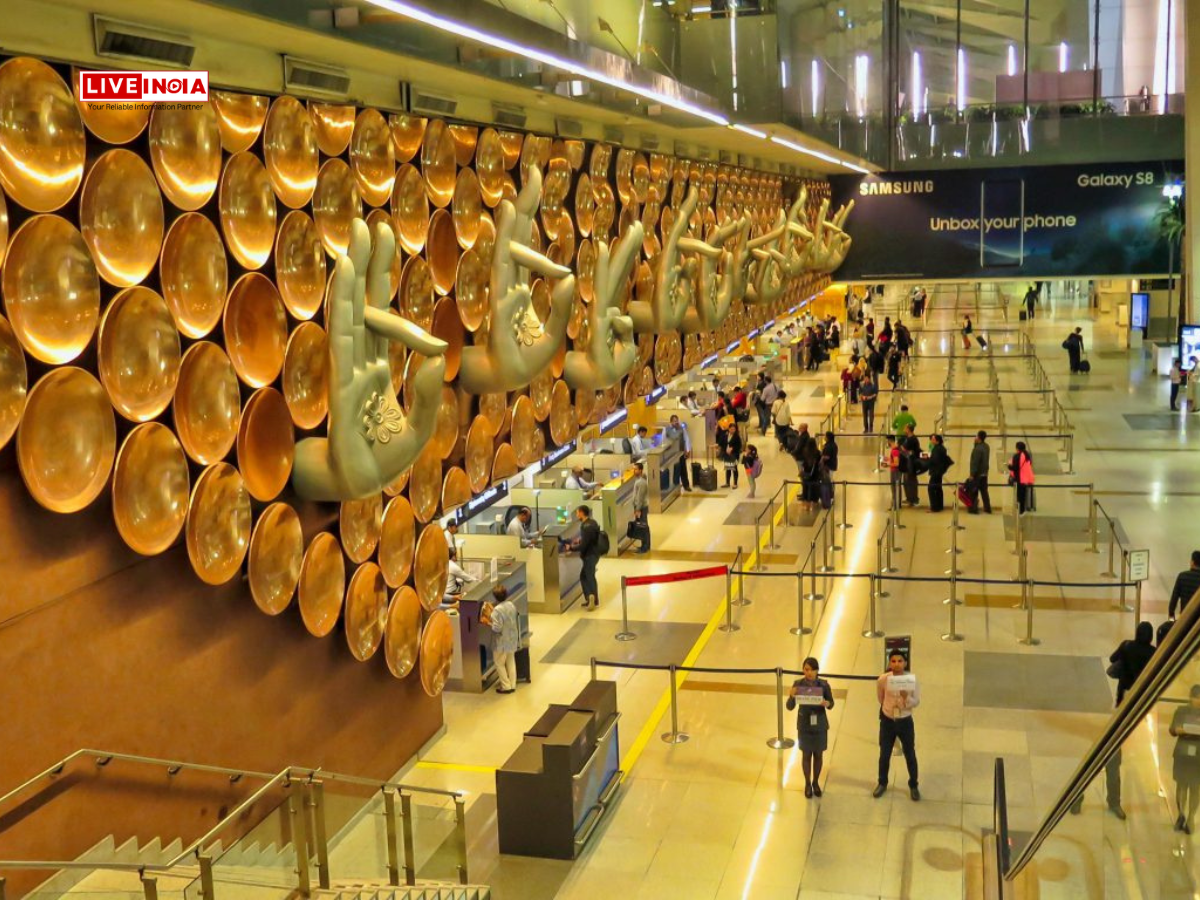


Non-aero revenues at Delhi Airport outpace aero earnings by nearly threefold, driven by retail, food, and rentals.
January 29, 2025: Delhi Airport: Where Flying Meets Shopping
Delhi’s Indira Gandhi International Airport is more than just a hub for air travel. With non-aeronautical revenues outpacing aeronautical earnings by nearly three times, it has cemented its reputation as a commercial hotspot.
GMR Airports Limited, the operator of Delhi Airport, released its financial results for Q3-FY25 and 9M-FY25 on January 28, 2025. Despite reporting a ₹49 crore loss last quarter—attributed to high finance costs and debt servicing—the airport recorded significant growth in passenger numbers and revenue.
Also Read: Sabyasachi’s Net Worth Soars by 96%: This Is How Much He Is Worth
Record-Breaking Passenger Numbers
In Q3-FY25, Delhi Airport handled over 20 million passengers, an all-time high, with an 8.3% increase in passenger traffic and an 8.1% revenue growth. From April to December, Delhi Airport accounted for 17% of India’s domestic traffic and 28% of its international traffic. With Air India’s ongoing expansion, Delhi Airport is poised to solidify its status as a regional hub.
Also Read: Mona Lisa, Viral Sensation of Mahakumbh 2025 and Rumours of ₹10 Crore Earning in 10 Days
Non-Aero Revenue Outshines Aero Earnings
For the nine months ending December 2024, Delhi Airport reported a gross income of ₹3,775.3 crore. Of this, 57%—or over half—came from non-aero activities such as retail, duty-free shopping, commercial rentals, food and beverages, and advertisements.
Key non-aero revenue contributors include:
- Retail and Duty-Free: 28% of non-aero revenue, with an average spend of ₹1,026 per passenger at Delhi Duty-Free.
- Space Rentals: 18% of non-aero revenue, bolstered by the airport’s extensive land bank development.
- Food and Beverages: 10%, with a growth of 23%—the highest among all categories.
- Cargo Operations: 14%.
In contrast, aeronautical revenues, tied to aircraft operations like landing fees and passenger security charges, accounted for just 20% of total revenue.
A Global Perspective
Globally, non-aero revenues are a key focus for airports, with major hubs like Singapore’s Changi generating 55% of their income from such sources. Delhi Airport’s 57% share is well above the global average of 40%, as reported by the ACI Airport Economics Report.
This focus on non-aero earnings aligns with the capital-intensive nature of airport operations. The additional revenue not only helps airports offset development costs but also supports the Airports Authority of India (AAI) in funding smaller airports and new developments.
Challenges of a Mall-Like Airport
However, the retail-heavy model isn’t without drawbacks. Increasing passenger complaints about congestion highlight the need for better planning and space optimization. Delhi Airport could draw inspiration from global counterparts like Singapore’s Changi and Dubai Airport, which balance expansive retail offerings with seamless passenger experiences.
As Delhi Airport evolves, it serves as a reminder of the dual role airports now play: gateways for travelers and bustling commercial hubs.
Tags: Delhi Airport, GMR Airports, Non-Aero Revenue, Retail Revenue, Duty-Free Shopping, Indian Aviation, Airport Privatisation, Passenger Traffic Growth, Mall-Like Airports, Global Aviation Trends