
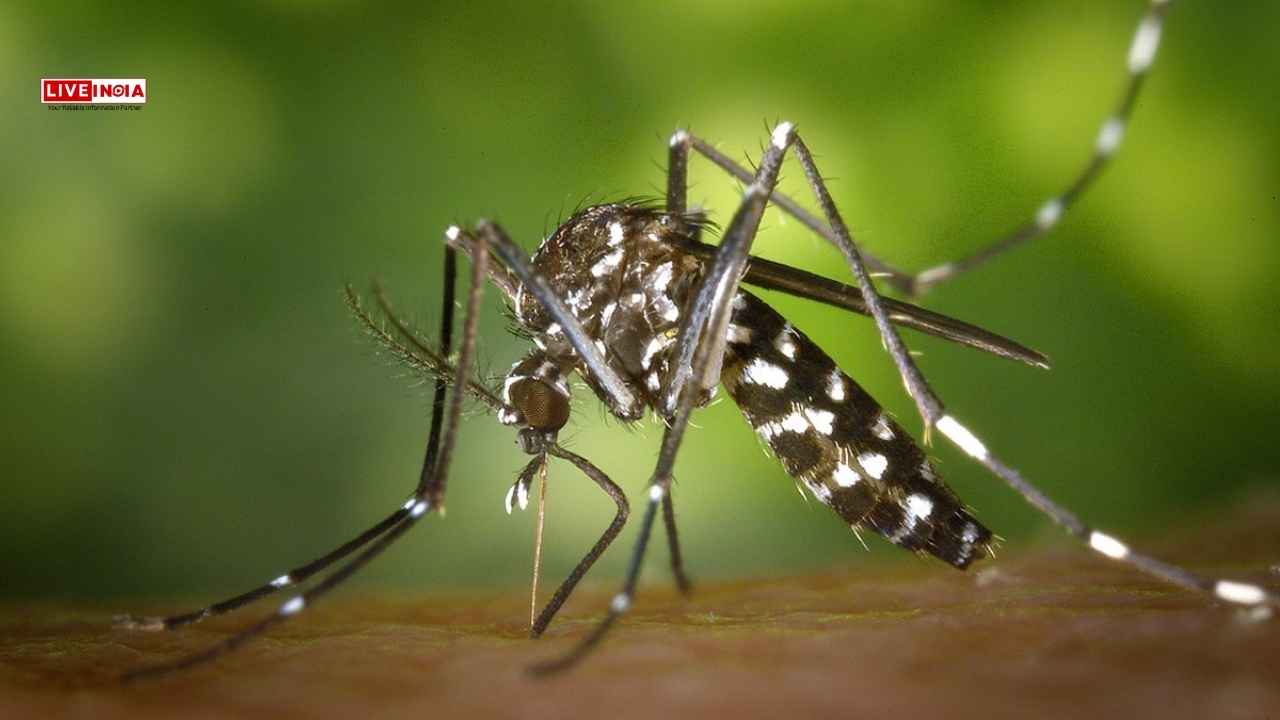


Climate change, global travel, and invasive mosquito species are fueling outbreaks across Europe — experts urge surveillance, public awareness, and tech-driven solutions
July-5, 2025: Europe is bracing for another hot, mosquito-heavy summer, and with it, the rising threat of diseases like dengue, chikungunya, West Nile virus, and Zika — illnesses historically found in tropical climates but now spreading across the continent.
According to the European Centre for Disease Prevention and Control (ECDC), 1,436 cases of West Nile virus and 304 dengue infections were recorded in Europe last year — a sharp increase from just 201 cases in the previous two years combined.
Italy alone reported 238 dengue cases, marking the largest outbreak in EU history. In 2025, France already faces seven active chikungunya outbreaks, indicating an early and aggressive mosquito season.
Also Read: Mass Evacuations Underway as Wildfire Rages Unchecked on Greek Island of Crete
🧬 The Climate-Mosquito Connection
Environmental epidemiologist Jan Semenza of Umeå University in Sweden warns that the spread of mosquito-borne diseases in Europe is accelerating — not just because of warming temperatures but also due to global travel and urbanisation.
“We’re seeing an exponential curve,” Semenza said. “Diseases that once took decades to appear after a mosquito’s arrival now surface in under five years.”
Climate change is extending the mosquito season and allowing invasive species, like the Asian tiger mosquito, to flourish in parts of Europe they never inhabited before.
The mosquito that spreads yellow fever, once eradicated in Europe, has now reappeared in Cyprus, further alarming experts.
Also Read: UK Heatwave Set to Peak at 34°C: Could Rank Among Hottest June Days Ever
📉 Global vs. European Impact
While European outbreaks remain relatively small, global numbers are staggering:
- 3+ million dengue cases reported worldwide so far in 2025
- 220,000 chikungunya cases
- 1,400+ dengue deaths and 80 chikungunya-related fatalities
Experts fear Europe is on the brink of endemic transmission if preventive measures aren’t swiftly adopted.
🛑 What Can Be Done?
Semenza and other researchers say that completely eliminating mosquitoes is unrealistic, but mitigating outbreaks is possible through:
- Enhanced surveillance at airports and transport hubs to catch incoming infections
- Rapid isolation of infected travellers before local mosquitoes can bite and spread the virus
- AI-powered citizen apps, like one in Spain, that let users submit photos of mosquitoes to identify and track invasive species
Since 2023, Spain’s programme has helped detect Asian tiger mosquitoes in 156 municipalities, allowing health officials to act before outbreaks occur.
🧍♂️ What Individuals Can Do
The ECDC urges the public to take personal precautions, including:
- Using mosquito repellents
- Wearing long sleeves and trousers, especially at dusk and dawn
- Avoiding mosquito bites for at least three weeks after returning from regions where dengue and chikungunya are common (e.g., South America, the Caribbean, Southeast Asia)
🌐 Lessons from the Global South
Experts say Europe can learn from Africa, Asia, and the Americas, where vector-borne diseases have been endemic for decades.
“In Europe, it’s seasonal,” Semenza said. “But that season is expanding — and so will the cases.”
As mosquito-borne diseases shift from imported threats to local epidemics, governments and citizens alike must act to adapt — or risk an unprecedented public health challenge.
🏷️ Tags:
Mosquito-borne diseases Europe, dengue in Italy, chikungunya France, Asian tiger mosquito, West Nile virus Europe, climate change and mosquitoes, ECDC dengue report, mosquito control apps, global health threats, mosquito surveillance Europe