
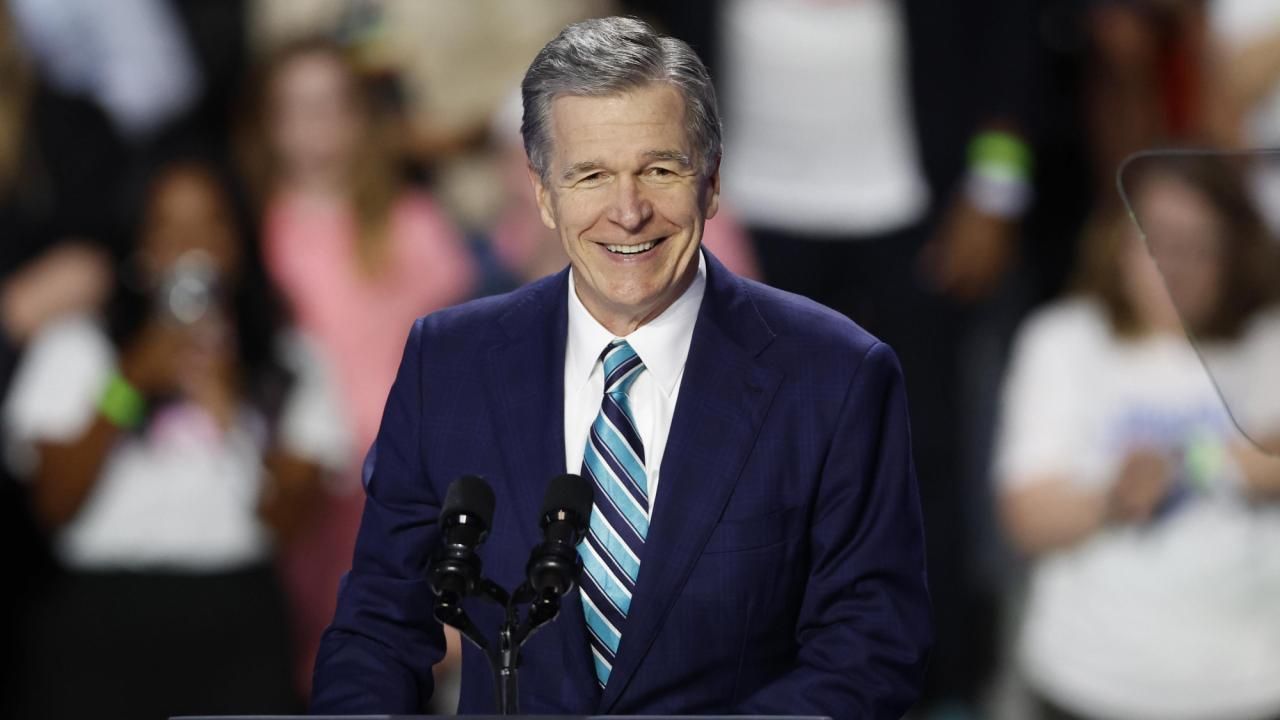


A well-known Democrat is running for an open seat after Sen. Thom Tillis decided not to run for re-election.
July 28, 2025: On Monday morning, Roy Cooper, a former Democratic governor of North Carolina, officially announced that he would compete for the U.S. Senate in 2026. He said on X, “I have thought about it and prayed about it, and I have decided: I am running to be the next U.S. Senator from North Carolina.” This announcement sets the groundwork for what is expected to be one of the most costly and widely watched Senate contests in the country.
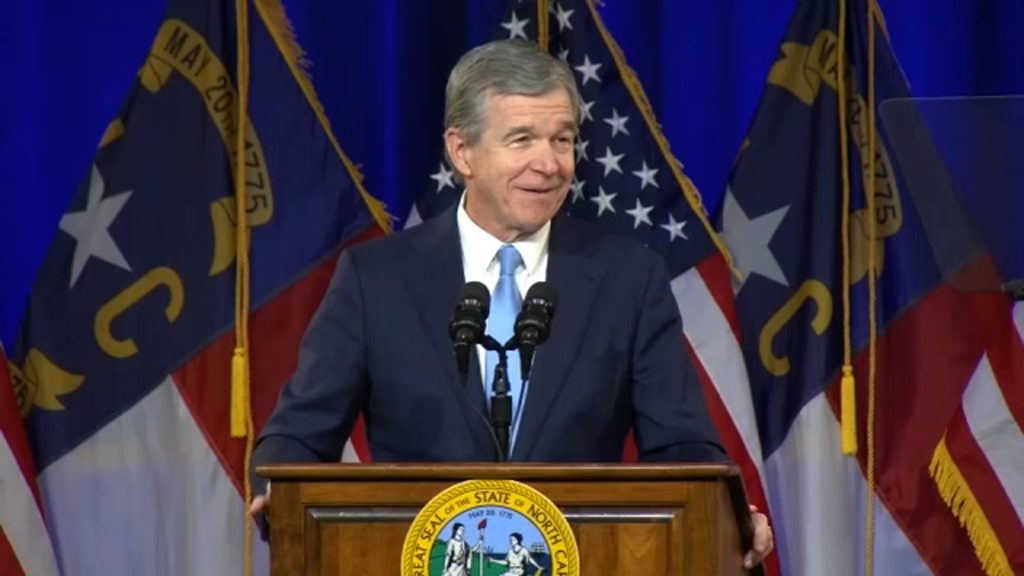
Cooper is a very popular politician in North Carolina. He will finish his eight-year tenure as governor at the end of 2024 because of term limitations. He has never lost an election in over 30 years. Before he became governor, he was a state senator and attorney general. It’s interesting to note that he won many of these races in years when Republican presidential candidates won North Carolina.
His choice comes after Republican Senator Thom Tillis said he wouldn’t run for a third term, leaving a seat open. Since Tillis left, Republicans have come together around RNC Chair Michael Whatley as their likely nominee. They want to keep their slim majority in the Senate. There was also talk of Lara Trump, the president’s daughter-in-law and a native of North Carolina, running for the Republican nomination, but she decided not to run.
The 2026 Senate race in North Carolina is likely to get a lot of national attention and a lot of campaign money, making it an important race in the fight for control of the U.S. Senate. In the past, the party that controls the White House has often lost seats in midterm elections. This is a good chance for Democrats to “flip” seats.
Cooper is running for office now, but advisers to former Vice President Kamala Harris had thought about him as a possible running partner in the past election cycle. However, he decided not to run. For a long time, Democrats about Cooper running for the Senate, but he had turned down multiple offers to do so.
Six months before Tillis’s announcement, Cooper told ABC11’s Steve Daniels in December that he would run for the Democratic primary in the 2026 U.S. Senate race. This showed that he was still interested in public service.
The voters and political scene in North Carolina:
People often call North Carolina a “purple” or “battleground” state because its voters are so different. Around 7.6 million people in North Carolina were registered to vote as of September 28, 2024. The partisan breakdown was about even:
About 2,886,573 people, or about 38% of all registered voters, are not associated with any party.
About 32% of registered voters are Democrats, or about 2,413,469.
There are roughly 2,285,377 registered Republicans, which is about 30%.
Other parties: roughly 72,300, or roughly 0.94%.
This information shows that unaffiliated voters are having a bigger and bigger impact on the state, especially among younger people. For instance, 51% of people between the ages of 18 and 25 are registered as unaffiliated, while 22% are enrolled as Republicans and 25% as Democrats. People over 41 and 66 are more likely to register as Republicans or Democrats.
Recent polls of possible matchups for the 2026 Senate campaign show that it might be a very close fight. A recent poll found that Roy Cooper and a generic Republican candidate were close, with each getting 48% of the vote and 4% not knowing. Before Thom Tillis announced his retirement, Cooper was ahead in a hypothetical contest, getting 49% of the vote to Tillis’s 31%.
The Republican Party now controls both the U.S. Senate and the U.S. House of Representatives, as well as both chambers of the state government. Democrats have, however, been successful in statewide executive campaigns. For example, in 2024, they won half of the state’s executive posts. This mix of partisan success shows how important North Carolina is as a swing state. The 2026 Senate election will be a big test for both parties.