
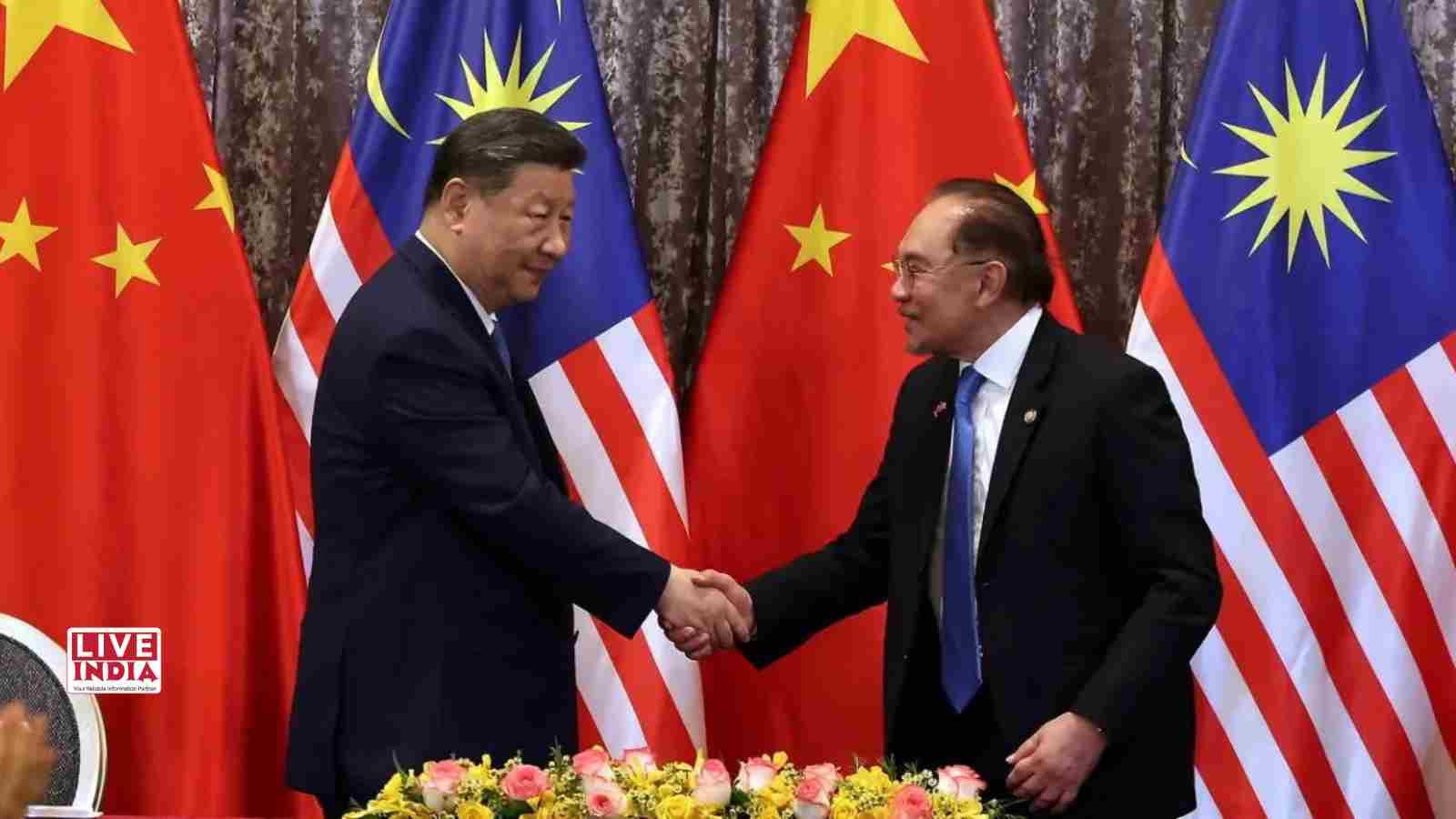


Bilateral pacts focus on AI, trade, and strategic cooperation as Xi continues Southeast Asia tour amid Beijing’s ongoing trade tensions with the US
Kuala Lumpur [Malaysia], April 17: China and Malaysia have signed 31 memoranda of understanding (MoUs) during President Xi Jinping’s State visit, marking what both nations described as a “new golden era” in bilateral relations. The agreements span key areas such as artificial intelligence, trade, global governance, and maritime security, as China looks to strengthen its ties in Southeast Asia amid escalating tensions with the United States.
The three-day visit came at the invitation of Malaysia’s King Sultan Ibrahim and was part of Xi’s broader tour of Southeast Asia, which also included Vietnam and Cambodia. The visit coincided with the 50th anniversary of diplomatic ties between Malaysia and China.
“These 31 MoUs are among the most significant achievements in our history,” said Malaysian Communications Minister Fahmi Fadzil, according to state news agency Bernama.
In a joint statement, the two nations pledged to build a high-level strategic China-Malaysia community with a shared future, aimed at accelerating modernization and promoting regional stability and prosperity. They also reaffirmed cooperation through global bodies such as the UN, WTO, WHO, and BRICS.
During his meeting with Malaysian Prime Minister Anwar Ibrahim in Putrajaya, Xi discussed expanding trade and regional security, including the sensitive issue of the South China Sea, where both countries have overlapping territorial claims.
Malaysia, currently Chair of ASEAN, plays a pivotal role in balancing regional diplomacy. Notably, US-imposed tariffs of 24% on Malaysian goods—introduced under the Trump administration—have recently been paused for 90 days, adding urgency to Malaysia’s efforts to diversify its economic partnerships.
In 2024, China-Malaysia trade reached USD 212 billion, according to Xinhua, making China Malaysia’s top trading partner for the 16th consecutive year.
Following his stop in Malaysia, Xi Jinping departed for Cambodia, where he expressed hopes for deepening cooperation through a China-Cambodia community with a shared future. In an op-ed for Cambodian media, Xi emphasized China’s role as Cambodia’s largest trading and investment partner, especially in industrial and supply chain development.
As global trade alliances shift, China’s deepening ties with Southeast Asia—through diplomacy, infrastructure, and shared political goals—signal a strategic pivot in response to ongoing pressure from Western economic blocs.