



May 12, 2025: In a powerful display of military preparedness and technological superiority, Vice Admiral AN Pramod declared on Monday that the Indian Navy is maintaining continuous and layered surveillance to degrade or neutralise any threats, particularly in response to recent aggression from Pakistan.
Speaking at a joint press conference alongside DGMO Lt Gen Rajiv Ghai and Air Marshal AK Bharti, Vice Admiral Pramod underscored the Navy’s strategic advantage during Operation Sindoor, launched on May 7. He credited India’s integrated air defence capabilities and the presence of the carrier battle group with deterring Pakistan from mounting any significant maritime threat.
“We are maintaining continuous surveillance using multiple sensors and inputs to detect, degrade, or neutralise threats as they manifest,” said Vice Admiral Pramod. “Our comprehensive layered fleet air defence mechanism effectively counters drones, high-speed missiles, and fighter or surveillance aircraft.”
The Indian Navy, he noted, operates as a composite force capable of handling threats from the air, surface, and subsurface domains. During Operation Sindoor, the Navy’s dominance in maritime zones effectively bottled up Pakistani air operations, denying them any operational freedom in the region. “Should we choose to, we can strike at will,” he added.
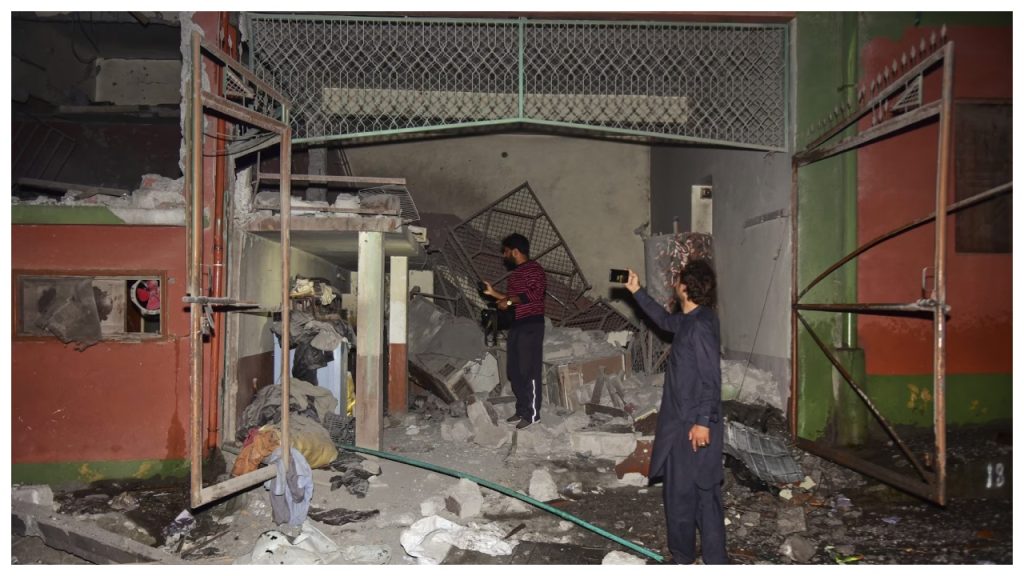
Air Marshal AK Bharti provided details on the precision and effectiveness of Operation Sindoor, which targeted nine terrorist infrastructure sites across Pakistan and Pakistan-occupied Jammu and Kashmir. The operation was launched in retaliation to the deadly April 22 terror attack in Pahalgam that claimed 26 lives.
Air Marshal Bharti emphasised that the Indian Armed Forces’ mission was focused solely on eliminating terrorist infrastructure. However, Pakistan’s military intervention on behalf of these elements forced a robust Indian response. “We made it clear—our fight is not with the Pakistani military but with the terrorists and those supporting them. Any losses they suffered were a result of their own choices,” he said.
He highlighted the seamless coordination across services and the instrumental role played by India’s Integrated Air Command and Control System (IACCS), which synchronised air defence assets from the Army, Navy, and Air Force. The Indian defence apparatus successfully intercepted and neutralised several waves of Pakistani drones and unmanned aerial vehicles (UAVs) using a combination of soft- and hard-kill technologies.
“The robust air defence grid, including indigenous systems like the Akash missile system and counter-UAV technologies, showcased our ability to defend while ensuring minimal collateral damage,” Bharti noted. He credited a decade of consistent government investment for enabling the deployment of cutting-edge, indigenous air defence capabilities.
The coordinated efforts of India’s tri-services under Operation Sindoor have underscored the nation’s defence readiness and strategic edge, sending a strong message of deterrence and operational superiority in the region.