
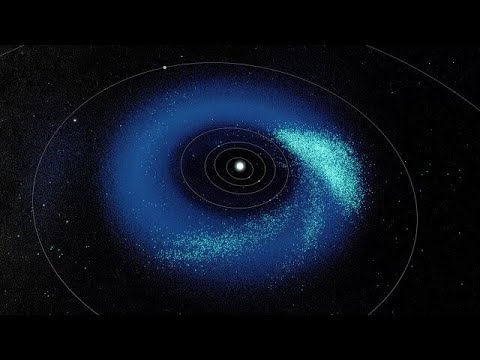


Early observations from the Vera C. Rubin Observatory have already produced groundbreaking results, with scientists discovering more than 11,000 new asteroids and refining the orbital paths of tens of thousands of previously known objects—all within just weeks of initial imaging.
These findings were achieved even before the observatory’s primary sky survey officially began, offering a promising preview of how the facility will eventually trace and catalogue millions of objects across the solar system.
Advanced Technology Powers Massive Sky Coverage
The Rubin Observatory’s remarkable capabilities stem from its powerful imaging system, which includes a 3.2-gigapixel camera paired with an 8.4-metre mirror. Together, they provide an expansive 9.6-square-degree field of view, allowing the observatory to capture vast portions of the night sky in a single observation.
This wide-angle capability enables astronomers to map the entire southern sky within just a few nights, dramatically accelerating the process of identifying and tracking celestial objects.
Experts say these early results serve as a preview of the observatory’s long-term mission to create one of the most detailed astronomical catalogues ever compiled.
Record-Breaking Asteroid Discoveries
According to an official press release, scientists working with the Rubin Observatory submitted a record number of asteroid discoveries to the Minor Planet Center during the initial observation phase.
Within the first few weeks, researchers reported:
- Over 11,000 previously unknown asteroids discovered
- Improved orbital calculations for around 80,000 known asteroids
- 33 newly identified near-Earth objects (NEOs)
- Several hundred icy bodies located beyond Neptune
These discoveries were made using roughly one million exposures, highlighting the observatory’s exceptional speed and sensitivity.
Near-Earth objects, often referred to as NEOs, are asteroids whose orbits pass relatively close to Earth, making them especially important to monitor.
Strengthening Planetary Defence Efforts
Beyond expanding scientific knowledge, the Rubin Observatory’s discoveries carry major implications for planetary defence.
The detection of 33 new near-Earth objects, none of which currently pose any threat to Earth, demonstrates how the observatory can help identify potential risks early. Accurate tracking of asteroid paths allows scientists to predict their future positions and assess whether any could pose a danger to the planet.
By adding to existing datasets, these findings also help researchers simulate how the solar system formed and evolved over billions of years.
Future Impact: A Massive Increase in Asteroid Tracking
Scientists expect the Rubin Observatory to dramatically increase the known population of asteroids over the coming years.
Current projections suggest that the observatory could:
- Triple the total number of known asteroids
- Double the number of identified large near-Earth objects
- Improve the precision of orbital calculations for countless celestial bodies
With its ability to scan wide areas of space quickly and repeatedly, the Rubin Observatory is expected to become one of the most important tools in modern astronomy.
As its main survey operations begin, astronomers anticipate an unprecedented wave of discoveries that will reshape humanity’s understanding of the solar system and strengthen global preparedness against potential asteroid threats.