
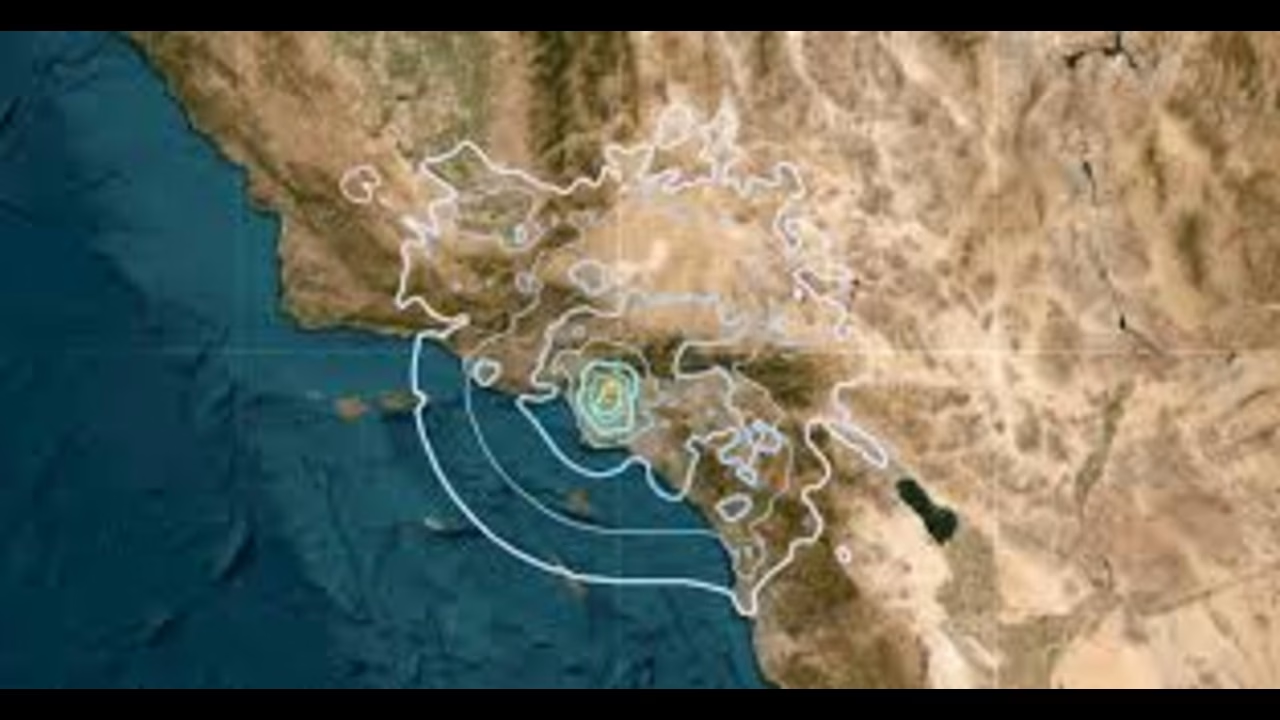


A swarm of seismic activity near San Bernardino caused shaking that was felt across a wide swath of the region, but no injuries have been reported.
SAN BERNARDINO, CA – A series of earthquakes, including a preliminary magnitude-4.4 quake, shook the San Bernardino area on Thursday morning, causing noticeable shaking that was felt throughout Southern California. The largest of the tremors occurred at approximately 9:30 a.m. local time, with its epicenter located near the communities of Muscoy and Rialto, roughly 50 miles east of Los Angeles.
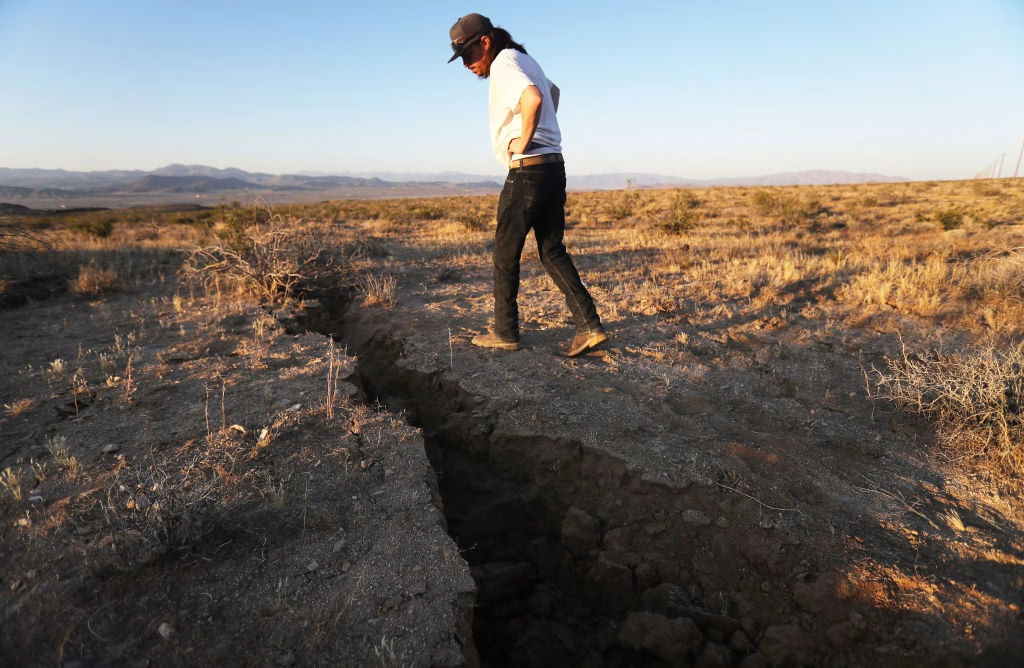
The seismic activity began earlier in the morning with an initial quake reported at 8:34 a.m. Measuring at a magnitude of 2.5 or greater, this tremor was followed by a cluster of other quakes. The most significant event, the 4.4 magnitude earthquake, was felt by residents as far west as Santa Monica, Torrance, Long Beach, and Pasadena. A magnitude-3.1 aftershock was reported just four minutes later, adding to the day’s seismic activity.
According to data from the U.S. Geological Survey (USGS), this area has experienced a significant number of earthquakes over the past few decades. Since 1990, there have been about 130 quakes of magnitude 3.0 or greater, with eight of those being magnitude 4.0 or greater. The recent cluster of quakes is part of this long-standing seismic pattern.
Seismologists explain that the intensity of shaking felt during an earthquake is dependent on three main factors: the magnitude of the quake, the distance from the epicenter, and the local soil conditions. The closer one is to the epicenter, the more intense the shaking, and softer soil can amplify the seismic waves, making the effects more pronounced.
While there have been no immediate reports of injuries or significant structural damage, the event served as a stark reminder for residents of Southern California to be prepared for future seismic events. The region sits on the Pacific Ring of Fire and is crisscrossed by numerous fault lines, including the notorious San Andreas Fault, making earthquake preparedness a constant necessity.