
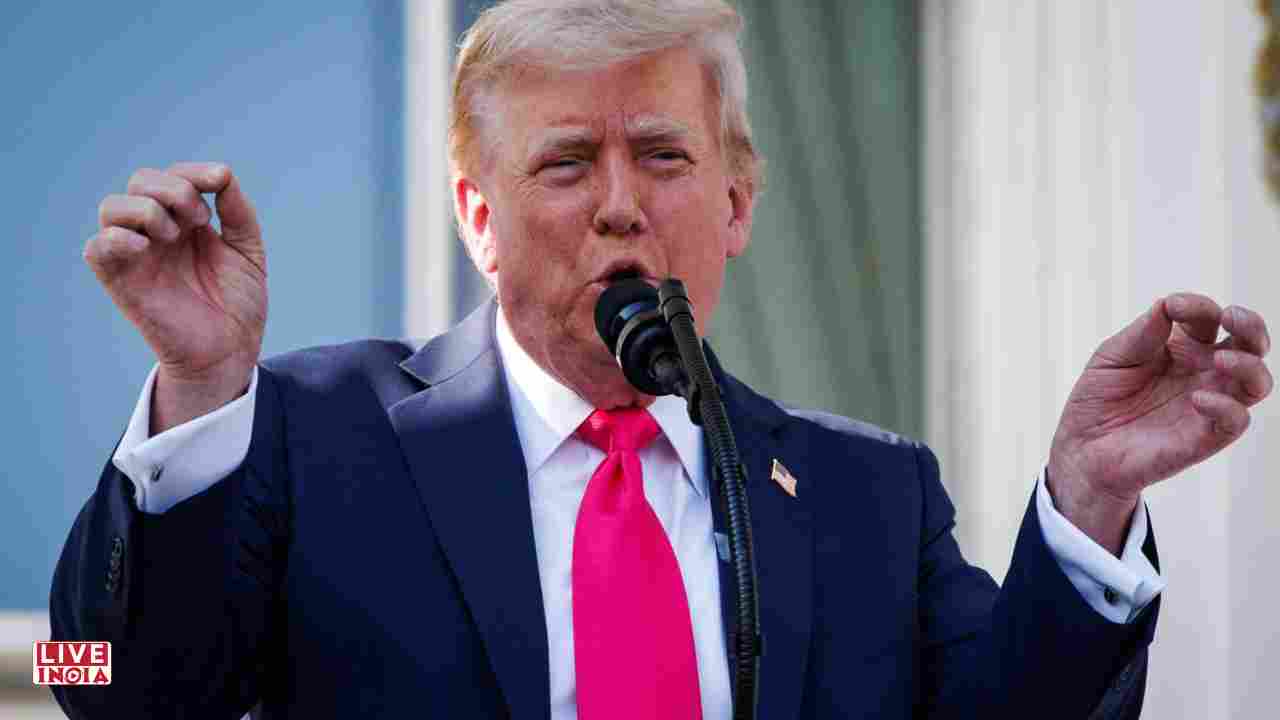


US President Donald Trump issues tariff letters to 14 countries including Japan, South Korea, Bangladesh, and South Africa, setting August 1 as deadline for new reciprocal trade rates.
Washington, DC [US], July 8: In a dramatic escalation of his protectionist trade policy, US President Donald Trump on Monday released a series of letters sent to 14 nations, notifying them of reciprocal tariffs set to take effect from August 1. The move, announced via Truth Social, marks the latest step in Trump’s aggressive campaign to renegotiate international trade terms in favor of American industry and workers. Countries facing new levies include Japan, South Korea, Malaysia, Indonesia, and Bangladesh among others, with tariffs ranging from 25% to 40%.
Trump first shared the letters addressed to Japanese Prime Minister Shigeru Ishiba and South Korean President Lee Jae-myung, each outlining a 25% tariff. Within hours, additional letters were posted targeting Malaysia, Kazakhstan, South Africa, Myanmar, Laos, Thailand, Bangladesh, Indonesia, Tunisia, Bosnia and Herzegovina, Serbia, and Cambodia.
Thailand and Cambodia will face 36% tariffs, while Bangladesh and Serbia will each see 35%. Indonesia is set to receive a 32% tariff, and Myanmar and Laos the highest—40%. South Africa and Bosnia and Herzegovina will be subject to 30%, with Tunisia, Malaysia, and Kazakhstan at 25%.
Trump’s letters explicitly warned these countries that any retaliatory tariffs against US imports would be met with an equal escalation, but also left open the possibility of tariff reductions if the respective nations revise their current trade practices to align with American interests.
White House Press Secretary Karoline Leavitt confirmed the president’s tariff strategy during a press briefing, stating that the administration aims to secure “tailor-made trade deals” with each country. She emphasized that these letters would continue to be made publicly available on Truth Social “in the effort of transparency.”
Leavitt also confirmed that President Trump had signed an executive order delaying the earlier July 9 deadline for tariff implementation to August 1, thereby giving foreign governments more time to negotiate or comply with the U.S. terms.
When asked if further nations may receive similar letters, Leavitt said, “Yes, approximately 12 other countries are receiving notifications directly from the President. We are actively engaging with every major trading partner on Earth.”
The 90-day deadline initially set by Trump in April—when he unveiled some of the highest tariffs in over a century, reaching up to 50%—was originally due to expire on July 9. However, market backlash, including a Wall Street sell-off and bond market volatility, prompted Trump to announce the three-month delay, which now ends on August 1.
Despite the controversy surrounding the tariffs, Trump’s administration insists that these measures are essential to correct decades of unfair trade practices and ensure a level playing field for American workers.
With reciprocal tariffs looming, global markets and foreign capitals are now on alert. President Trump’s message is clear—negotiate fair trade deals or face financial consequences. As the August 1 deadline approaches, all eyes are on how the targeted nations will respond to the latest chapter in the Trump administration’s hardline trade policy.