
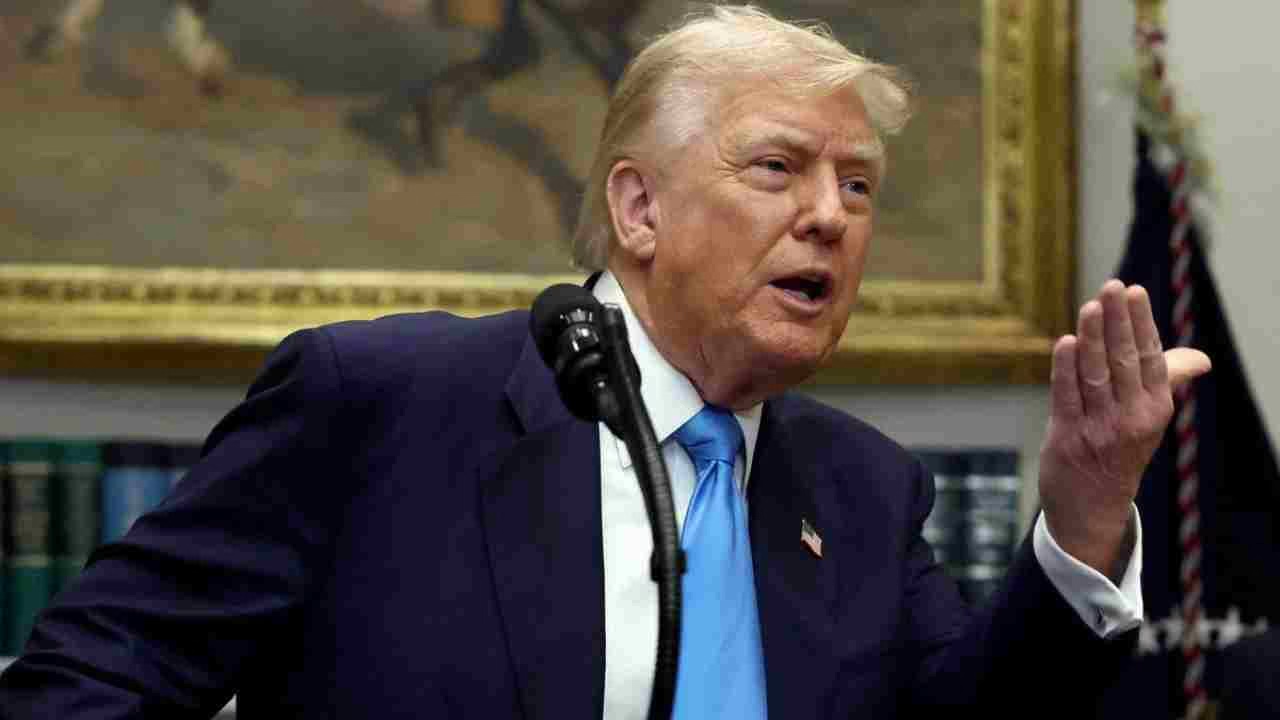


NEW DELHI, India – In a significant move that has rattled global trade, U.S. President Donald Trump has announced a 25% tariff on Indian imports, along with an unspecified additional “penalty” for India’s continued trade dealings with Russia. The new tariffs, set to take effect on Friday, August 1, 2025, were announced via a series of posts on his social media platform, Truth Social.
In one of the posts, Trump publicly criticized both India and Russia, stating, “I don’t care what India does with Russia. They can take their dead economies down together, for all I care.” He further justified the tariffs by claiming that “We have done very little business with India, their Tariffs are too high, among the highest in the world.”

The announcement comes just a day after Trump had called India a “friend” but reiterated his stance that its trade barriers were “the most strenuous and obnoxious non-monetary Trade Barriers of any Country.” This shift in rhetoric from a “friend” to a “dead economy” has been widely seen as a high-stakes pressure tactic to force concessions from New Delhi in ongoing bilateral trade negotiations.
The Indian government has responded with a measured, yet firm, stance. India’s Commerce and Industry Minister, Piyush Goyal, addressed the Parliament, stating that the government is “studying the implications” of Trump’s announcement and remains “dedicated to securing a fair trade deal” while prioritizing national interests. In a direct response to Trump’s “dead economies” remark, Goyal highlighted India’s robust economic performance, noting its rise from a “Fragile Five” economy to the world’s fifth-largest, and its status as the fastest-growing major economy.
The new tariffs are expected to have a significant impact on India’s export-oriented industries, particularly labor-intensive sectors. Experts and industry groups, including the Federation of Indian Export Organisations (FIEO), have warned that the 25% tariff could make Indian goods uncompetitive in the U.S. market against rivals from countries like Vietnam and China. Sectors such as textiles, gems and jewelry, and footwear are particularly vulnerable. The rupee’s value has already been volatile in the wake of the announcement, and some economists have warned that the tariffs could shave off up to 30 basis points from India’s GDP growth.
Despite this escalation, both sides have indicated that trade talks will continue. A U.S. trade delegation is still scheduled to visit New Delhi in late August for the sixth round of negotiations on a bilateral trade agreement. The final details of the “penalty” for trading with Russia have yet to be made public, adding another layer of uncertainty to the situation.