
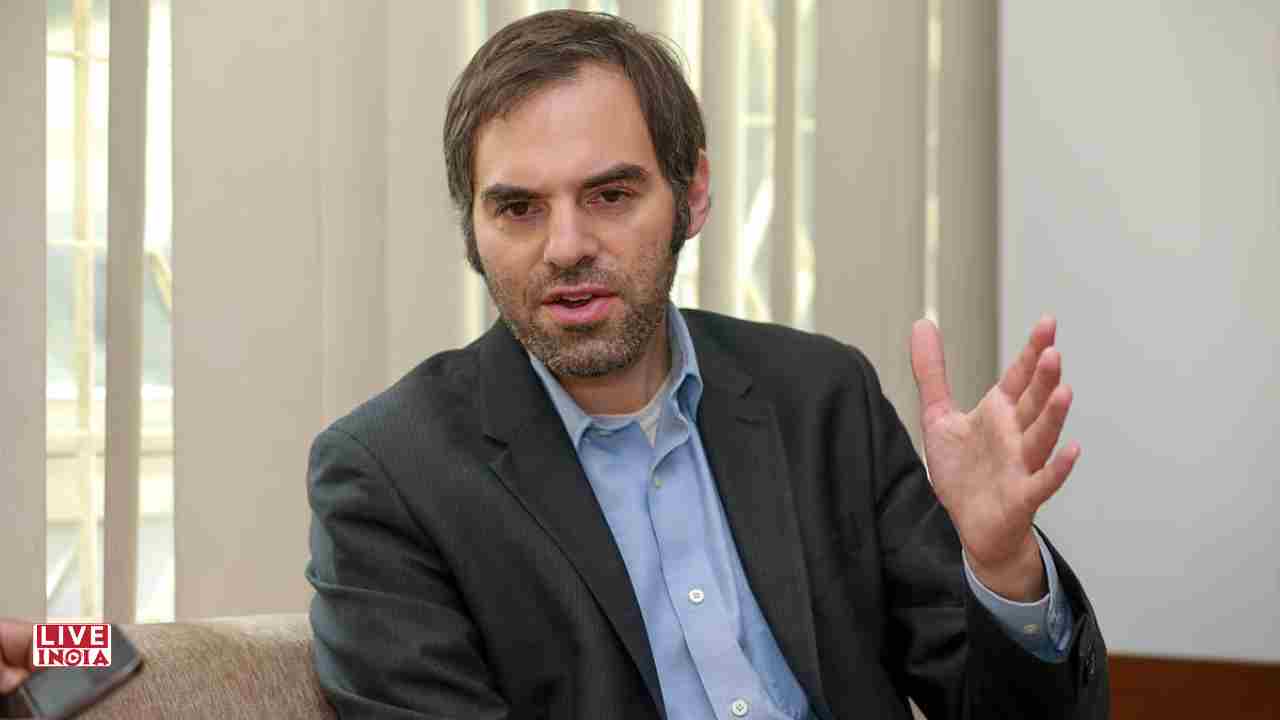


Senior analyst Michael Kugelman clarifies that Donald Trump’s claim about India aligning with China is less about geopolitics and more about his dissatisfaction with trade negotiations and New Delhi’s refusal to credit him for peace efforts.
Washington DC, September 6 – Former US President Donald Trump has sparked fresh controversy with his remark that America has “lost India and Russia to deepest, darkest China.” The comment, made on his Truth Social account, has drawn both criticism and analysis, with experts suggesting it reflects Trump’s personal frustrations rather than a genuine shift in geopolitics.
Michael Kugelman, Senior Fellow at the Asia Pacific Foundation of Canada, explained that Trump’s statement should be read as an emotional outburst, tied closely to ongoing trade disputes and diplomatic credit-seeking.
“India has not been lost to China,” Kugelman stressed. “New Delhi has been working over the last year to ease tensions with Beijing, and Trump himself has at times indicated a willingness to cooperate with China. His rhetoric is more about unhappiness – India refusing to make sweeping trade concessions, and not allowing Trump to take credit for the India-Pakistan ceasefire.”
The controversial remark came days after India, Russia, and China showcased a rare moment of unity at the Shanghai Cooperation Organisation (SCO) summit in Tianjin. In his post, Trump wrote: “Looks like we’ve lost India and Russia to deepest, darkest China. May they have a long and prosperous future together!”
The timing has fueled speculation about Trump’s motives. Over the past month, he has escalated criticism of India’s trade policies, even slapping a 50 percent tariff on Indian goods, citing New Delhi’s purchase of Russian crude oil.
Kugelman further noted a growing disconnect within the US administration. “There is a divide between Trump and his close aides, and other leaders within government departments. Much of the harsh rhetoric is coming directly from Trump and his inner circle, which doesn’t help the India-US relationship at all,” he said.
Interestingly, while Trump has been raising the pitch, Washington’s diplomatic tone has been strikingly different. On September 1, the US Embassy in India shared a message of optimism, calling the India-US bond a “defining relationship of the 21st century.” The post highlighted cooperation in defense, innovation, and people-to-people ties, reinforcing the commitment to long-term partnership.
Even US Secretary of State Marco Rubio underscored this sentiment, calling the friendship between Indians and Americans the “bedrock of cooperation.”
But Trump remains steadfast in portraying India as a difficult partner on trade. In a recent radio interview, he defended his tariff-heavy approach, saying: “China kills us with tariffs, India kills us with tariffs, Brazil kills us with tariffs. I’ve understood tariffs better than any human being in the world. India was the most highly tariffed nation in the world. They’ve offered me no tariffs now – and that’s because I used tariffs.”
He has repeatedly labeled India as America’s “most tariffed partner” and described the trade relationship as a “one-sided disaster.” Trump argues that while India benefits from large exports to the US, it has historically restricted American businesses with high tariffs.
Still, his stance has been weakened domestically. A US appeals court recently ruled that several of Trump’s tariff measures were “illegal,” further complicating his narrative.
At its core, analysts believe Trump’s latest remarks reflect more of a political tactic than a realistic assessment of global alignments. For India, the US remains a critical strategic partner, even as it balances ties with Russia and manages a tense relationship with China.