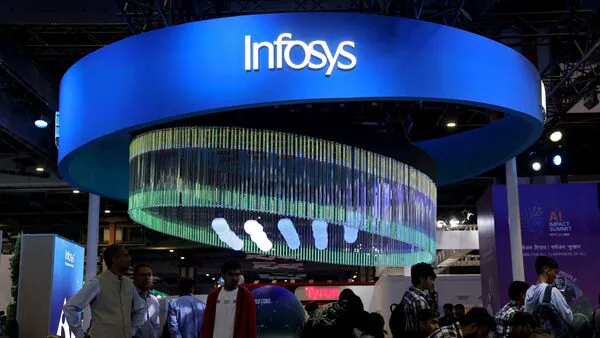
The Indian IT sector faced a grim morning on Friday, April 24, 2026, as Infosys share, the nation’s second-largest IT services exporter, saw its share price plummet 3.5% to a 52-week low of ₹1198.80.
The sell-off followed the company’s Q4 earnings announcement on Thursday, which, despite showing a robust 21% year-on-year profit increase, failed to reassure the market. Investor sentiment was primarily dampened by a conservative revenue growth guidance of 1.5% to 3.5% for FY27, signaling a cautious road ahead amidst global economic uncertainty and AI-driven shifts in the industry.
The Guidance Gap: Why the Market is Worried
While Infosys reported a consolidated net profit of ₹8,501 crore for the March quarter—beating the previous year’s figures—all eyes were on the future. The projected revenue growth for the upcoming fiscal year fell at the lower end of analyst expectations. This “muted” outlook was mirrored in the US markets, where Infosys ADRs fell 4%, reflecting deep-seated concerns over near-term growth. Experts suggest that as clients prioritize AI-led efficiencies, the “core portfolio” of traditional IT services is facing significant pricing pressure and deflation, forcing the company to pass productivity gains back to clients rather than retaining them as revenue.
Deal Economics and the “AI Deflation” Factor
A critical point raised by brokerage houses like Motilal Oswal is the shifting landscape of large-scale contracts. While Infosys secured $3.2 billion in large deal wins this quarter, there are growing signs that “deal economics” are deteriorating. Reports indicate that Infosys is increasingly walking away from certain large contracts where terms have become untenable due to extreme competitive intensity. This trend highlights a broader shift toward leaner delivery models where AI tools are reducing the manpower—and consequently the billing—required for traditional maintenance and support tasks.
Dividend Silver Lining Amidst EPS Cuts
Despite the stock’s struggle, the company remains committed to shareholder returns. Alongside the results, the board announced a final dividend of ₹25 per share, bringing the total payout for FY26 to ₹48 per share. However, the financial community remains wary; several brokerages have already trimmed their Earnings Per Share (EPS) and Profit After Tax (PAT) estimates for the next two years by 2% to 4%. As the IT giant navigates this transitionary period, the focus will remain on how it balances competitive pricing with its stated EBIT margin guidance of 20% to 22%.