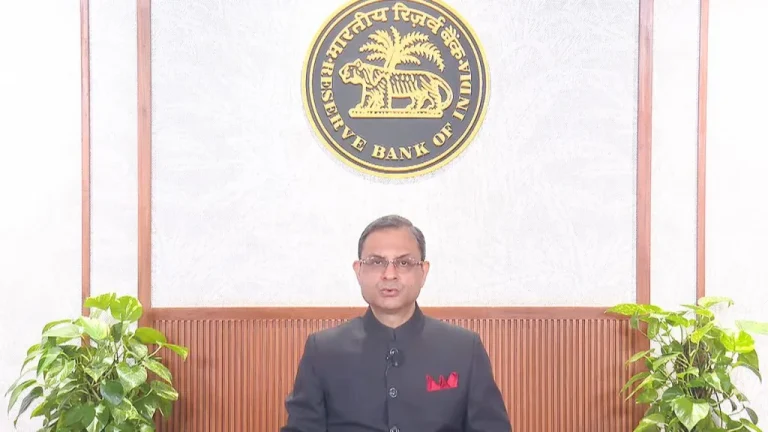
Reserve Bank of India (RBI) Governor Sanjay Malhotra has indicated that discussions around a possible interest rate hike are premature at this stage, emphasizing that the central bank will continue to closely monitor economic data before making any policy decisions.
Speaking in a recent interview, Malhotra said the Monetary Policy Committee (MPC) opted to maintain a neutral policy stance during its June meeting due to ongoing uncertainty surrounding inflation, economic growth, geopolitical developments and global market conditions.
Why The RBI Is Not Considering A Rate Hike Right Now
The governor explained that if the RBI believed a rate increase was likely in the near future, the MPC would have shifted its stance from “neutral” to “restrictive.” Since that did not happen, it signals that the central bank remains in observation mode rather than preparing for immediate monetary tightening.
Earlier this month, the MPC kept the repo rate unchanged at 5.25%. At the same time, it slightly lowered India’s FY27 growth forecast from 6.9% to 6.6% while revising inflation projections upward due to global uncertainties.
Global Uncertainty Remains The Biggest Concern
According to Malhotra, the biggest challenge facing the Indian economy over the next 12 to 18 months is global uncertainty.
Factors such as:
- Geopolitical tensions
- Supply-chain disruptions
- Energy price fluctuations
- Global trade uncertainties
- Weather-related risks
continue to create volatility in financial markets and economic forecasts.
Despite these concerns, the governor expressed confidence in India’s economic fundamentals, highlighting the country’s strong banking system, healthy macroeconomic indicators and resilient financial sector.
RBI’s Stand On The Rupee
The governor also reiterated that the RBI does not target any specific exchange rate for the Indian rupee.
Instead, the value of the currency is largely determined by market forces. The central bank intervenes only when excessive volatility threatens market stability.
This approach allows the rupee to adjust naturally to global economic developments while ensuring orderly market conditions.
Inflation Still Under Watch
While headline inflation remains below the RBI’s medium-term target of 4%, the central bank remains cautious.
Malhotra noted that:
- Headline inflation is currently below 4%
- Core inflation remains around 2.4%
- Retail inflation rose to 3.93% in May from 3.48% in April
The RBI is particularly watching whether rising fuel and energy costs begin affecting the prices of other goods and services.
At present, the central bank has not observed significant second-round inflationary effects. However, it remains prepared to act if price pressures become more widespread across the economy.
What It Means For Borrowers And Investors
For now, borrowers can take comfort in the fact that an immediate increase in interest rates appears unlikely. Home loan, vehicle loan and business borrowing costs are expected to remain stable in the near term unless inflationary pressures intensify significantly.
Investors, meanwhile, should continue monitoring inflation trends, crude oil prices, monsoon developments and global economic conditions, as these factors are likely to influence the RBI’s future policy decisions.
Bottom Line
The RBI has made it clear that it is not currently preparing for a rate hike. Instead, the central bank is adopting a cautious wait-and-watch strategy while closely tracking inflation, growth and global developments. With inflation still relatively contained and economic uncertainties persisting, policymakers appear focused on maintaining stability rather than tightening monetary conditions prematurely.