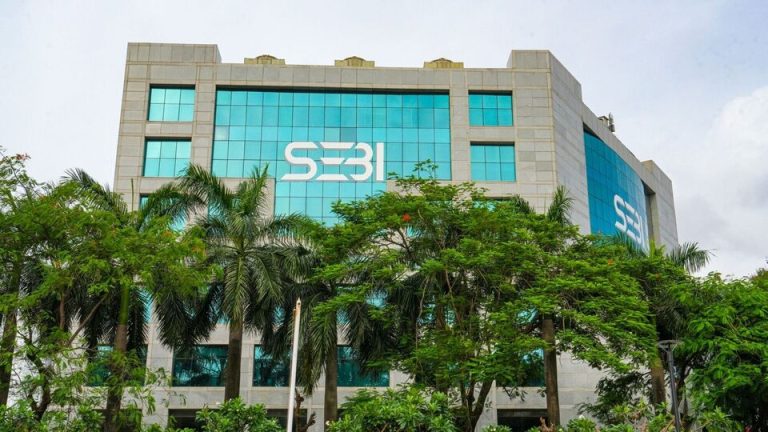
The Securities and Exchange Board of India (SEBI) has introduced a single certification examination for professionals involved in selling and distributing Mutual Funds and Specialised Investment Funds (SIFs). The move aims to simplify eligibility requirements and reduce the need for multiple certifications.
According to a circular issued on Tuesday, the new framework will make it easier for distributors to offer both investment products under one qualification.
New NISM Series V-D Certification Introduced
Under the revised rules, anyone engaged in the sale or distribution of Specialised Investment Fund products must hold a valid NISM Series V-D – Mutual Fund–Specialised Investment Fund Distributors Certification.
With this certification, distributors will become eligible to sell both Mutual Fund and SIF products. As a result, they will no longer need to obtain the separate NISM Series V-A – Mutual Fund Distributors Certification.
SEBI said the change has been introduced to streamline the certification process and make compliance easier for distributors.
Derivatives Certification Requirement To End
The market regulator has also removed another certification requirement for SIF distributors.
From September 21, 2026, distributors will no longer need the NISM Series XIII – Common Derivatives Certification to sell and distribute Specialised Investment Fund products.
However, SEBI has provided a transition period to ensure existing distributors are not affected immediately.
Existing Certificate Holders Get Transition Relief
Distributors who already hold a valid NISM Series XIII – Common Derivatives Certification on or before September 21, 2026, will not have to obtain the new Series V-D Certification until their current derivatives certificate expires.
During this transition period, they must continue to hold a valid NISM Series V-A – Mutual Fund Distributors Certification under the existing rules.
This arrangement will allow distributors enough time to switch to the new certification system without disrupting their business.
What Are Specialised Investment Funds?
SEBI introduced the Specialised Investment Fund (SIF) framework in February 2025 to bridge the gap between traditional mutual funds and Portfolio Management Services (PMS).
These investment products are designed for sophisticated investors and require a minimum investment of Rs 10 lakh.
Unlike traditional mutual funds, SIFs provide fund managers with greater flexibility. They can use hedging strategies, derivatives, and long-short investment approaches to manage portfolios and pursue returns.
SIF Assets Continue To Grow
The Specialised Investment Fund segment has witnessed strong growth in recent months.
According to SEBI, the assets under management (AUM) of SIFs rose 29% in June. The total AUM increased from Rs 13,814 crore at the end of May to Rs 17,858 crore by the end of June.
The steady rise in assets highlights growing investor interest in these advanced investment products.