



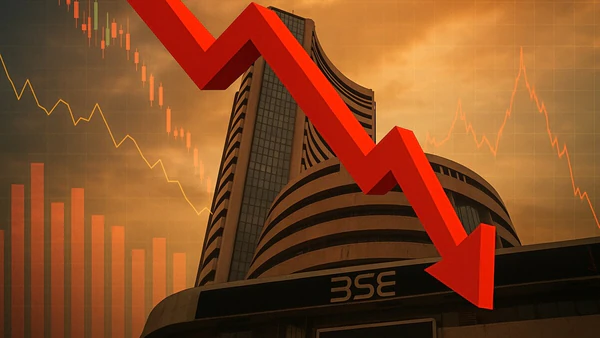
India’s stock markets suffered a sharp downturn on Tuesday, deepening a two-day selloff that has erased nearly ₹10 lakh crore in investor wealth. The S&P BSE Sensex fell over 1,000 points in two sessions, while the NSE Nifty 50 slipped 1% to breach the psychological 25,400 mark.
Experts attribute the decline to a combination of geopolitical tensions, foreign capital outflows, and pre-budget uncertainties. Global sentiment soured after US President Donald Trump threatened tariffs on eight European nations, raising concerns of a Trans-Atlantic trade war. The EU has reportedly prepared retaliatory tariffs on $108 billion of US goods if Washington imposes a 10% levy on February 1.
“The volatility is likely to continue until clarity emerges regarding the US-Europe standoff,” said V.K. Vijayakumar, chief investment strategist at Geojit Investments.
Foreign Outflows and Domestic Pressures
Adding to market stress, foreign institutional investors (FIIs) have sold over ₹29,000 crore in Indian equities so far this month, driven by a weakening rupee and uncertainty over a potential India-US trade deal. Domestically, third-quarter corporate earnings have largely disappointed, affected by the one-time impact of new labour codes.
Investors are also cautious ahead of the Union Budget 2026 on February 1. While measures to boost consumption are anticipated, concerns over fiscal consolidation potentially limiting government capital expenditure are restraining buying.
Safe-Haven Assets Surge
With risk-off sentiment prevailing, investors are moving capital into safer assets, sending gold and silver prices to record highs as equities continue to struggle.