What Is a Blue Moon and Why Is It Special?
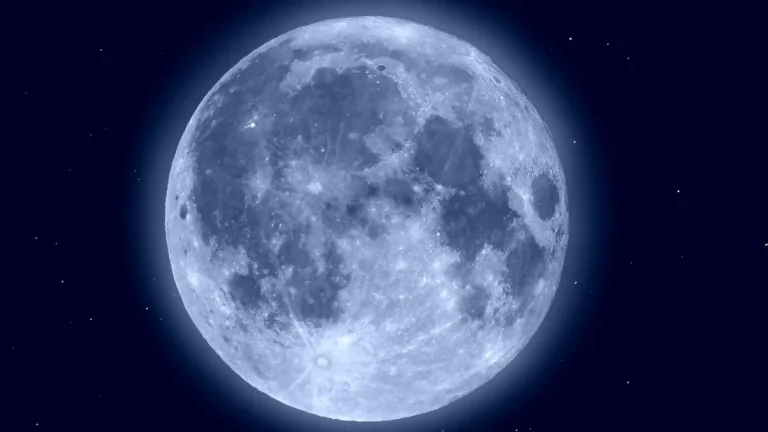
Skywatchers are in for a rare celestial event as a Blue Moon will appear on May 31. This will be the second full moon of the month, following the beautiful Flower Moon that illuminated the night sky on May 1.
A Blue Moon is an uncommon event that typically occurs only once every two or three years. Because of its rarity, the phrase “once in a blue moon” has become a popular expression used to describe something that happens very infrequently.
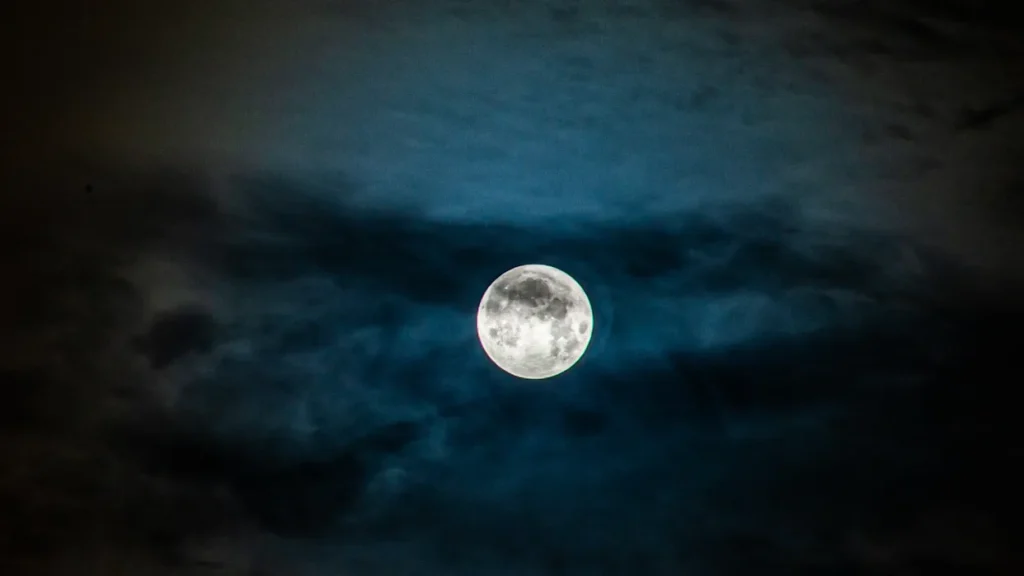
Despite its name, the moon will not actually appear blue. Instead, the term refers to the unusual timing of having two full moons within the same calendar month.
Best Time to Watch the Blue Moon
According to astronomer Catherine Pilachowski, the Blue Moon will reach its peak illumination at 4:45 a.m. ET on May 31.
Therefore, the best viewing opportunities will be during the late evening of May 30 and the early morning hours of May 31. Weather conditions and local light pollution will play an important role in determining visibility.
People looking for the clearest view should try to observe the moon from an open area away from bright city lights.
This Blue Moon Is Also a Micromoon
Adding to its uniqueness, the May 31 Blue Moon will also be classified as a Micromoon.
A micromoon occurs when the Moon reaches its full phase while being near its farthest point from Earth. As a result, it appears slightly smaller than a typical full moon.
The Moon will be approximately 252,360 miles from Earth during this event. By comparison, the average distance between Earth and the Moon is around 238,855 miles.
Because of this greater distance, the Blue Moon will appear about 6% to 7% smaller than an average full moon and roughly 12% to 14% smaller than a Supermoon.
Why Is It Called a Blue Moon?
The term “Blue Moon” is not an official scientific classification. Instead, it is a commonly used name for the second full moon occurring within a single month.
Astronomers also recognize another traditional definition. Under that system, a Blue Moon can refer to the third full moon in a season that contains four full moons.
However, the monthly definition remains the most widely used today.
Interestingly, the expression dates back centuries. Historical records suggest that the phrase originated from a 16th-century idiom describing something rare or unusual.
How Often Does a Blue Moon Occur?
Blue Moons generally occur every two to three years. Their rarity is what makes them a popular event among astronomy enthusiasts and casual observers alike.
The most recent Blue Moon occurred in August 2024. That event was particularly special because it was also a Supermoon, creating a rare combination known as a Blue Supermoon.
Such events happen only about once every decade.
When Will the Next Double Blue Moon Year Happen?
Occasionally, a single year can feature two Blue Moons. This happens when two separate months each contain two full moons.
The next time this rare calendar alignment occurs will be in 2037, when both January and March are expected to host Blue Moons.

As a result, astronomy enthusiasts may want to mark those dates well in advance.
A Rare Treat for Skywatchers
The May 31 Blue Moon offers a unique opportunity to witness one of the sky’s less common events. Although it will not appear blue, its status as both a Blue Moon and a Micromoon makes it an interesting sight for stargazers.
Furthermore, its rarity adds to the excitement. Whether viewed through a telescope, binoculars or with the naked eye, the final full moon of May is expected to be a memorable spectacle for observers around the world.