
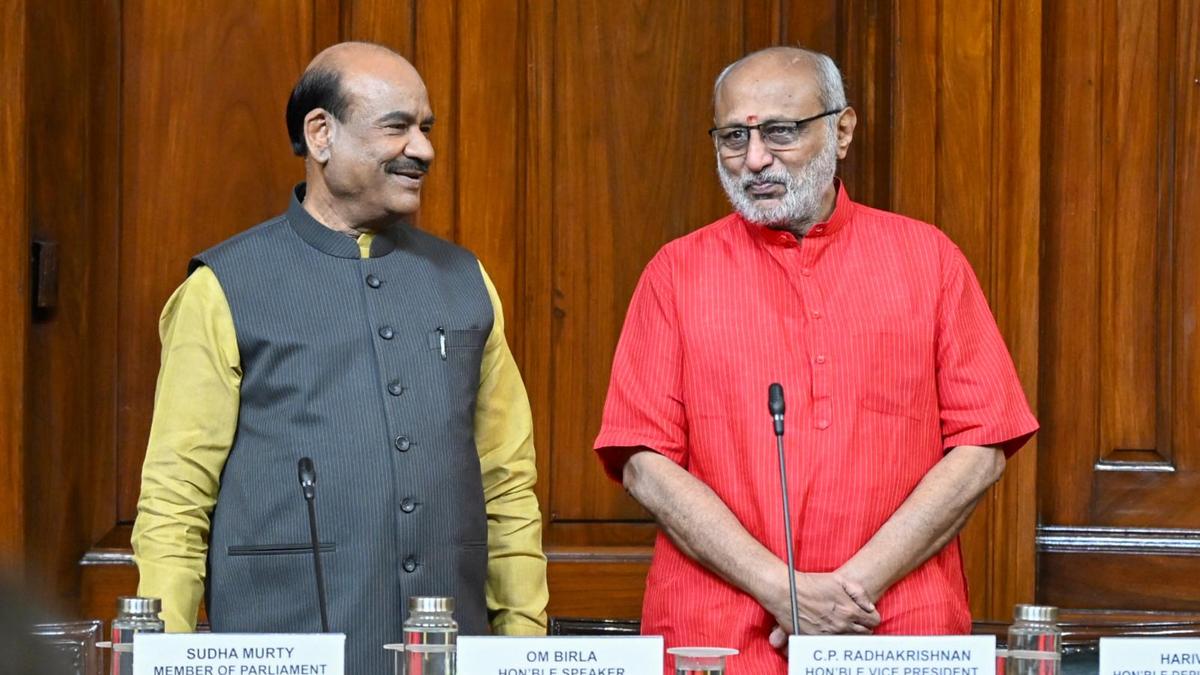


Om Birla, Speaker of the Lok Sabha, and C. P. Radhakrishnan, Chairman of the Rajya Sabha, on Monday rejected separate notices submitted by opposition parties seeking the removal of Chief Election Commissioner Gyanesh Kumar from his post.
The opposition had moved motions in both Houses of Parliament accusing the Chief Election Commissioner (CEC) of alleged misconduct, including claims of partisan functioning and obstruction of investigations related to electoral processes.
Opposition Alleged ‘Partisan Conduct’ and Electoral Irregularities
Opposition members had submitted notices to both parliamentary presiding officers alleging that the CEC engaged in “partisan and discriminatory conduct in office.” The notices also accused him of deliberately obstructing investigations into alleged electoral fraud and contributing to what they described as “mass disenfranchisement.”
These motions were filed under Article 324(5) of the Constitution of India, along with other relevant constitutional and statutory provisions governing the removal of election commissioners.
However, after reviewing the submissions, both presiding officers declined to admit the motions, effectively halting further proceedings on the matter at this stage.
Rajya Sabha Chairman Rejects Motion Signed by 63 MPs
According to an official notification issued by the Rajya Sabha Secretariat, the motion dated March 12, 2026, was signed by 63 members of the Upper House.
The statement clarified that after careful evaluation of the notice and all relevant issues involved, the Rajya Sabha Chairman exercised powers under Section 3 of the Judges (Inquiry) Act, 1968 to refuse admission of the motion.
“After due consideration of the notice of Motion and a careful and objective assessment of all relevant aspects and issues involved, the Chairman, Rajya Sabha, has refused to admit the said notice,” the notification stated.
Lok Sabha Speaker Also Refuses Motion Backed by 130 MPs
A separate notification issued by the Lok Sabha Secretariat confirmed that a similar motion dated March 12, 2026, had been submitted to the Speaker.
The notice was signed by 130 Members of Parliament from the Lok Sabha and cited provisions under Article 324(5) and Article 124(4) of the Constitution, along with Section 11(2) of the Chief Election Commissioner and Other Election Commissioners (Appointment, Conditions of Service and Term of Office) Act, 2023.
The Speaker, after reviewing the submission, also rejected the motion under Section 3 of the Judges (Inquiry) Act, 1968.
“After due consideration of the notice of Motion and a careful and objective assessment of all relevant aspects and issues involved therein, the Hon’ble Speaker has refused to admit the said notice,” the Lok Sabha notification stated.
Opposition Raised Concerns Over Electoral Roll Revision
Opposition parties have repeatedly accused the Chief Election Commissioner of favouring the ruling Bharatiya Janata Party (BJP), particularly in connection with the ongoing Special Intensive Revision (SIR) of electoral rolls.
They alleged that the revision exercise could potentially benefit the ruling party by influencing voter lists, though authorities have not accepted these claims.
The rejection of the motions is likely to intensify political debate between the ruling and opposition parties over electoral processes and institutional independence.
CEC Removal Process Similar to Impeachment of Judges
Under Indian law, the process for removing a Chief Election Commissioner is stringent and mirrors the procedure followed for removing judges of the Supreme Court or High Courts.
Such removal can only be carried out on the grounds of “proven misbehaviour or incapacity,” making it one of the most rigorous accountability mechanisms under the Constitution.
Since the presiding officers declined to admit the motions at the preliminary stage, the process will not move forward unless fresh notices are submitted with additional grounds.