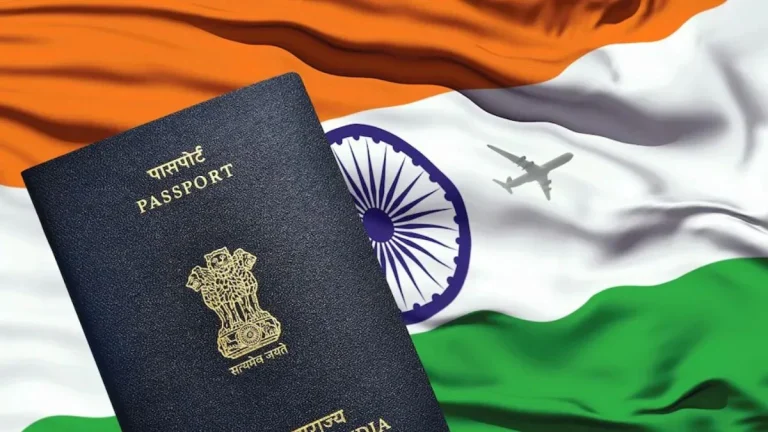
New Delhi: The Ministry of External Affairs (MEA) has clarified that an Indian passport is not a citizenship certificate but a travel document issued by the Government of India to facilitate international travel.
The clarification was made on Wednesday during the observance of the 14th Passport Seva Divas, according to multiple media reports.
The MEA explained that while a passport establishes the holder’s nationality before foreign authorities and enables international travel, it does not serve as conclusive proof of citizenship in every legal context under Indian law.
Passport Facilitates Travel, Does Not Determine Citizenship
Officials highlighted the distinction between a passport’s function as a travel document and the legal process of determining citizenship.
A passport is issued after authorities verify multiple supporting documents submitted by an applicant. These may include birth certificates, Aadhaar cards, educational certificates, residence records and other government-issued documents.
As a result, the passport is granted based on an assessment of an individual’s eligibility and nationality status rather than serving as the original or final document that establishes citizenship.
The ministry noted that citizenship in India is governed by specific legal provisions and cannot be determined solely on the basis of passport possession.
Citizenship Governed By Citizenship Act, 1955
According to the MEA, Indian citizenship is regulated by the Citizenship Act, 1955.
The law provides for citizenship through various routes, including:
- Birth
- Descent
- Registration
- Naturalisation
The determination of citizenship often depends on factors such as birth details, parental lineage and other statutory requirements.
Officials pointed out that these factors became particularly important after amendments to citizenship laws introduced in 1987 and 2004, which modified the eligibility criteria for citizenship by birth.
Supporting Documents Remain Crucial
The ministry stressed that documents relating to birth records and family lineage continue to play a critical role in establishing citizenship status under Indian law.
While a passport may indicate that the holder has been recognised as an Indian national for travel purposes, it does not replace the legal processes and documentation required for citizenship determination.
Supreme Court’s Position On Aadhaar And Voter ID
The clarification also comes amid frequent public debates over the status of various government-issued identity documents.
The Supreme Court has previously ruled that Aadhaar is an identity document and not proof of citizenship.
Similarly, a voter identity card primarily serves as proof of identity, age and residence for electoral purposes. It does not independently establish citizenship in every legal situation.
The MEA’s statement reinforces the distinction between documents that establish identity and those that determine citizenship status under law.
Indian Passports Remain Government Property
The ministry further noted that every Indian passport remains the property of the Government of India.
Under existing legal provisions, passport holders may be required to surrender their passports if directed under applicable laws.
The clarification was issued as part of Passport Seva Divas celebrations, which mark the enactment of the Passports Act and highlight efforts to improve passport-related services across the country.
The MEA reiterated that passports are intended to facilitate international mobility and establish nationality abroad, while citizenship continues to be governed by constitutional and statutory provisions under Indian law.