How the BJP Conquered the West Bengal Fortress
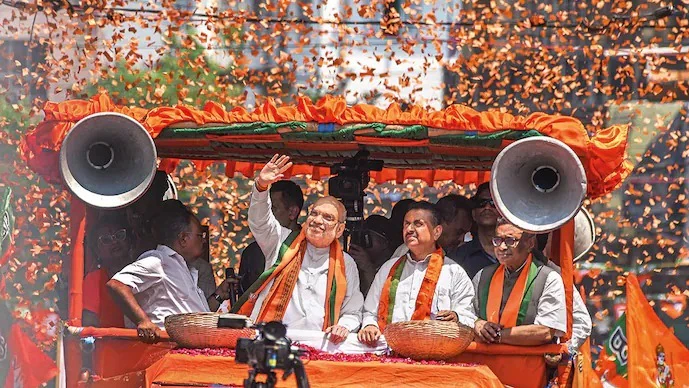
The Bharatiya Janata Party (BJP) recently secured a historic victory in the West Bengal assembly elections. Many political analysts are pointing to the sharp strategy and vast experience of Union Home Minister Amit Shah as the main reason for this success. Often called the party’s “Chanakya,” Shah acted as the primary architect behind this major win.
To ensure victory, Shah camped in Bengal for 14 days. During this time, he personally coordinated party operations and issued direct instructions to his team. Furthermore, he spent his nights holding continuous organisational meetings with state leaders to provide guidance. His days were just as busy, as he participated in at least 50 rallies and roadshows across the state.
Key Promises and Public Confidence
During his campaign, Shah made several significant announcements that resonated with the voters. He promised the implementation of the 7th Pay Commission for government employees if the BJP formed the government. Additionally, he pledged to deal strictly with “goons and infiltrators” to improve state security.
After the first phase of voting, Shah confidently stated that the BJP had already secured over 110 seats. This bold claim paved the way for even more success in the second phase. Consequently, this message gave the public great confidence in the party’s impending victory, especially in areas previously considered difficult for the BJP.
The Five Pillars of the BJP’s Victory
Beyond Shah’s leadership, five central figures played strategic roles that were essential to the final outcome. These leaders worked as a cohesive team to manage everything from social media to grassroots logistics.
- Dharmendra Pradhan: Serving as the chief strategist, he ensured smooth coordination between different communities and social groups. He acted as a vital bridge between the central leadership and the state unit.
- Bhupender Yadav: Known for his organizational skills, he focused on micro-management and mobilizing party workers at the booth level. He also successfully navigated the complex legal challenges of the election.
- Sunil Bansal: Leveraging his experience from Uttar Pradesh, he built a disciplined army of “panna pramukhs.” His focus was on creating a strong structure to counter the ruling party’s existing system.
- Biplab Deb: Drawing from his experience in Tripura, he worked in regions with similar cultural ties. He was instrumental in galvanizing local workers and encouraging an aggressive campaign style.
- Amit Malviya: As the head of the IT cell, he led the battle of narratives online. He used social media to highlight key incidents, such as the Sandeshkhali and RG Kar Medical College cases, effectively building anti-government sentiment.
Ultimately, this collective effort allowed the BJP to break into Mamata Banerjee’s stronghold and achieve a landmark result in West Bengal.