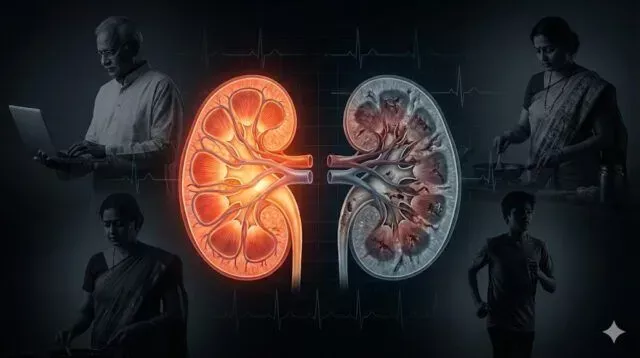
NEW DELHI — While diabetes and hypertension are well-known culprits of renal failure, a leading expert is shedding light on the “hidden threats” accelerating chronic kidney disease (CKD) across India.
Dr. Anurag Gupta, a veteran nephrologist at Sir Ganga Ram Hospital with 20 years of experience, warns that modern lifestyle factors—ranging from chronic burnout to the casual use of over-the-counter painkillers—are driving a silent surge in kidney damage that often goes undetected until it is too late.
The “Silent” Nature of Kidney Decline
Kidneys are remarkably resilient, often compensating for damage so effectively that patients feel no symptoms during the early stages. Dr. Gupta defines CKD as reduced kidney function (an eGFR of less than $60 mL/min/1.73 m²$) persisting for more than three months.
“Waste and fluid build up in the body without noticeable signs,” Dr. Gupta explained. “Many people remain unaware until significant damage has already occurred.”
Anatomy of the Human Urinary System
Stress and Burnout: A Physiological Strain
One of the most overlooked triggers is chronic stress. Dr. Gupta notes that a constant “fight or flight” state isn’t just mental; it’s a systemic assault on the body.
- Cortisol Surge: High stress increases cortisol, leading to sodium retention and fluid buildup.
- Vascular Damage: Persistent stress strains blood vessels, directly impacting the kidneys’ filtration ability.
- Behavioral Links: Stress often leads to poor sleep, dehydration, and unhealthy diets, creating a “perfect storm” for renal failure.
The Danger in the Medicine Cabinet
Dr. Gupta issued a stern warning against the indiscriminate use of Nonsteroidal Anti-inflammatory Drugs (NSAIDs). These common painkillers inhibit prostaglandins, the chemicals responsible for maintaining blood flow to the kidneys. In cases of dehydration or existing illness, these drugs can trigger acute kidney injury or long-term damage.
A Roadmap for Protection
While CKD has no permanent cure, its progression can be significantly slowed through early intervention. Dr. Gupta recommends a four-pillar approach to renal health:
- Clinical Screening: Regular blood tests for eGFR and urine tests for albumin levels.
- Addressing Hidden Threats: Proactively managing stress, improving sleep hygiene, and staying hydrated.
- Aggressive Management: Strict control of blood sugar and blood pressure while avoiding nephrotoxic medications.
- Dietary Adjustments: Reducing intake of salt, alcohol, and processed foods.
“The challenge with kidney disease lies in its silent nature,” says Dr. Gupta. “Recognizing these hidden threats early is the only way to preserve function and prevent advanced disease.”