Climate activist and education reformer Sonam Wangchuk is widely known for promoting sustainable living, and his residence in Ladakh reflects the same philosophy. Located within the Himalayan Institute of Alternatives, Ladakh (HIAL), the home combines traditional Ladakhi architecture with modern engineering to create an energy-efficient and environmentally friendly living space.
Unlike conventional homes built with concrete and steel, the house is primarily constructed using rammed earth and mud, materials that have been used for generations in Ladakh due to their excellent insulation properties. The thick earthen walls naturally keep the interiors cool during summer while retaining warmth throughout the harsh Himalayan winters.
One of the home’s standout features is its passive solar heating system. Large south-facing windows allow maximum sunlight to enter during the day, while specially designed thermal walls absorb and gradually release the stored heat after sunset. This design helps maintain indoor temperatures of around 18–20 degrees Celsius, even during freezing winter nights, without relying heavily on conventional heating systems.
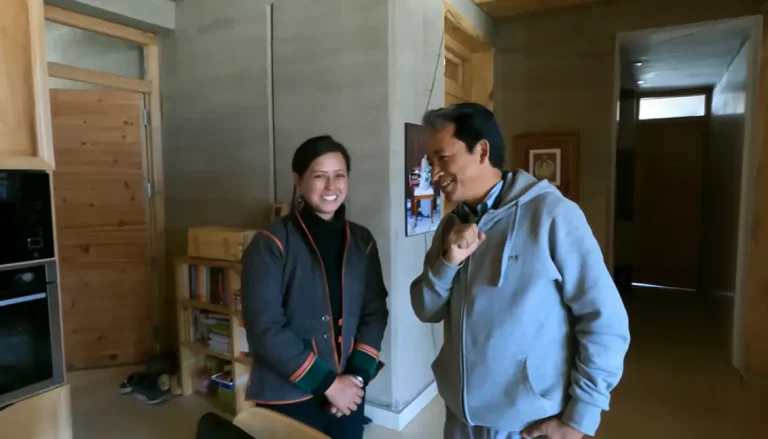
Although inspired by traditional architecture, the interiors offer modern comforts. The house features comfortable living spaces, vintage wooden furniture, a modular kitchen and a communal dining area that reflects the traditional Ladakhi way of family living. Bedrooms are equipped with attached bathrooms, showing that sustainable homes can also be comfortable and functional.
Water conservation is another key aspect of the residence. Instead of conventional flush toilets, the home uses urine-separating composting toilets, where sawdust or mud replaces water for waste management. This system significantly reduces water consumption while converting waste into nutrient-rich compost suitable for agriculture.
The surrounding property functions as a self-sustaining ecosystem. A greenhouse allows vegetables to be grown despite Ladakh’s harsh climate, while an apple orchard demonstrates how agriculture can flourish even at high altitudes. Every element of the landscape has been designed to maximise local resources and minimise environmental impact.
Ladakh’s extreme weather conditions—including freezing winters, intense sunlight, thin air and dramatic temperature variations—make energy-efficient construction particularly challenging. By combining traditional building techniques with renewable solar energy and climate-responsive design, Sonam Wangchuk’s home showcases how sustainable architecture can work in harmony with nature while reducing dependence on external energy sources.