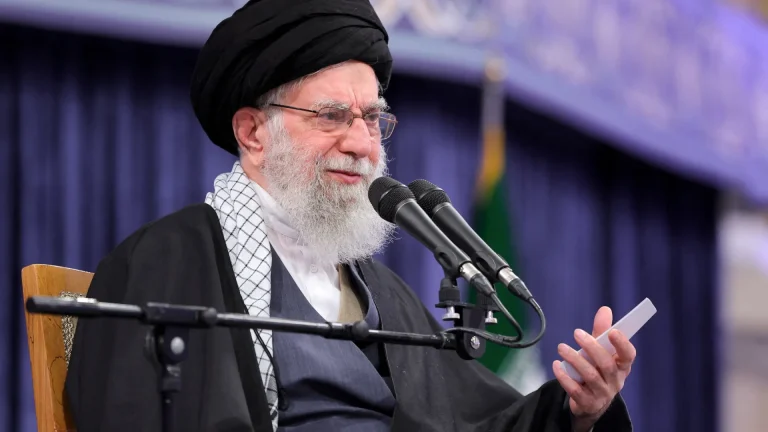
Iran has acknowledged that the security breach which enabled the assassination of former Supreme Leader Ali Khamenei has not yet been resolved, raising fresh concerns about the country’s internal intelligence and security apparatus amid the ongoing conflict in the region.
Speaking to a television channel, Iranian Foreign Minister Abbas Araghchi said the attack on Khamenei’s residence during the early phase of the conflict was made possible because those responsible had detailed knowledge of the late leader’s daily routine and the timing of high-level government meetings.
According to Araghchi, the attackers knew that Khamenei was present at his office every morning and were aware that key leadership and Intelligence Ministry meetings were taking place nearby. He said the strike was carefully timed, indicating the existence of a significant intelligence leak.
“The attack on the Leader’s office happened because of a security vulnerability, and that vulnerability probably still exists,” Araghchi said, suggesting that the source of the breach has yet to be identified or eliminated.
Recalling the events leading up to the attack, Araghchi said he had warned President Masoud Pezeshkian that the atmosphere had become increasingly tense before attending meetings with senior officials. Shortly afterwards, Israeli strikes reportedly targeted the Tehran compound where Khamenei and several senior leaders were present.
The attack resulted in the deaths of Khamenei and multiple top Iranian military commanders, dealing a significant blow to the country’s leadership structure.
Araghchi also defended Iran’s decision to continue diplomatic engagement with the United States despite expecting another round of military confrontation. He said Tehran resumed negotiations to demonstrate that it had exhausted diplomatic avenues and to avoid accusations that it had rejected dialogue.
He maintained that the country’s diplomatic efforts were aimed at safeguarding Iran’s national interests rather than protecting the reputation of any individual leader.
On Iran’s decision-making process during wartime, Araghchi reiterated that while the Supreme National Security Council assesses military and security developments, the final authority on matters of war and ceasefire rests with the Supreme Leader.
His remarks came a day after Iran announced the suspension of its ceasefire understanding with the United States, accusing Washington of violating the Islamabad Memorandum of Understanding and further escalating tensions between the two countries.