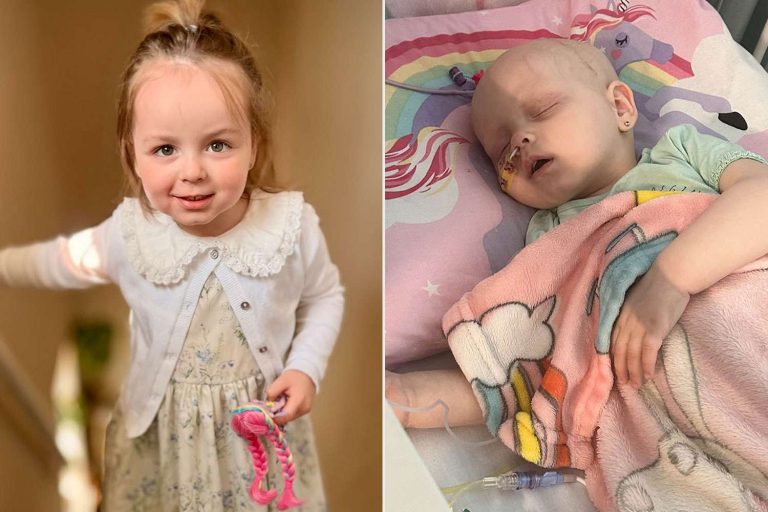
A toddler who was initially treated for tonsillitis was later diagnosed with a rare and aggressive brain tumour after her parents insisted on further testing when her symptoms worsened.
Nancy Dakin was just 12 months old when she began experiencing persistent vomiting. Her parents, Gemma and Sam, took her to an urgent care centre, where doctors diagnosed her with tonsillitis and prescribed antibiotics. However, her condition failed to improve and began to deteriorate over the following weeks.
According to a report by The Sun, Nancy later developed tremors, prompting her parents to rush her to A&E on November 6, 2023. Despite their growing concern, the family felt their worries were initially overlooked. Determined to find answers, the parents insisted on an MRI scan — a decision that ultimately revealed a life-threatening condition.
MRI Scan Revealed Large Tumour In Brain’s Frontal Lobe
The MRI scan showed a large tumour in Nancy’s left frontal lobe, located just behind her forehead. Further testing confirmed that she had a grade 3 ependymoma, a rare and aggressive type of brain cancer.
Recalling the terrifying period, Nancy’s mother described how the symptoms worsened despite medication.
“This all started with vomiting that just wouldn’t go away. We were told it was tonsillitis and given antibiotics, but nothing made a difference, and she just kept getting worse,” Gemma said.
She explained that Nancy later developed tremors in her arm and became unusually pale and lethargic.
“It felt like she was slipping away, and I knew something was seriously wrong. When we went to A&E, I felt like we were being brushed off, but I refused to leave.”
When doctors confirmed the presence of a tumour, the news left the family devastated.
“When they finally did the scan and told us they had found a tumour, it was like the ground disappeared beneath us. We were told surgery wouldn’t be possible and that we should prepare for the worst,” she added.
Emergency Transfer And Two Surgeries Gave New Hope
Nancy was transferred the same evening to the Queen’s Medical Centre in Nottingham, where doctors began emergency treatment.
She was given fluids, intravenous morphine, and steroids to reduce swelling in her brain and stabilise her condition. At the hospital, a neurosurgeon reviewed her case and informed the family that the tumour was operable — offering a ray of hope after earlier grim predictions.
Nancy subsequently underwent two major surgeries, followed by several months of chemotherapy as part of her treatment plan.
Her treatment journey concluded in January 2025, when doctors officially declared her cancer-free.
What Is Ependymoma?
Ependymoma is a rare tumour that develops in the brain or spinal cord. It originates in ependymal cells, which are responsible for producing and circulating cerebrospinal fluid — the fluid that surrounds and protects the brain and spinal cord.
Although it can occur in adults, this condition is more commonly seen in children.
Common Symptoms Of Ependymoma
Symptoms vary depending on the tumour’s location but may include:
- Persistent nausea and vomiting
- Headaches
- Dizziness
- Balance issues
- Blurred vision or vision changes
- Muscle weakness
- Seizures
- Mood changes
- Neck or back pain
- Numbness in arms or legs
- Difficulty controlling urination
Symptoms In Babies And Young Children
Young children may show different signs because they cannot communicate discomfort clearly. These include:
- Larger-than-normal head size
- Unusual irritability or fussiness
- Sleeplessness
- Frequent vomiting or spitting up
Grades And Types Of Ependymomas Explained
Ependymomas are classified into grades based on how fast they grow:
- Grade 1: Slow-growing tumours
- Grade 2: Moderately growing tumours
- Grade 3: Fast-growing, cancerous tumours
Major Types Include:
- Subependymomas (Grade 1): Develop near brain ventricles; more common in adults
- Classic Ependymomas (Grade 2): Most common type; affects both adults and children
- Myxopapillary Ependymomas (Grade 2): Usually found in the lower spinal cord
- Anaplastic Ependymomas (Grade 3): Aggressive tumours that grow quickly and may spread
Parents’ Persistence Played Crucial Role In Diagnosis
Nancy’s recovery highlights the importance of trusting parental instincts when symptoms persist or worsen despite treatment.
What began as unexplained vomiting eventually led to the discovery of a rare brain tumour — a diagnosis made possible only because her parents continued to seek answers.
Today, after surgeries and chemotherapy, Nancy is cancer-free — a remarkable outcome following months of uncertainty and fear.