
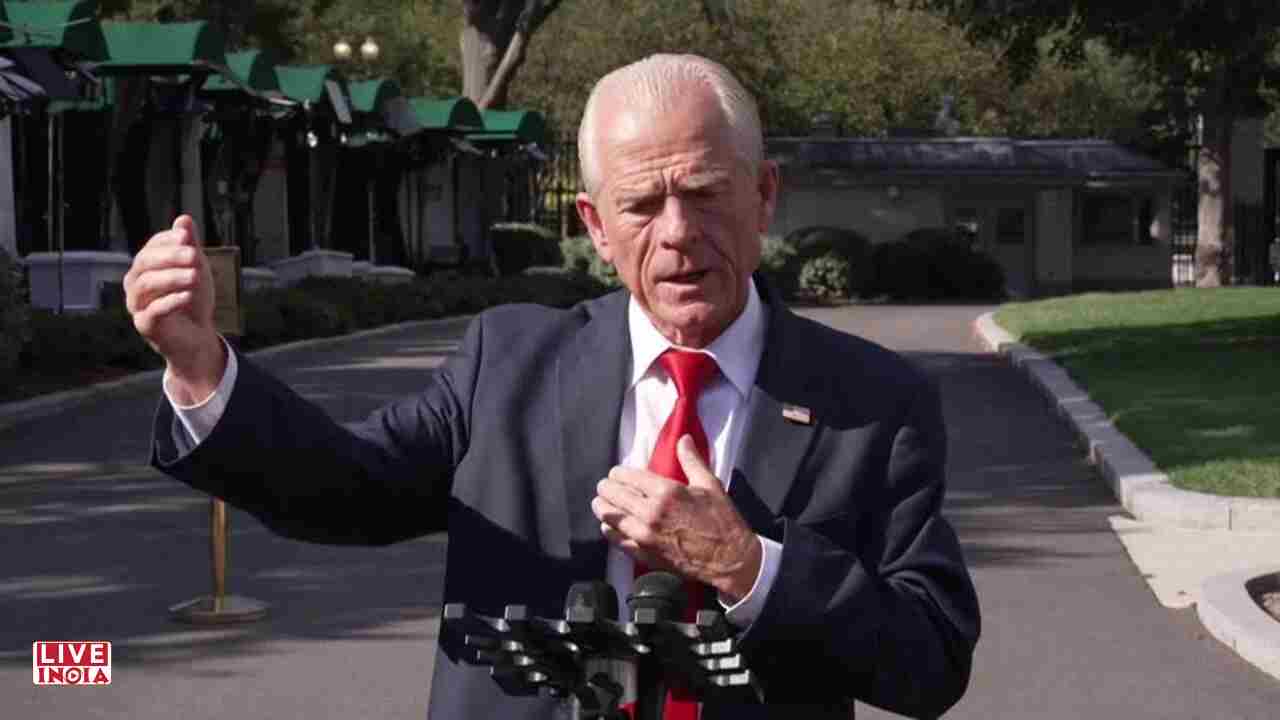


Former Trump adviser launches scathing attack on BRICS nations, calls their trade practices exploitative while India and Brazil push for global reforms
Washington DC [US], September 9 – Peter Navarro, Senior Counsellor for Trade and Manufacturing under former US President Donald Trump, has once again sparked controversy with his fiery remarks on the BRICS alliance. In an interview with Real America’s Voice on Monday, Navarro branded BRICS member nations as “vampires,” accusing them of draining the United States with “unfair trade practices.”
“The bottom line is that none of these countries can survive if they don’t sell to the United States. And when they sell to us, their exports are like vampires sucking our blood dry,” Navarro said, warning that the grouping poses a threat to American interests. He added, “I don’t see how BRICS stays together since historically they all hate each other and kill each other.”
A divisive take on BRICS unity
Navarro, known for his hardline trade positions, cited long-standing tensions within the bloc to argue its fragility. “Russia is getting into bed with China, but Beijing still claims Vladivostok and is colonizing Siberia through illegal immigration. India has been at war with China for decades, and it was China that gave Pakistan a nuclear bomb. Meanwhile, Brazil’s economy is sliding because of Lula’s socialist policies,” Navarro claimed, dismissing the future of the grouping.
BRICS pushes back with reform agenda
Navarro’s remarks came shortly after a BRICS virtual summit chaired by Brazil, where member states emphasized cooperation and reform. Representing India, External Affairs Minister S. Jaishankar stressed that BRICS must focus on stabilizing the global economy, addressing the impact of conflicts on the Global South, and pushing for reformed multilateralism.
Brazilian President Luiz Inácio Lula da Silva echoed this vision, highlighting the importance of building a “just, balanced, and inclusive international order” capable of addressing the real concerns of developing nations.
Despite Navarro’s skepticism, the grouping—which now includes eleven members: Brazil, Russia, India, China, South Africa, Saudi Arabia, Egypt, UAE, Ethiopia, Indonesia, and Iran—has positioned itself as a key voice for the Global South in shaping international policy.
The bigger picture
While Navarro dismissed BRICS as a fragile coalition with internal contradictions, the alliance is steadily expanding its influence. With growing calls for reforming international institutions and reducing dependency on Western-led systems, BRICS is emerging as a platform that could reshape global power dynamics.