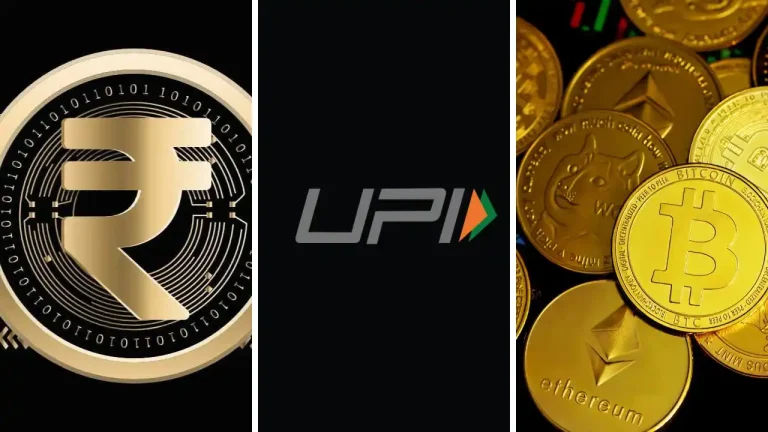
As India expands its digital payment ecosystem, understanding the difference between the Retail Digital Rupee, UPI, and cryptocurrencies becomes essential. Though all three operate in the digital financial space, they are fundamentally different in structure, ownership, and stability.
Each system serves a distinct role in modern financial transactions.
RBI Digital Rupee As Sovereign Money
The Retail Digital Rupee is issued directly by the Reserve Bank of India and acts as legal tender. It is equivalent to physical cash but exists in digital form, making it a centralised and fully government-controlled currency system.
Its value remains stable and is always equal to the Indian rupee, ensuring zero volatility.
How UPI Functions Differently
UPI, or Unified Payments Interface, is not a currency but a payment system that facilitates transfers between bank accounts. When users transact via UPI, they are moving money stored in commercial banks rather than using a separate form of currency.
This makes UPI a fast and convenient infrastructure layer rather than actual money itself.
Cryptocurrency As A Decentralised Asset
Cryptocurrencies such as Bitcoin operate independently of governments and central banks. They are decentralised digital assets whose value is determined by market demand and speculation.
Unlike the Digital Rupee, cryptocurrencies are highly volatile and are not recognised as legal tender in most jurisdictions, including India.
Key Differences In Control And Stability
The Digital Rupee is fully backed and controlled by the Reserve Bank of India, ensuring stability and trust. UPI relies on regulated banks and payment networks, while cryptocurrencies operate on decentralised blockchain systems without central authority control.
This fundamental difference shapes their use cases and risk levels.
Why The Distinction Matters For Users
Understanding these differences helps users make informed financial choices. The Digital Rupee offers stability like cash, UPI offers convenience in banking transactions, and cryptocurrencies offer speculative investment opportunities but come with higher risk.
Together, they represent three very different approaches to digital finance in today’s economy.