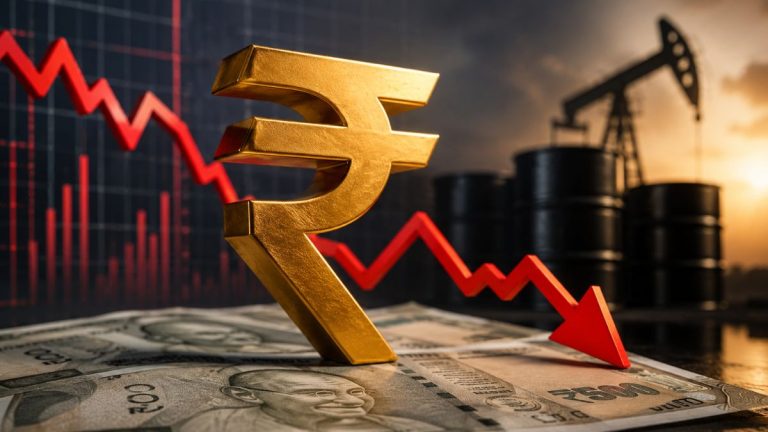
The Indian rupee extended its losing streak on Tuesday, opening at a record low of 96.85 against the US dollar before slipping further to 96.93 in early trade, as rising crude oil prices, a stronger dollar and mounting global uncertainty continued to weigh heavily on the domestic currency.
The latest decline marks the rupee’s 13th consecutive calendar-day fall, highlighting persistent pressure on emerging-market currencies amid escalating geopolitical tensions and fears of prolonged global inflation.
RBI Reportedly Steps In To Limit Rupee Weakness
According to Bloomberg reports, the Reserve Bank of India was seen selling dollars in the foreign exchange market in an attempt to slow the rupee’s depreciation.
Market participants said central bank intervention helped prevent sharper losses, though sentiment remained fragile due to sustained external pressures.
The rupee had breached the 96-per-dollar mark for the first time last Friday, and Tuesday’s fresh low has intensified concerns over imported inflation and rising costs for India’s oil-dependent economy.
Crude Oil Prices Remain A Major Concern
One of the key drivers behind the rupee’s weakness continues to be elevated global crude oil prices.
Oil prices have remained above the psychologically important $100-per-barrel level amid ongoing tensions in West Asia, particularly surrounding Iran and fears of supply disruptions. Since India imports more than 85% of its crude oil requirements, higher oil prices directly increase dollar demand from refiners, putting additional pressure on the rupee.
The surge in crude has also revived concerns about energy-driven inflation globally, complicating the outlook for central banks and financial markets.
US Bond Yields Hit Highest Levels Since 2007
Adding to the pressure on emerging-market assets, US Treasury yields have climbed sharply as investors reassess inflation and interest-rate expectations.
The yield on the 30-year US Treasury bond surged to 5.18% on Tuesday, its highest level since just before the 2007 global financial crisis. Meanwhile, the benchmark 10-year Treasury yield climbed to 4.66%, reaching a more than one-year high.
Higher US yields generally strengthen the dollar by attracting global capital into American assets, often triggering outflows from emerging markets like India.
Inflation Fears And Fiscal Concerns Shake Markets
Analysts said the spike in bond yields reflects growing investor anxiety over multiple risks, including:
- Persistent inflation in major economies
- Rising crude oil prices
- Expanding US fiscal deficits
- Geopolitical instability in West Asia
The combined effect has increased volatility across global financial markets and strengthened safe-haven demand for the US dollar.
For India, the weaker rupee could raise import costs further, especially for fuel and industrial inputs, potentially adding pressure on inflation at a time when policymakers are trying to support economic growth.
What Traders Are Watching Next
Currency traders and investors are now closely monitoring:
- Further movements in crude oil prices
- Possible additional intervention by the RBI
- Upcoming signals from the US Federal Reserve
- Geopolitical developments involving Iran and the Middle East
Any continued rise in oil prices or US bond yields could keep the rupee under pressure in the near term.