
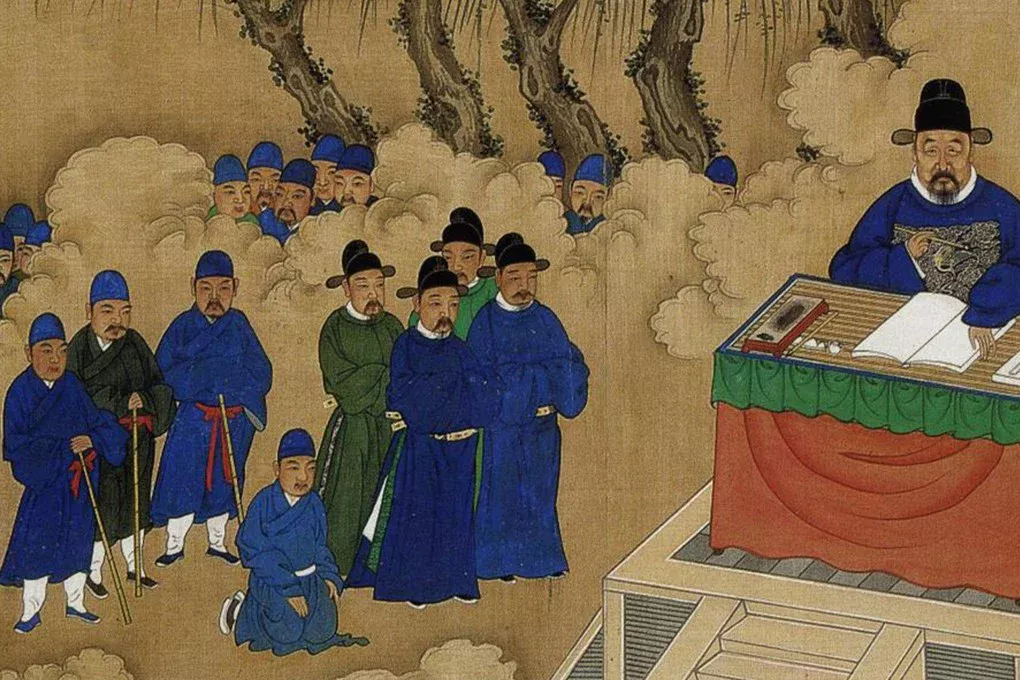


Ancient China once enforced a legal system filled with unusual and often brutal punishments that would seem shocking by modern standards. Historical accounts suggest that certain laws targeted behaviour now considered harmless, including crying in public and having untidy handwriting.
According to reports cited by the South China Morning Post, these strict laws reflected the priorities of imperial rulers, who believed discipline, obedience and loyalty to authority were essential for maintaining order across the empire.
Men Could Be Punished For Crying During The Qin Dynasty
One of the more unusual laws reportedly dates back to the Qin dynasty, when adult men could face punishment simply for crying in public.
Officials at the time viewed tears as a sign of weakness that undermined the image of masculinity and strength expected from men in society. Historical records suggest punishments included shaving off a man’s eyebrows and beard as a form of humiliation.
The punishment was designed not only to discipline individuals but also to publicly shame them.
Poor Handwriting Could Lead To Forced Ink Drinking
Another strange practice reportedly emerged during the Sui dynasty, when China’s imperial examination system was becoming more prominent.
The exams were highly important because they allowed ordinary citizens to rise into government service. However, handwriting quality was seen as a reflection of respect toward the emperor and the state.
According to historical accounts, candidates whose handwriting was considered messy or careless could be punished by being forced to drink ink.
Calligraphy held deep cultural significance in ancient China, and neat writing was often associated with discipline, education and moral character.
Punishments Were Often Severe And Public
Some punishments in imperial China were far harsher than symbolic humiliation.
Historical texts describe penalties including:
- Facial tattooing
- Amputation of body parts
- Forced labour
- Public executions
In many cases, punishments were deliberately designed to leave visible marks of shame that offenders would carry for life.
Historians say these measures reflected the highly authoritarian nature of many imperial dynasties, where strict social control was considered necessary to preserve stability and obedience.
Why These Laws Still Fascinate People Today
Experts note that such laws reveal how different ancient legal systems were from modern ideas of justice and human rights.
While many of these punishments disappeared centuries ago, stories about them continue to attract attention because they highlight the extreme methods rulers once used to enforce discipline and social order.
They also offer insight into the cultural values of imperial China, where loyalty to authority, public behaviour and social hierarchy played a central role in everyday life.