
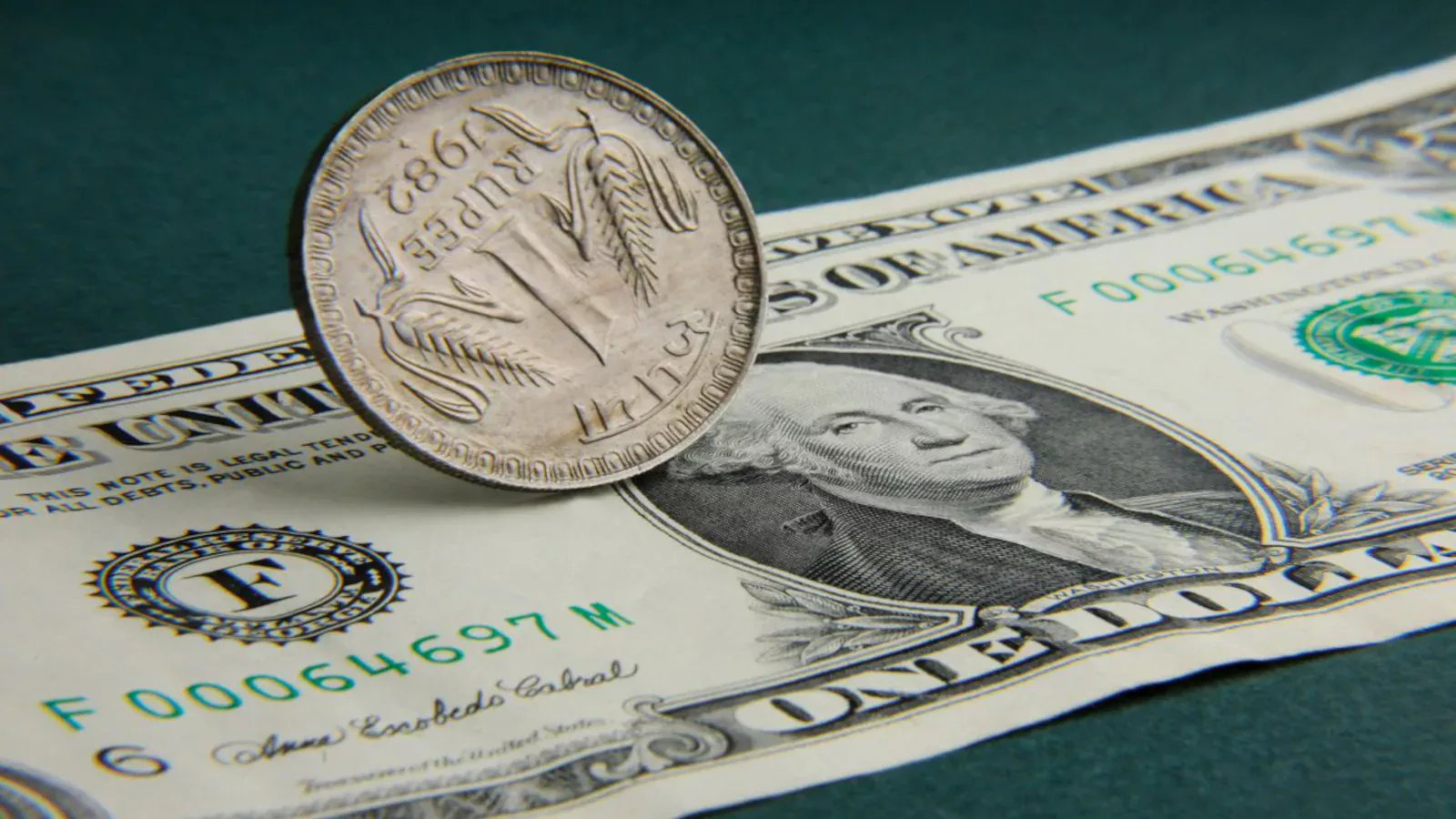


The Indian rupee strengthened for the second consecutive session on Friday, rising 21 paise to open at 96.05 against the US dollar in early trade. The recovery comes after aggressive dollar selling by the Reserve Bank of India helped stabilise the domestic currency following a sharp decline over the past several days.
The rupee had previously rebounded 50 paise from its record closing low to settle at 96.36 against the dollar in Thursday’s trading session.
RBI Intervention Helps Rupee Recover
Forex traders believe the recent recovery in the rupee has been largely driven by active intervention from the Reserve Bank of India in the currency market.
The domestic currency had fallen nearly 2.5 percent over the previous nine trading sessions and was approaching the 97-per-dollar level before the RBI reportedly stepped in through heavy pre-market dollar selling.
Market participants say the central bank’s actions helped restore confidence and reduce panic in the forex market.
Oil Prices And West Asia Tensions Remain Key Factors
Global geopolitical developments continue to heavily influence the rupee’s movement.
Traders found some relief after comments from Marco Rubio, the US Secretary of State, suggested that diplomatic discussions related to the Iran crisis were showing constructive signs. The remarks temporarily eased concerns around disruptions in the Strait of Hormuz, one of the world’s most critical oil shipping routes.
As a result, Brent crude prices cooled slightly near the USD 104 mark, reducing immediate pressure on the rupee.
However, analysts warn that geopolitical tensions in West Asia remain a major risk factor for both crude oil prices and the Indian currency.
RBI Swap Auction Boosts Market Confidence
Another important factor supporting the rupee is growing confidence around the RBI’s planned USD 5 billion buy-sell swap auction scheduled for May 26.
Currency experts believe the move could improve rupee liquidity in the banking system and strengthen the central bank’s ability to manage volatility in the foreign exchange market.
The announcement has reassured investors that the RBI remains prepared to actively intervene if global market conditions worsen further.
Dollar Index And Equity Markets Show Stability
The dollar index, which measures the strength of the US dollar against six major global currencies, remained relatively stable near 99.24 during early trade.
Meanwhile, Indian stock markets also witnessed gains. The BSE Sensex rose over 330 points in early trade, while the Nifty 50 advanced more than 80 points.
Despite the recovery in domestic markets, foreign institutional investors continued selling Indian equities, with net outflows of nearly Rs 1,900 crore recorded on Thursday.
Concerns Over India’s Current Account Deficit
The weakening rupee and rising oil prices have also increased concerns regarding India’s Current Account Deficit (CAD).
Piyush Goyal recently stated that the government is considering several measures to manage the widening trade deficit and contain pressure on the economy.
Analysts believe India’s dependence on imported crude oil makes the rupee particularly vulnerable during periods of geopolitical instability and rising global energy prices.
What Experts Expect Next
Currency experts say the rupee’s near-term direction will largely depend on geopolitical developments, crude oil prices, and further intervention measures by the RBI.
Supportive actions such as swap auctions and stabilisation in global markets could help the rupee strengthen further. However, if tensions in West Asia escalate again, pressure on the domestic currency may quickly return.
Market watchers believe a sustained move below the 94.80 level would be needed to signal a stronger long-term recovery trend for the rupee.