
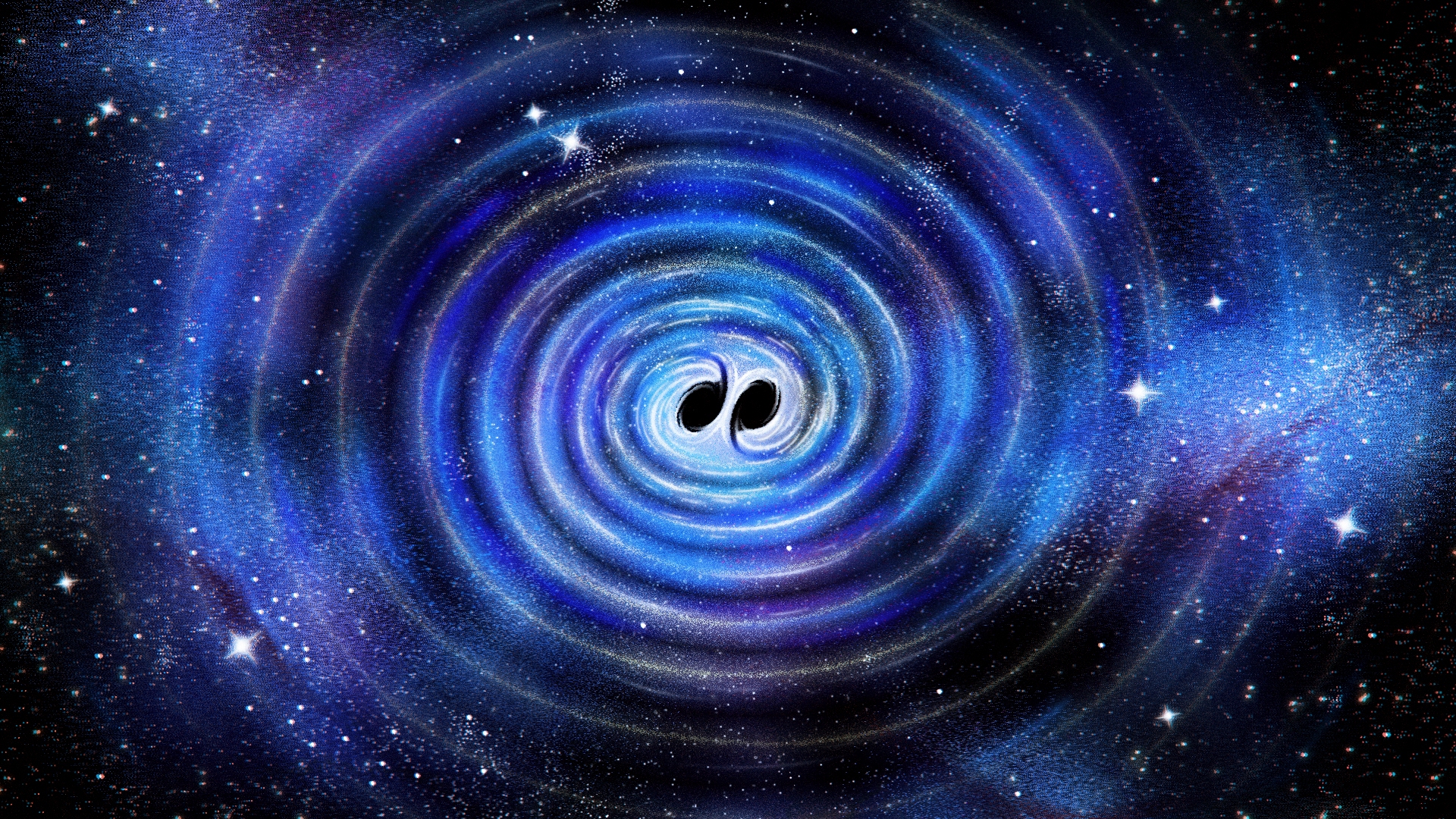


A groundbreaking study led by Cardiff University suggests that the universe’s most massive black holes were not born from collapsing stars. Instead, these cosmic giants likely formed through a series of “extremely violent” collisions within densely populated star clusters. By analyzing ripples in spacetime, known as gravitational waves, researchers have identified a specific population of black holes that grew by repeatedly merging with one another.
Evidence from Gravitational Waves
The international research team examined the GWTC-4 catalog, which contains 153 confirmed black hole mergers. During their analysis, they discovered two very different groups of black holes:
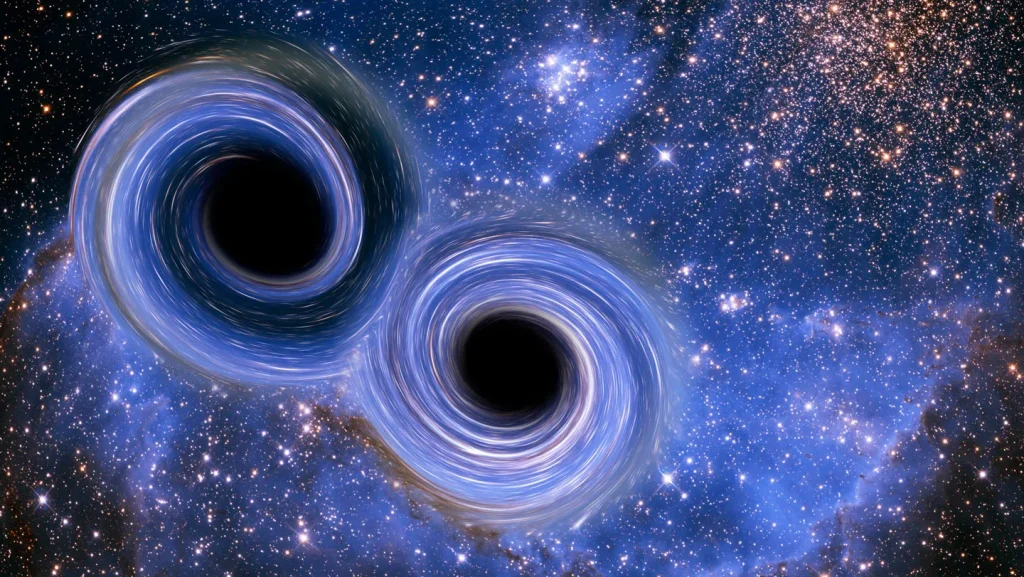
- Lower-mass population: These black holes have slow spins and likely formed through the standard collapse of individual massive stars.
- Higher-mass population: These objects possess rapid spins pointing in random directions. This “random” orientation is a classic signature of hierarchical mergers, where black holes collide repeatedly in crowded environments.
Solving the “Mass Gap” Mystery
The study provides the strongest evidence yet for a “pair-instability mass gap.” Scientists have long predicted that stars of a certain size explode so catastrophically that they leave nothing behind, creating a “forbidden” mass range for black holes. The team identified this gap starting at approximately 45 solar masses.
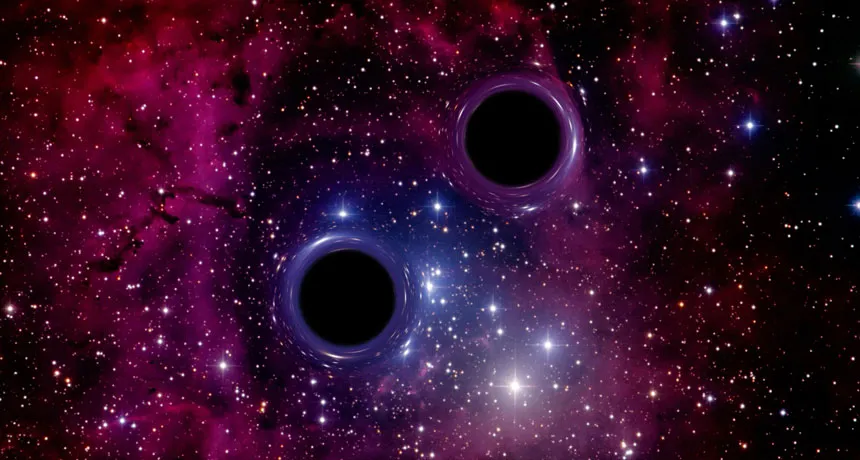
Because black holes larger than 45 times the mass of the Sun exist in the data, the researchers argue they must be “second-generation” objects. This means they were not born directly from a single star but were created when smaller black holes merged in the cores of star clusters. In these regions, stars and black holes are packed a million times more tightly than in our solar neighborhood.
Impact on Nuclear Physics
This discovery does more than just explain how black holes grow; it also helps scientists test their understanding of stellar evolution. Co-author Dr. Fani Dosopoulou noted that these findings could eventually help study nuclear reactions inside the cores of massive stars. Moving forward, gravitational-wave astronomy will likely become a key tool for investigating the fundamental physics of the early universe.