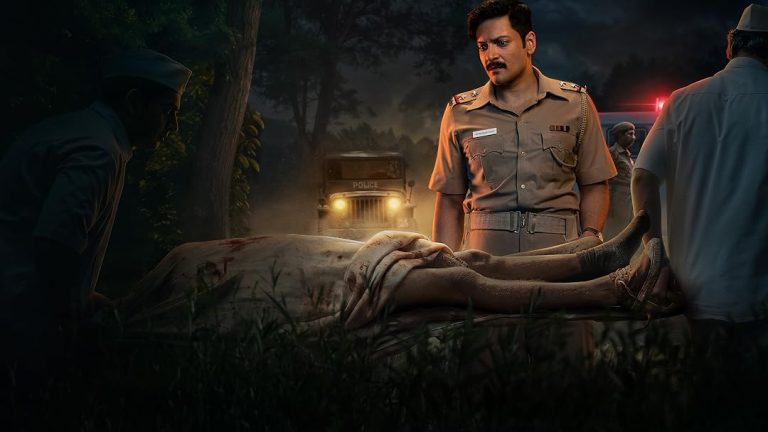
Raakh, Based on the infamous 1978 Ranga-Billa case, director Prosit Roy’s true-crime drama on Prime Video moves past formulaic mystery to deliver a devastatingly raw look at grief, systemic institutional rot, and the dark psychological anatomy of violence.
The Premise
Set against the dusty, atmospheric backdrop of late 1970s Delhi, Raakh is inspired by the chilling real-life abduction and murder of teenage siblings Geeta and Sanjay. Rather than sticking to a predictable, fast-paced whodunit, the series pivots into a visceral study of the aftermath. It meticulously deconstructs the nationwide manhunt through multiple lenses: the staggering trauma of the victims’ family, the grueling uphill battle faced by the police, and the disturbing origin stories of the killers themselves.

Grounded Performances
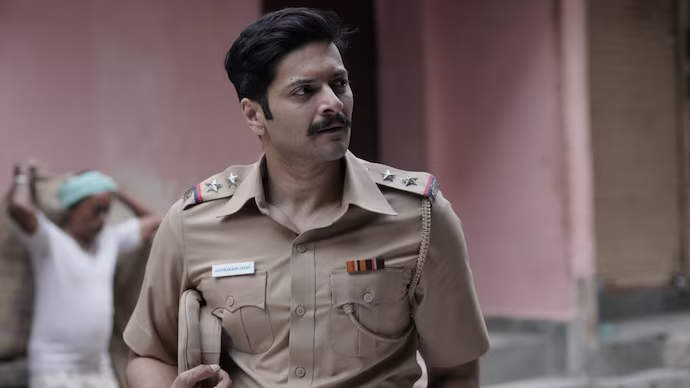
Ali Fazal delivers a remarkably restrained performance as Jayprakash Jatav, a rookie cop fighting deep-rooted political bureaucracy and institutional caste dynamics to seek justice. Completely shedding his aggressive Mirzapur persona, Fazal portrays Jatav with a quiet, anxious desperation that instantly wins over the audience. He is brilliantly supported by Rakesh Bedi, who plays his father. Bedi delivers a beautifully subdued, worldly-wise performance that beautifully captures a complex father-son dynamic.
The emotional core of the series is anchored by Sonali Bendre and Aamir Bashir as the grieving parents. Bendre channels an agonizing, quiet vulnerability as a mother caught in profound shock and denial, anchored by a particularly devastating, fragile encounter with a pregnant woman. On the chilling flip side, Akash Makhija (Babu) and Ramandeep Yadav (Rajjo)—playing characters heavily inspired by the real criminals—deliver unsettlingly brilliant performances, tracking a slow descent into human depravity.
The Verdict
Raakh is an incredibly heavy, intense watch, but director Prosit Roy deserves immense praise for his creative restraint. Much like the first season of Delhi Crime, the series purposefully avoids showing graphic acts of sexual assault on screen, actively pushing back against Bollywood’s historical tendency to sensationalize real-world violence. Backed by sharp dialogue and atmospheric cinematography, the creative team delivers a moving ode to the victims’ family at the finish line, refusing to reduce a profound human tragedy to a mere crime statistic.