
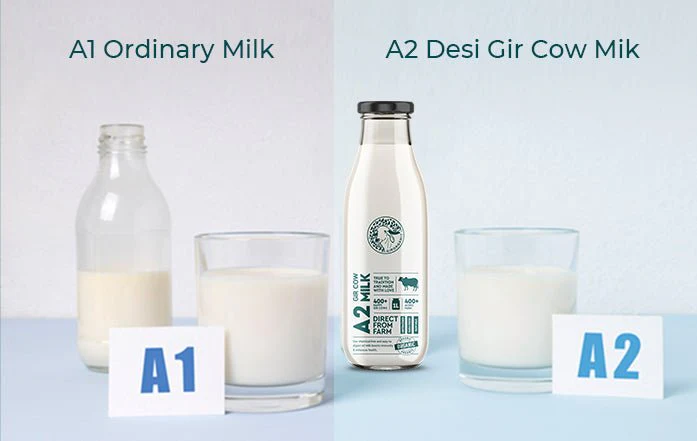


Milk may look identical in your glass, but not all cow’s milk is the same. Over the past few years, A2 milk has gained massive popularity in India and around the world, with many brands promoting it as a healthier and easier-to-digest alternative to regular milk.
The main difference between A1 and A2 milk lies in a protein called beta-casein. Though the variation between the two is extremely small, researchers believe it may affect digestion and how some people respond to milk.
What Is A1 And A2 Milk?
Cow’s milk contains two major types of protein — casein and whey. Around 80% of milk protein is casein, and beta-casein is one of its important forms.
There are two common variants of beta-casein:
- A1 beta-casein
- A2 beta-casein
A1 milk contains A1 beta-casein, while A2 milk contains only A2 beta-casein.
The difference between them comes down to just one amino acid in the protein structure. Despite being a tiny change, experts say it may influence how the body digests milk.
Which Cows Produce A1 And A2 Milk?
A1 milk is generally produced by foreign cow breeds such as Holstein, Friesian, and Ayrshire, which are commonly used in commercial dairy farming.
A2 milk is more commonly associated with Jersey, Guernsey, and several indigenous Indian cow breeds like Gir, Sahiwal, and Tharparkar. This is why many Indian dairy brands market “desi cow milk” as A2 milk.
Why Is A2 Milk Considered Easier To Digest?
When the body digests A1 beta-casein, it may release a compound called beta-casomorphin-7 (BCM-7). Some researchers believe BCM-7 could be linked to digestive discomfort such as bloating, gas, stomach pain, or loose motions in certain people.
A2 milk does not release BCM-7 in the same way, which is why some consumers report feeling more comfortable after switching to A2 milk.
However, scientists also point out that more large-scale studies are still needed before confirming major health advantages.
Can A2 Milk Help Lactose Intolerance?
Many people confuse A2 milk with lactose-free milk, but they are not the same.
Both A1 and A2 milk naturally contain lactose, which is the sugar found in milk. So if someone is lactose intolerant, switching to A2 milk may not completely solve digestive issues unless the product is specifically lactose-free.
Is A2 Milk More Nutritious?
Nutritionally, both A1 and A2 milk are very similar. They contain nearly the same levels of:
- Protein
- Calcium
- Vitamin B12
- Potassium
- Fat
The major difference lies only in the type of beta-casein protein present in the milk.
Which Milk Is Better For You?
The answer depends largely on your body and digestive comfort.
People who often feel bloated or uncomfortable after drinking regular milk may find A2 milk easier to tolerate. It may also appeal to those looking for alternatives linked to indigenous Indian cow breeds.
At the same time, many people digest regular milk perfectly well and may notice no difference after switching. Since A2 milk is usually more expensive, it may not be necessary for everyone.
Final Take
There is no universal rule that A2 milk is healthier than A1 milk for all people. While some individuals report better digestion with A2 milk, scientific evidence remains mixed and ongoing research is still exploring its long-term benefits.
For most healthy individuals, both A1 and A2 milk can be part of a balanced diet. The better option is ultimately the one your body responds to comfortably.