
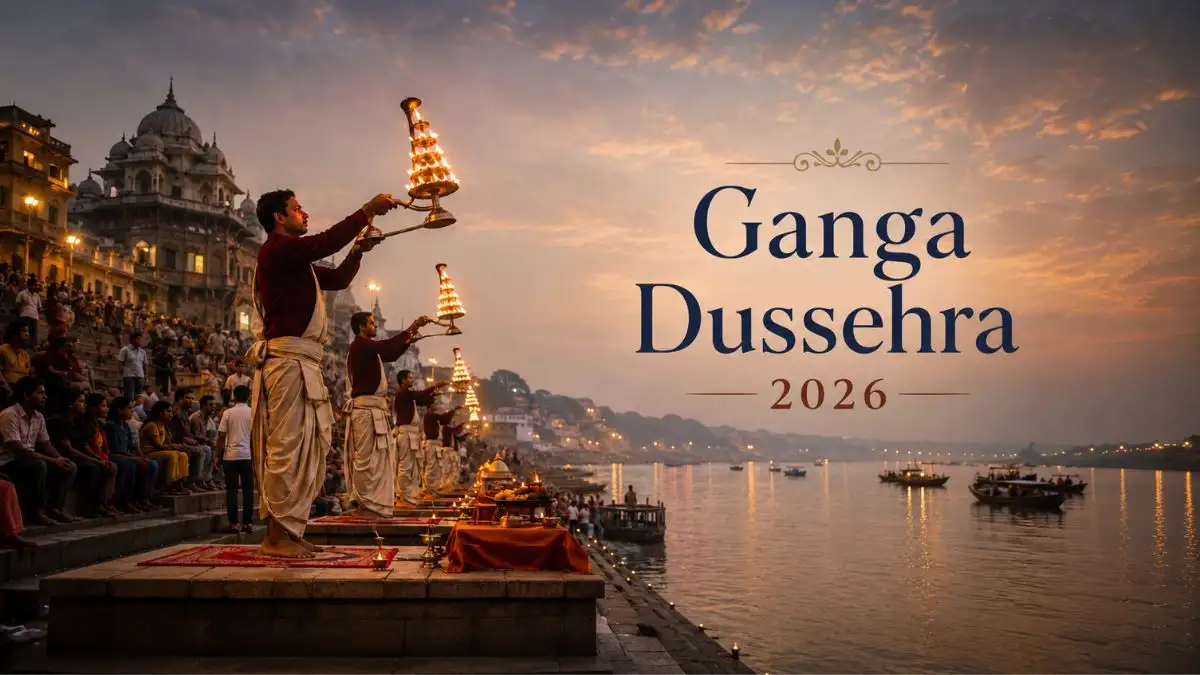


Ganga Dussehra, also affectionately known as Gangavataran, celebrates the magnificent descent of the sacred River Ganges from the celestial realms down to earth.
Commemorated with deep devotion over a ten-day period peaking on May 25, 2026, the festival aligns perfectly with the intense peak of the Indian summer. As the harsh sun dominates the plains, the human body and spirit naturally seek coolness, cleansing, and rejuvenation. The foundational ritual involves gathering at the riverbanks at dawn to take a holy dip in the gentle currents, driven by the timeless belief that a lifetime of transgressions can be purified. To the millions who line her banks, Maa Ganga is not merely a geographic waterway; she is a motherly purifier, a vital nourisher, and a cornerstone of civilization that has shaped agricultural lands, pilgrim routes, and collective memories across generations.
The scriptural narrative of the festival traces back to King Bhagirath, whose fierce tapasya (ascetic penance) moved the divine order to liberate the wandering souls of his ancestors. The celestial Ganga agreed to descend, but her untamed torrent was far too powerful for the earth to absorb without fracturing. In an act of ultimate cosmic grace, Lord Shiva captured her thundering falls within his matted locks, releasing her safely into gentle, winding streams across the plains. This ancient legend carries a profound ecological insight: that nature’s boundless power must be received with immense humility and absolute reverence.
The Spirit of Daan: Across historic river towns like Rishikesh, Haridwar, Varanasi, and Prayagraj, the atmosphere remains one of deep humility rather than material display. Devotees offer simple earthen lamps, flowers, and milk to the river, while simultaneously setting up community distribution stalls to offer handmade fans, umbrellas, and refreshing drinks to travelers, sadhus, and passersby.
Sattvic Disciplines and Cooling Summer Prasad
The unique culinary tradition of Ganga Dussehra is profoundly shaped by North Indian sattvic (pure, vegetarian) guidelines and seasonal intelligence. The day’s offerings begin with cooling, water-rich fruits like mangoes, melons, watermelons, cucumbers, and bananas. These light selections nourish the body against the intense heat, reminding devotees that sacred food doesn’t need to be complex to be meaningful. Following the morning prayers, traditional kitchens fill with the rich aroma of fresh sooji (semolina) or atta (whole wheat) halwa slowly roasted in pure ghee and sweetened with jaggery or sugar. When paired with puffed, golden puris and mildly spiced kala chana (black chickpeas), this comforting combination transforms simple kitchen grains into a celebrated devotional feast.
Creamy desserts hold an equally prominent place in the festival’s culinary matrix. Classic chawal ki kheer is prepared by simmering rice in milk for hours until it thickens into a luxurious consistency, delicately perfumed with cardamom and saffron threads. For families observing strict fasting rules, regular grains are set aside in favor of sabudana (tapioca pearls) or lightly roasted makhana (fox nuts) simmered gently in sweetened milk. These sweet preparations are shared thoughtfully among children and family elders, embodying a sense of auspicious nourishment rather than pure indulgence.
Balancing Festive Feasts With Digestive Wisdom
The savory portion of a Ganga Dussehra meal beautifully reflects the balance required for hot summer days. Standard wheat puris are paired with classic aloo sabzi prepared entirely without onion or garlic, relying instead on a fragrant tempering of cumin, ginger, green chilies, and fresh tomatoes. For those following strict fasting rules, standard flour is swapped for kuttu (buckwheat) or singhara (water chestnut) flour to create crisp, fast-compliant flatbreads served alongside plain yogurt.
Seasonal vegetables are selected with great care to ease digestion. Kaddu ki sabzi (pumpkin) is highly favored, as its natural sweetness pairs beautifully with dynamic spices like fenugreek, cumin, amchur (dry mango powder), and a touch of raw jaggery. Alongside it sits lauki (bottle gourd)—an incredibly hydrating vegetable that is cooked with minimal seasoning to cool the system. For a more festive touch, families prepare crisp kachoris stuffed with spiced moong or urad dal pastes, or pivot toward a soothing pot of moong dal khichdi to embrace simple, clean eating after a long day of rituals.
Because Ganga Dussehra is fundamentally a celebration of water and selfless service, the beverages distributed during the festival are just as important as the solid food. The star of the Gangetic plains is sattu sharbat—a nutrient-dense drink made from roasted gram flour mixed with cold water, roasted cumin, black salt, and lemon juice. Tangy aam panna, crafted from boiled raw mango pulp and fresh mint leaves, serves as a natural shield against the fierce summer winds. Offering these cool drinks, alongside frothy lassi, jaljeera, and tender coconut water to tired workers or hot pilgrims, transforms a simple act of hospitality into a sacred response to human thirst, flowing with the same spirit of grace as the river itself.