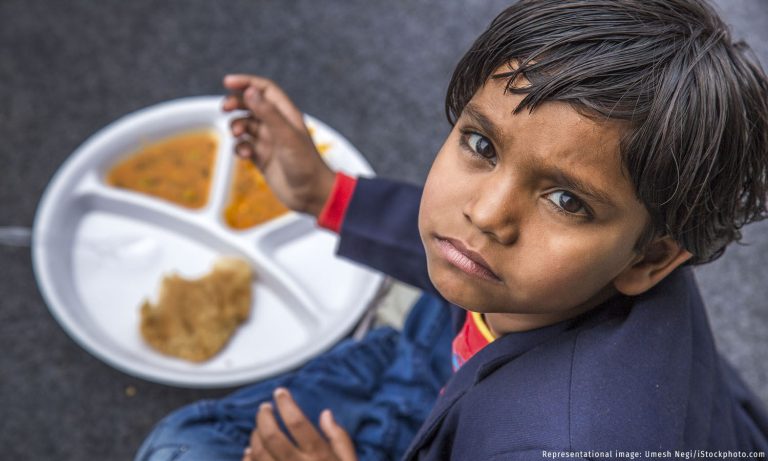
As India pursues its vision of becoming a developed nation under the Viksit Bharat initiative, a new study has highlighted a growing public health challenge that threatens the wellbeing of future generations. Researchers have found that children from economically weaker backgrounds are increasingly experiencing a double burden of malnutrition — suffering from undernutrition in early childhood and later becoming overweight or obese before reaching adolescence.
The findings come from a long-term study conducted in Vellore, Tamil Nadu, which tracked children from birth until the age of nine. The research paints a concerning picture of how India’s nutrition challenges are evolving beyond traditional concerns of hunger and underweight children.
Published in The Lancet Regional Health, the study was carried out by researchers from the Advanced Research Unit of Metabolism, Development and Aging (ARUMDA) at Tata Institute of Fundamental Research (TIFR) and Christian Medical College (CMC), Vellore.
Study Tracks Children for Nearly a Decade
Led by Dr. Beena Koshy of CMC Vellore and Dr. Birsen Yilmaz of TIFR Mumbai, the study followed 251 children growing up in an urban slum environment.
Researchers found that most children began life with relatively normal growth patterns. However, significant changes emerged as they grew older, particularly after the age of five.
By the time children reached seven years of age, more than a quarter of them were classified as thin. At the same time, a smaller but growing number had already become overweight.
The situation became more pronounced by age nine. Around 21.6 per cent of the children remained underweight, while nearly 14.6 per cent were overweight or obese.
This unusual coexistence of undernutrition and obesity within the same community—and sometimes within the same child at different stages of life—is known as the “double burden of malnutrition.”
Malnutrition Is No Longer Just About Hunger
According to the researchers, India’s nutrition problem has become far more complex than simply addressing food scarcity.
“Our findings show that children in low-income urban communities are now facing both thinness and emerging obesity before they even enter their teens,” said Dr. Beena Koshy.
“Malnutrition in India is no longer just about underweight toddlers, but about the entire childhood years.”
The study identifies primary school age as a critical and often overlooked period in a child’s development. Researchers observed that both thinness and obesity begin increasing sharply between the ages of seven and nine, suggesting that nutrition interventions need to continue well beyond early childhood.
Why Primary School Years Matter
Experts involved in the research believe current nutrition strategies place too much emphasis on the first 1,000 days of life, from conception through a child’s second birthday.
While this period remains crucial, the study suggests it is not enough to ensure healthy long-term growth.
“Our findings clearly hint at the importance of child growth beyond the first 1000 days,” said Prof. Ullas Kolthur and Mahendra Sonawane from ARUMDA at TIFR.
“Extending nutrition, growth monitoring and healthy food and activity initiatives into the primary school years is essential because this is when children’s metabolic profiles are being shaped for life.”
The Two Pathways to Poor Health
Researchers found that the roots of childhood malnutrition often begin before birth.
Children born with low birth weight or to undernourished mothers were significantly more likely to remain thin throughout childhood.
At the same time, children born with healthy birth weights were more likely to become overweight later in life, reflecting the impact of changing diets, reduced physical activity and increased availability of unhealthy processed foods in rapidly urbanising communities.
Dr. Nihal Thomas of CMC Vellore explained that both pathways can lead to serious long-term health consequences.
“Undernutrition in early life can lead to defects in insulin secretion and even diabetes in lean individuals,” he said.
“Overnutrition, coupled with sedentary lifestyles, can lead to rapid weight gain and increased risk of diabetes, hypertension and cardiovascular disease.”
NFHS Data Reveals Similar National Trend
The findings from Vellore gain additional significance when viewed alongside the latest National Family Health Survey (NFHS) data released recently.
The survey shows encouraging progress in some areas. Child stunting, which reflects chronic undernutrition, has declined to 29.3 per cent. Severe wasting has also dropped to 5.2 per cent.
However, major challenges remain.
Nearly one in three Indian children is still underweight, with prevalence estimated at approximately 31.8 per cent nationwide.
At the same time, obesity and lifestyle-related diseases are increasing rapidly across the country. The NFHS has flagged obesity as an emerging public health concern, highlighting India’s growing struggle with two opposite forms of malnutrition.
The Vellore study provides a real-world example of how this transition is unfolding, particularly among families living in economically disadvantaged urban communities.
Poor Households Face a Double Whammy
For low-income families, the challenge is especially severe.
Limited access to nutritious food often contributes to undernutrition during a child’s early years. Later, inexpensive calorie-dense foods, increasing screen time, reduced outdoor activity and changing urban lifestyles create conditions that promote overweight and obesity.
This combination places children at risk throughout their lives.
Undernourished children may experience stunted growth, weakened immunity and impaired cognitive development. Meanwhile, those who become overweight face higher risks of diabetes, heart disease, hypertension and other chronic illnesses later in life.
What makes the issue even more concerning is that the same child can experience both forms of malnutrition at different stages of development.
A Call for Rethinking India’s Nutrition Strategy
Researchers say the findings should prompt policymakers to broaden India’s nutrition agenda.
While maternal health and early childhood nutrition must remain priorities, interventions need to extend into school-age years. Experts recommend strengthening nutrition programmes, expanding growth monitoring and ensuring that schools provide both healthy meals and opportunities for regular physical activity.
India’s mid-day meal programme already offers a foundation for such efforts, but researchers argue that more comprehensive measures are needed to address the changing nature of childhood malnutrition.
As India works toward becoming a developed nation, ensuring healthy childhood development will be critical to achieving that goal.
The message emerging from the Vellore study is clear: the future health, productivity and prosperity of the country depend on how effectively it addresses both undernutrition and obesity. Without tackling this growing double burden, the vision of a Viksit Bharat could rest on an increasingly fragile foundation.