
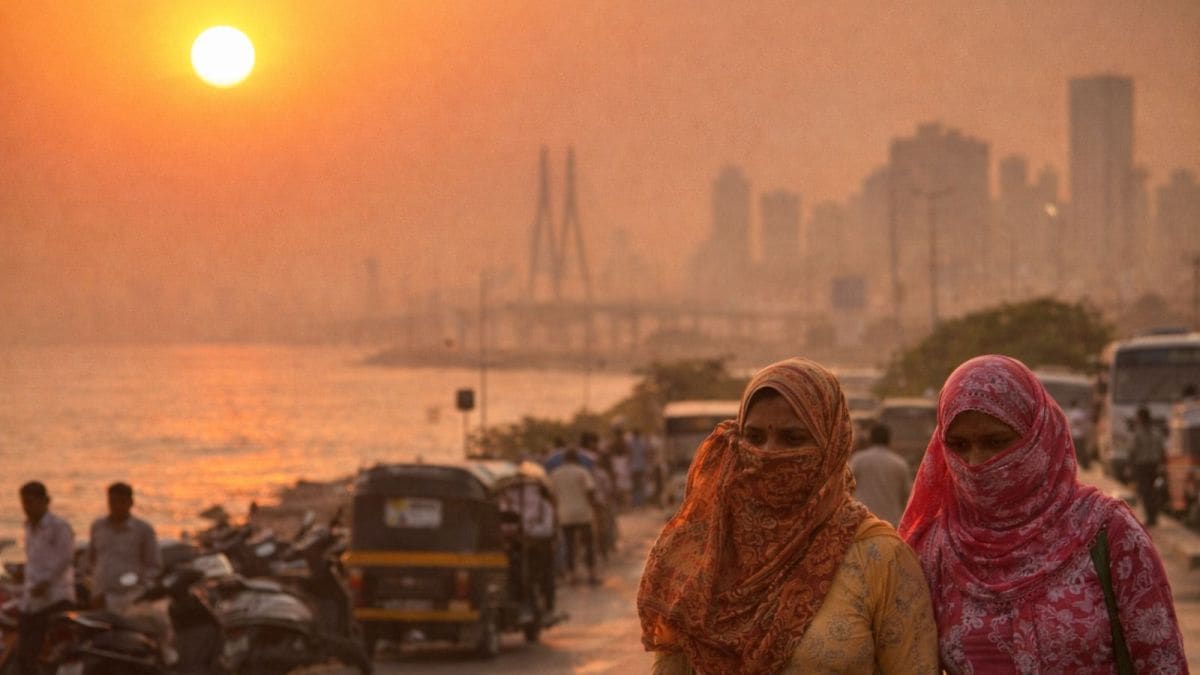


Maharashtra is currently caught in a meteorological tug-of-war as the state grapples with two wildly opposing weather extremes at once. While residents in Vidarbha are witnessing the mercury shatter the 40°C mark, those in Pune and Satara are being caught off-guard by sudden, violent thunderstorms.
This unusual “heat-rain overlap” has turned daily life into a game of unpredictable transitions, leaving citizens navigating harsh sunlight in the morning and searching for umbrellas by the evening.
The Science of “Heat-Fueled” Storms
According to the India Meteorological Department (IMD), the current volatility is not a coincidence—the extreme heat is actually acting as a catalyst for the rain.
In regions like Nagpur, Akola, and Chandrapur, intense daytime heating creates a low-pressure zone near the ground. When this scorching air meets moisture-laden winds coming from the Bay of Bengal or the Arabian Sea, it leads to rapid cloud formation. The result is “convective” rainfall—short, localized, but intense bursts of rain accompanied by lightning and gusty winds, often occurring in the late afternoon or evening.
A State Divided: Heatwaves in the East, Thunder in the West
The geographical contrast across Maharashtra is becoming sharper by the day. While the Interior and Vidarbha regions are under high-pressure “heat-trapping” conditions that push temperatures to dangerous levels, districts in Madhya Maharashtra and Marathwada are seeing patchy, sporadic showers.
This explains why Solapur might remain bone-dry and dusty while nearby Kolhapur experiences a sudden downpour. The IMD has highlighted that this “dual-threat” weather pattern—heatwave alerts alongside thunderstorm warnings—is a hallmark of a highly volatile pre-monsoon transition period in 2026.What to Expect: Preparing for the Dual Threat
The forecast for the final week of April 2026 suggests that this weather “schizophrenia” is here to stay. Residents across the state, from Mumbai to Wardha, are advised to stay hydrated to combat heat stress while remaining vigilant for sudden weather shifts. The IMD warns that while these pre-monsoon showers provide temporary relief from the heat, they often come with high-velocity winds that can disrupt power lines and local transport. For now, Maharashtra remains a state of two seasons playing out in a single day.