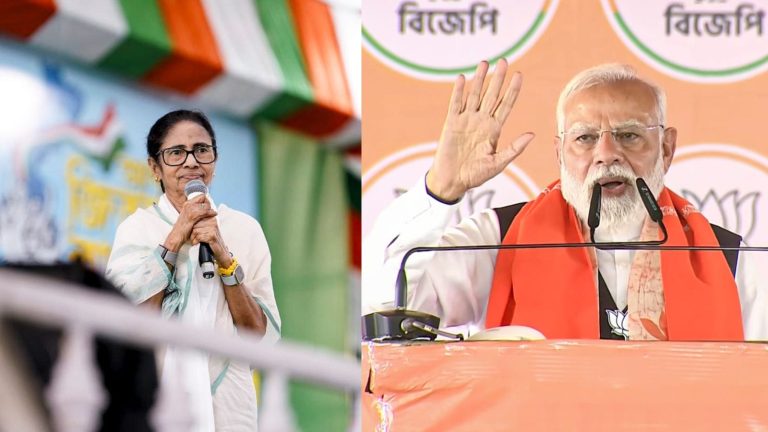
With assembly election results scheduled for May 4 across West Bengal, Kerala, Assam, Tamil Nadu, and Puducherry, market participants are closely watching whether political outcomes could influence short-term stock market movement. While these are state-level elections, analysts say they often act as sentiment triggers for investors, especially during periods of market weakness.
Fragile Market Setup Ahead of Results
According to Feroze Azeez, Joint CEO at Anand Rathi Wealth Limited, the Indian stock market is currently in a weak and oversold phase. The Nifty index is down nearly 9% from its recent highs, while foreign institutional investors (FIIs) have pulled out around ₹56,000 crore in April alone.
At the same time, elevated short positions in index futures suggest cautious sentiment among traders. In such conditions, even small positive surprises can lead to sharp market reactions.
Why West Bengal Matters for Markets
Among all states going to polls, West Bengal is being closely tracked by investors due to its political significance and historically unpredictable outcomes.
Azeez notes that if election results show a stronger-than-expected performance by the Bharatiya Janata Party (BJP), markets could react positively in the short term. This is because markets often respond not to expected outcomes, but to deviations from expectations.
West Bengal has also seen rapid political competition in recent years, making it a key sentiment driver during election cycles.
Short-Term Reaction vs Long-Term Impact
Experts say that any immediate market movement following election results is likely to be short-lived and sentiment-driven.
Historically, markets have shown intraday volatility around election outcomes, including quick rallies when results exceeded expectations. However, these reactions typically fade within days as investors return focus to fundamentals.
Key drivers that dominate longer-term market direction include:
- Corporate earnings growth
- Interest rate trends
- Liquidity conditions
- Global factors like oil prices and currency movement
Political Stability Still Matters
While markets do not react strongly to every state election, analysts agree that political stability plays an important supporting role in investor confidence.
A strong performance by the ruling party in politically important states like West Bengal—home to 42 Lok Sabha seats—can reinforce expectations of policy continuity at the national level. This can improve medium-term sentiment, especially ahead of future general elections.
FII Outflows Add to Sensitivity
The current wave of foreign investor withdrawals has made markets more sensitive to external triggers, including political events. With heavy outflows already underway, analysts say even minor positive surprises from election results could temporarily improve sentiment.
However, they also caution that such effects are usually technical and emotional rather than structural, meaning they do not change the long-term market direction.
Conclusion
While West Bengal and other state election results may create short-term volatility in Indian stock markets, experts stress that earnings and macroeconomic fundamentals remain the real drivers of long-term performance.
For now, elections are being viewed more as a sentiment catalyst than a structural market influencer, especially in an already fragile and FII-sensitive environment.