


The International Cricket Council (ICC) has delivered a massive blow to Cricket Canada, officially suspending its central funding for the next six months.
The Associate Member board was notified of the freeze earlier this week following severe, ongoing breaches of ICC administrative policies, a total collapse of internal financial oversight, and structural governance failures. While the ICC has clarified that this suspension will not halt immediate high-performance programs or on-field matches, the financial implications are staggering.
For an organization whose 2024 financial balance sheets reveal that 63% of its total income (CAD 3.6 million out of CAD 5.7 million) relies directly on centralized ICC distributions, this freeze threatens to cripple the country’s long-term cricket ecosystem.
Spot-Fixing and Organized Crime: The Shocking T20 World Cup Probe
The funding freeze follows a explosive, 43-minute investigative documentary titled “Corruption, Crime and Cricket,” which recently aired on the public broadcaster CBC’s The Fifth Estate.
The documentary brought forward harrowing allegations of corruption, including a claims that the notorious Lawrence Bishnoi gang had infiltrated the nation’s cricket framework. According to the investigation, the gang allegedly threatened a prominent national player and influenced a last-minute leadership change when the team landed in Sri Lanka, installing 22-year-old Dilpreet Bajwa as captain just weeks before the tournament.
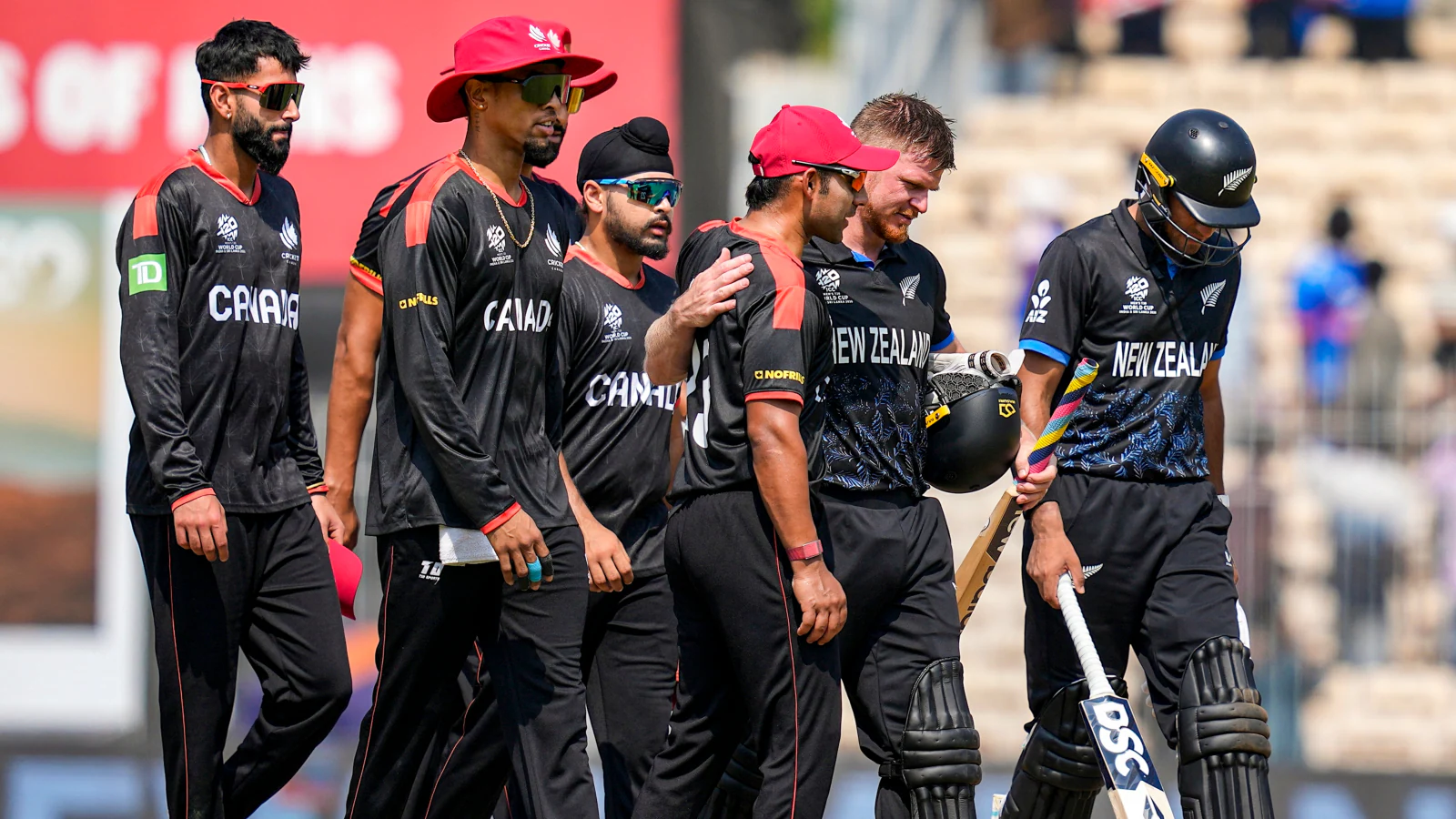
The ICC’s Anti-Corruption Unit (ACU) has launched an active investigation into Canada’s group-stage match against New Zealand held in Chennai. The fifth over of that match bowled by Bajwa himself, where he gave away 15 runs via erratic no-balls and wides right after Canada’s pace attack had taken two quick wickets is under heavy scrutiny. Reports indicate that the ACU immediately seized Bajwa’s mobile phone for digital forensics following the match.
Leaked Tapes and Criminal CEO: Administrative Collapse Exposed
The on-field scandal is compounded by a secondary ACU investigation into a leaked telephone recording involving former head coach Khurram Chohan. In the audio, Chohan can be heard claiming that senior board members heavily pressured him to fix batting orders and select specific players during their qualifiers against Bermuda. Furthermore, former coach Pubudu Dassanayake has also sued the board for wrongful dismissal, alleging he was threatened with contract termination when he resisted illegal selection mandates before the 2024 T20 World Cup.
Administratively, the board has been in freefall since the highly controversial appointment and subsequent sacking of former CEO Salman Khan. Khan’s hiring drew sharp ICC intervention after he failed to disclose that the Calgary Police Service was investigating him for misappropriating CAD 200,000 from a local league.
Khan has since been criminally charged with theft and fraud over $5,000, though he maintains his innocence. In an immediate bid to scrub its image, Cricket Canada held its Annual General Meeting on May 9–10, implementing sweeping governance reforms and officially electing interim head Arvinder Khosa as the full-time board president to replace Amjad Bajwa. However, the ICC’s swift disciplinary freeze makes it clear that paper reforms will not be enough to bypass deeper structural accountability.