
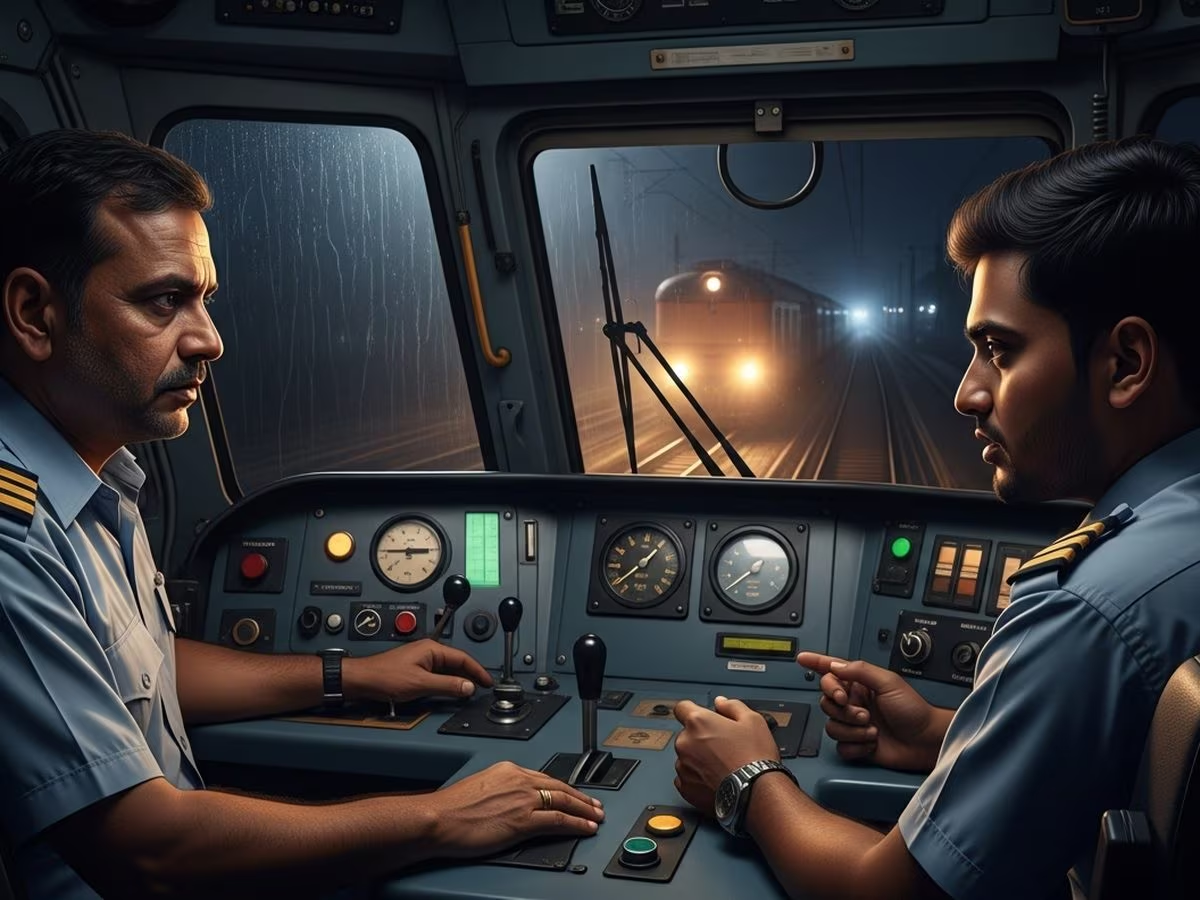


As passengers settle into their berths on overnight trains and drift off to sleep, two railway staff members at the front of the train remain fully alert throughout the journey — the Loco Pilot and the Assistant Loco Pilot. Their nonstop communication plays a crucial role in ensuring passenger safety during night travel.
Constant Signal Verification Inside The Engine Cabin
While the train moves through darkness at high speed, the Loco Pilot continuously calls out every railway signal visible on the track ahead. The Assistant Loco Pilot immediately verifies and repeats the information to confirm it has been correctly observed.
This process includes announcing the signal number, colour, and warning status aloud. For example, if a signal shows green and carries a specific number, the pilot verbally identifies it and the assistant confirms it instantly. This constant cross-checking system helps reduce the risk of human error and improves operational safety.
Signals Appear Throughout The Journey
Railway signals are placed at regular intervals along the tracks to guide train movement. On open railway stretches, signals may appear every 1 to 2 kilometres, while in busy sections and near stations they can appear much more frequently.
The repeated communication between the two railway professionals continues for the entire journey, especially during overnight operations when visibility is lower and concentration becomes even more important.
Loco Pilots Prepare Before The Journey Begins
Before departure, Loco Pilots study a detailed route chart containing crucial information about the journey. This includes station timings, track curves, speed restrictions, caution zones, repair work, and scheduled halts.
By the time passengers board the train, the engine crew is already familiar with the full route and operational requirements for the trip ahead.
A Job That Demands Continuous Focus
Railway experts say even a brief lapse in attention while operating a fast-moving train can lead to serious consequences. Unlike many modern transport systems, train operations still rely heavily on human alertness, coordination, and timely decision-making.
Throughout the night, while passengers rest comfortably, the Loco Pilot and Assistant Loco Pilot remain focused on reading signals, monitoring the track, and maintaining communication to ensure a safe journey.
The Invisible Work Behind Every Safe Train Ride
The peaceful atmosphere passengers experience during overnight train travel is supported by hours of uninterrupted concentration inside the locomotive cabin. The nonstop exchanges between railway crew members form an essential layer of safety that most travellers never see.
Behind every smooth overnight journey lies a system built on discipline, coordination, and constant vigilance from the railway staff leading the train through the night.