
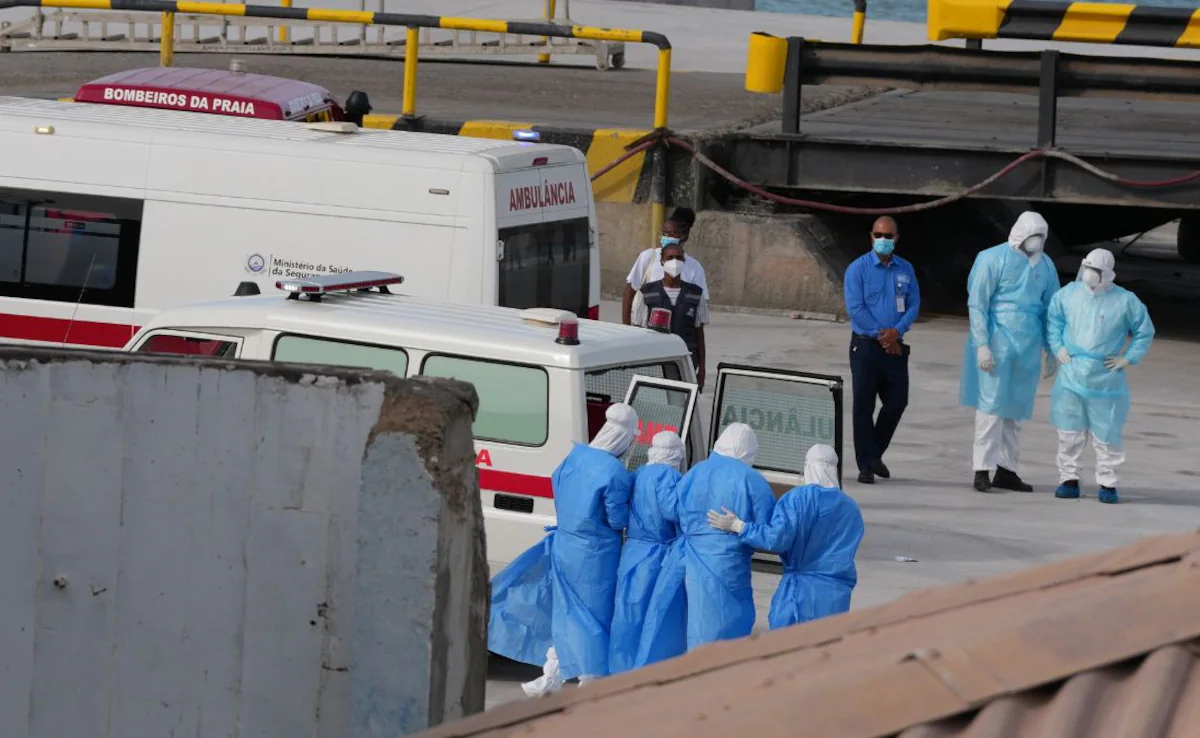


One of the 14 Spanish evacuees from the hantavirus-hit cruise ship MV Hondius has preliminarily tested positive for the virus, Spanish Health Minister Monica Garcia confirmed on Monday.
In a post on X, Garcia said the passenger, currently under isolation at Madrid’s Gomez Ulla hospital, returned a preliminary positive result in a PCR test conducted after arrival in Spain.
Uno de los pasajeros españoles aislados en el Hospital Gómez Ulla ha dado positivo provisional en la PCR realizada a su llegada.
— Mónica García (@Monica_Garcia_G) May 11, 2026
La persona permanece aislada, sin síntomas y con buen estado general, bajo seguimiento clínico continuo y conforme a los protocolos de seguridad y…
“The person remains in isolation, without symptoms and in general good health, under continued clinical observation in accordance with established safety and epidemiological protocols,” she said.
The remaining 13 Spanish passengers tested provisionally negative, although officials said final test results are still awaited.
The outbreak aboard the expedition cruise ship MV Hondius has triggered a coordinated international response after several confirmed and suspected cases of hantavirus were linked to passengers on board.
According to health authorities and the World Health Organization (WHO), the outbreak is believed to involve the Andes strain of hantavirus — a rare variant capable of possible human-to-human transmission through close contact. Typically, hantavirus spreads through exposure to infected rodent urine, droppings, or saliva.
The Spanish evacuees were brought to Madrid as part of an emergency evacuation operation after the ship reached Spain’s Canary Islands over the weekend.
Authorities said multiple passengers from different countries have been transferred for treatment, testing, and observation as precautionary measures continue across Europe.
The final batch of evacuees left the vessel on Monday after the ship briefly docked at the Port of Granadilla on the Spanish island of Tenerife due to poor weather conditions. The vessel later resumed its journey toward Rotterdam in the Netherlands.
Meanwhile, the European Commission said it is actively coordinating the multinational response to the outbreak. The European Centre for Disease Prevention and Control (ECDC) has assessed the current risk to the wider European population as “very low”.
Spain activated the EU Civil Protection Mechanism on May 6, prompting the EU’s Emergency Response Coordination Centre to oversee evacuation and medical coordination efforts linked to the cruise ship.
Officials said five repatriation flights coordinated by the European Union were conducted on Sunday with assistance from France, Spain, the Netherlands, Greece, and Ireland. A sixth and final evacuation flight operated by the Netherlands departed on Monday.
The European Union has also mobilised emergency medical resources and strategic reserves. A specialised medical evacuation aircraft from the EU fleet, hosted by Norway, has been stationed in Tenerife, while additional transport support, logistics systems, and protective equipment remain on standby.
To strengthen on-ground coordination, the Emergency Response Coordination Centre deployed a liaison officer to Tenerife. The ECDC also sent two experts from the EU Health Task Force to inspect conditions aboard the ship before passengers disembarked.
The European Commission said it is maintaining close coordination with EU member states, countries participating in the Civil Protection Mechanism, the WHO, and G7 partners as monitoring efforts continue.
European Commissioner for Equality, Preparedness and Crisis Management Hadja Lahbib stressed the importance of global coordination in handling health emergencies.
“Health threats can easily cross borders, which is why coordinated international action remains essential,” she said.